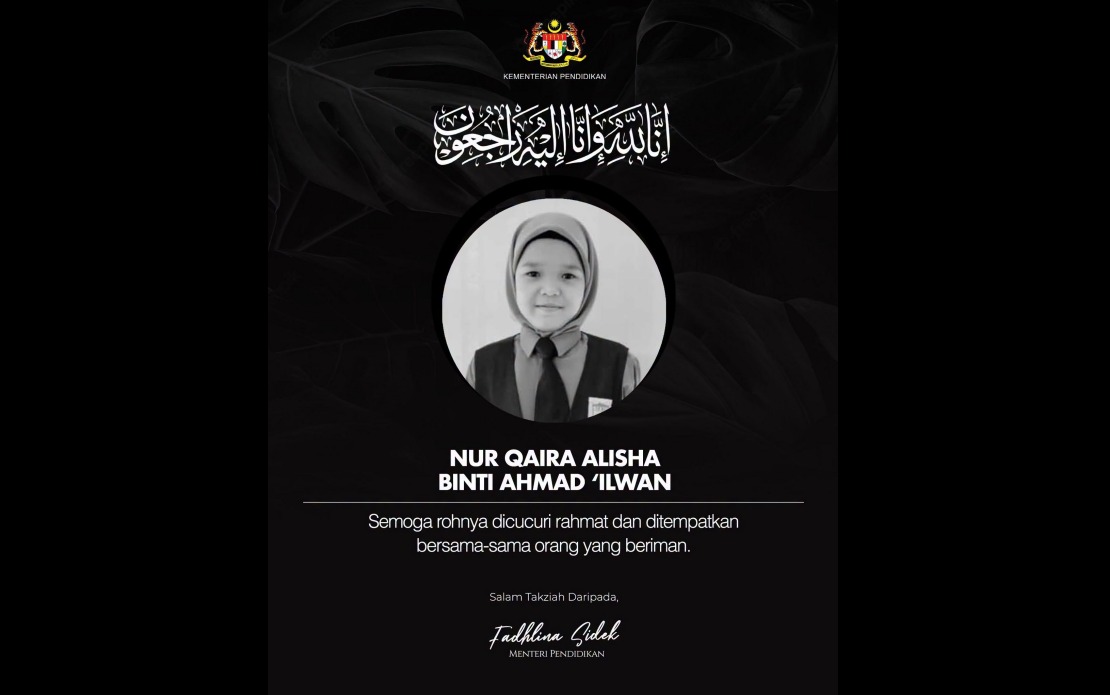
Education Minister Datuk Seri Fadhlina Sidek has instructed the Ministry of Education's Integrity Unit to pursue further investigation into a formal complaint lodged by the family of Year Four student Nur Qaira Alisha Ahmad Ilwan, who passed away recently under circumstances that have raised significant questions about duty of care in schools. The minister emphasised in a Facebook statement that any subsequent action must adhere to established protocols and be grounded in equitable treatment for all parties involved in the case.
The Kedah State Education Department has already completed a preliminary investigation into the matter following the family's initial complaint. However, the escalation to the ministry's Integrity Unit suggests the gravity with which federal education authorities are now viewing the incident. The move reflects growing pressure to ensure comprehensive accountability when student welfare concerns are implicated in tragic outcomes within the school system.
Nur Qaira's medical history presents a critical dimension to the case. Since infancy—specifically from three months of age—the child had lived with a significant heart condition that required ongoing medical management. Due to this pre-existing vulnerability, her school had formally documented an exemption from competitive sports participation, a precautionary measure intended to shield her from physical exertion that could trigger cardiac complications.
According to accounts provided by Nur Qaira's parents, a teacher at the school instructed the pupil to take part in a running event held as part of the annual sports house selection process on April 15. This directive allegedly proceeded despite the school's possession of a medical certificate explicitly outlining the child's cardiovascular limitations and her exclusion from athletic activities. The apparent disregard for documented medical guidance has emerged as the focal point of the family's allegations and the subsequent investigation.
The consequences of participation in that event became apparent within days. On April 24, Nur Qaira was admitted to Sultanah Bahiyah Hospital presenting with acute symptoms including severe vomiting and periocular oedema. Clinical assessment revealed that the child had developed acute heart failure stemming from decompensated dilated cardiomyopathy—a deterioration of the heart muscle's ability to pump blood effectively. The diagnosis indicated that her cardiac condition had significantly worsened, though the precise relationship between the sports participation and this acute decompensation remains medically and legally contested.
The child subsequently succumbed to her condition while hospitalised, leaving her family bereft and searching for accountability. The timeline—between the April 15 sports event and the April 24 hospital admission—has raised troubling questions about whether the physical strain of the running competition contributed to the acute cardiac event that claimed her life. For the parents, the existence of the medical exemption coupled with the teacher's directive creates a narrative of preventable tragedy rooted in institutional negligence.
Education Minister Fadhlina's response signals official acknowledgment of the case's sensitivity and the legitimate concerns at stake. She reiterated that the Ministry of Education views student safety and welfare as paramount considerations within the institutional framework. The phrase "takes every matter involving student safety and welfare seriously" represents standard bureaucratic language, yet the escalation to the Integrity Unit demonstrates that this particular matter transcends routine administrative handling.
The minister also offered formal condolences to Nur Qaira's family, expressing hope that they might find emotional sustenance during their grieving process. This compassionate dimension of the official response, while necessary, does not address the substantive questions about systemic safeguards and professional accountability within Malaysian schools. Families across the country will be watching to see whether the Integrity Unit's investigation produces meaningful findings and whether institutional reforms emerge from this tragedy.
The case illuminates persistent vulnerabilities in how Malaysian schools manage documented medical conditions among their student populations. While protocols exist for documenting health concerns and exempting students from particular activities, the execution of these protections appears inconsistent. The question of whether teachers receive adequate training in recognising and respecting medical documentation—and whether there exist clear consequences for disregarding such guidance—remains largely unanswered in Malaysian educational practice.
For parents of children with chronic health conditions, the incident raises legitimate anxieties about trusting schools to honour medical restrictions and prioritise welfare over participation metrics. The relationship between institutional pressure to achieve certain outcomes in sports or other activities and individual student safety requires careful calibration. If institutional culture inadvertently penalises or discourages students with health limitations from full participation, the response may create pressure on students or teachers that undermines documented medical guidance.
The investigation's scope and thoroughness will carry implications beyond this single family. How Malaysian education authorities determine responsibility, whether they identify systemic gaps in medical compliance procedures, and what corrective measures they subsequently implement will send signals throughout the school system about institutional priorities. The Integrity Unit's investigation represents an opportunity to establish clearer protocols, improve professional accountability, and potentially prevent similar tragedies.
As the investigation proceeds, this case serves as a sobering reminder that student welfare exists at the intersection of medical reality, institutional protocols, and individual professional judgment. For Malaysian schools, particularly those serving students with documented health vulnerabilities, the path forward requires unambiguous commitment to medical guidance, systematic training for staff handling health-related matters, and transparent accountability when protocols are breached.

