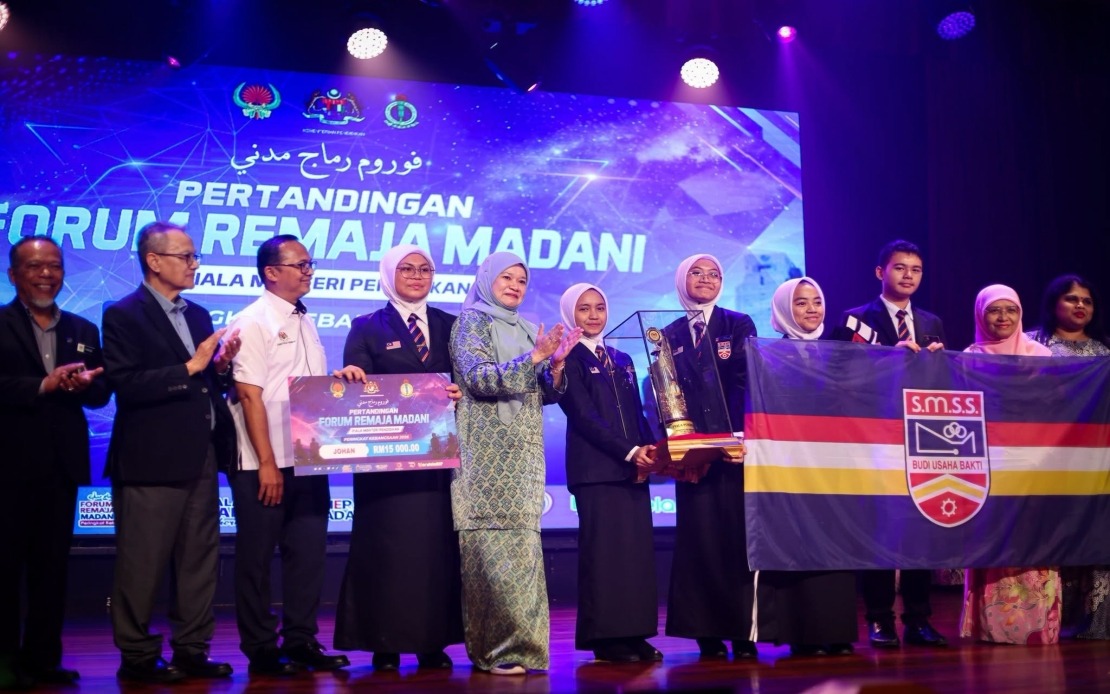
Education Minister Fadhlina Sidek has articulated a vision for Malaysian education that moves beyond rote compliance toward fostering independent thought and constructive debate among young people. Speaking after observing discussions at the National MADANI Youth Forum, Fadhlina emphasised that character development in schools should equip students with the confidence to express themselves, the intellectual rigour to support their arguments, and the maturity to acknowledge perspectives that diverge from their own.
The minister's remarks reflect growing recognition within Malaysia's education establishment that the nation's future stability depends not on uniform agreement but on cultivating a generation capable of engaging across differences productively. This philosophical shift carries particular weight in a diverse society where religious, ethnic, and ideological viewpoints intersect daily in schools and communities. Rather than imposing silence on contentious issues or discouraging debate altogether, Fadhlina suggests schools should become spaces where disagreement becomes an opportunity for learning rather than a source of conflict.
A cornerstone of Fadhlina's approach involves linking this emphasis on articulate expression with the promotion of Malay language proficiency. The minister argued that strengthening Bahasa Malaysia requires young people to perceive it not as a ceremonial or academic subject but as a living tool capable of conveying nuanced thinking. When students view the language as merely something to be mastered for examinations rather than as a medium through which they can express their own ideas and engage in substantive discourse, its cultural vitality diminishes. By creating forums where youth can deploy Malay to articulate position papers, debate complex issues, and defend arguments, the government aims to revitalise the language's relevance to contemporary Malaysian life.
Fadhlina's framework deliberately separates the government's role in education from the temptation to script what young people should think or say. She noted that educators should not position themselves as arbiters determining acceptable conclusions, but rather as facilitators ensuring students possess both the factual knowledge and the rhetorical tools to make informed arguments. This distinction matters enormously for trust in institutions and for the intellectual independence that democratic societies require. When authorities tell citizens what conclusions they must reach, legitimacy erodes; when authorities teach citizens how to reason rigorously while remaining open to evidence, institutional credibility strengthens.
The practical implications of this approach extend beyond classrooms into campus politics, student journalism, and youth engagement in public discourse. If implemented consistently, such a model would embolden student voices on issues from environmental policy to economic opportunity, from social justice to educational reform. This carries both promise and risk. Student activism energised by genuine intellectual conviction can pressure governments toward accountability and innovation. Conversely, poorly managed discourse can devolve into polarisation, with young people adopting tribal positions rather than engaging genuinely across divides.
The timing of Fadhlina's statement also signals an implicit acknowledgment that controlling information and suppressing dissent among younger demographics has become increasingly futile in an age of internet connectivity and social media. Rather than attempting the impossible task of preventing young Malaysians from encountering diverse viewpoints, the minister proposes channelling that intellectual ferment into structured, respectful formats where critical thinking flourishes within boundaries of civility. This pragmatic adaptation recognises that censorship breeds cynicism whereas transparent debate, even when uncomfortable, builds confidence in institutions.
For Malaysia's regional position, fostering a generation of articulate, respectful but independent thinkers carries strategic value. Southeast Asian nations increasingly compete on innovation, soft power, and the quality of their human capital. Countries that suppress critical thinking lose the competitive advantage of diversity of thought; those that channel disagreement productively gain resilience and adaptability. Malaysia's multicultural composition, properly leveraged, becomes an asset rather than a liability when young people from different backgrounds learn to construct and defend arguments while genuinely listening to others.
The concept of maturity that Fadhlina articulates—where a nation succeeds not through unanimity but through managed disagreement—represents a significant statement within Malaysian political culture. Historical narratives in Malaysian schools have often emphasised consensus and harmony as primary values, sometimes at the expense of exploring how genuine democracy requires space for dissent. Reframing maturity as the capacity to disagree without rupturing social bonds introduces subtle but consequential reorientation in how citizenship itself gets taught and modelled.
Implementing such an approach requires training educators to facilitate rather than dictate, to ask probing questions rather than provide predetermined answers, and to establish classroom norms where respectful challenge becomes normalised. Many teachers trained under older pedagogical models may require substantial professional development to shift from transmitting information to orchestrating intellectual exchange. The ministry's commitment to this vision will ultimately depend on whether corresponding investments in teacher training, curriculum redesign, and school culture follow the rhetorical articulation.
The response from parents, educators, and young people themselves will likely reveal tensions between the stated ambition and lived experience in Malaysian schools. Some constituencies may worry that encouraging critical thinking and respectful disagreement opens doors to questioning matters traditionally considered settled, whether religious doctrine, national symbols, or government policy. Others may see the initiative as insufficient, arguing that without protecting the most vulnerable voices or addressing power imbalances in school settings, rhetoric about freely expressing views rings hollow. These tensions themselves become valuable opportunities for the kind of respectful, substantive debate Fadhlina envisions.

