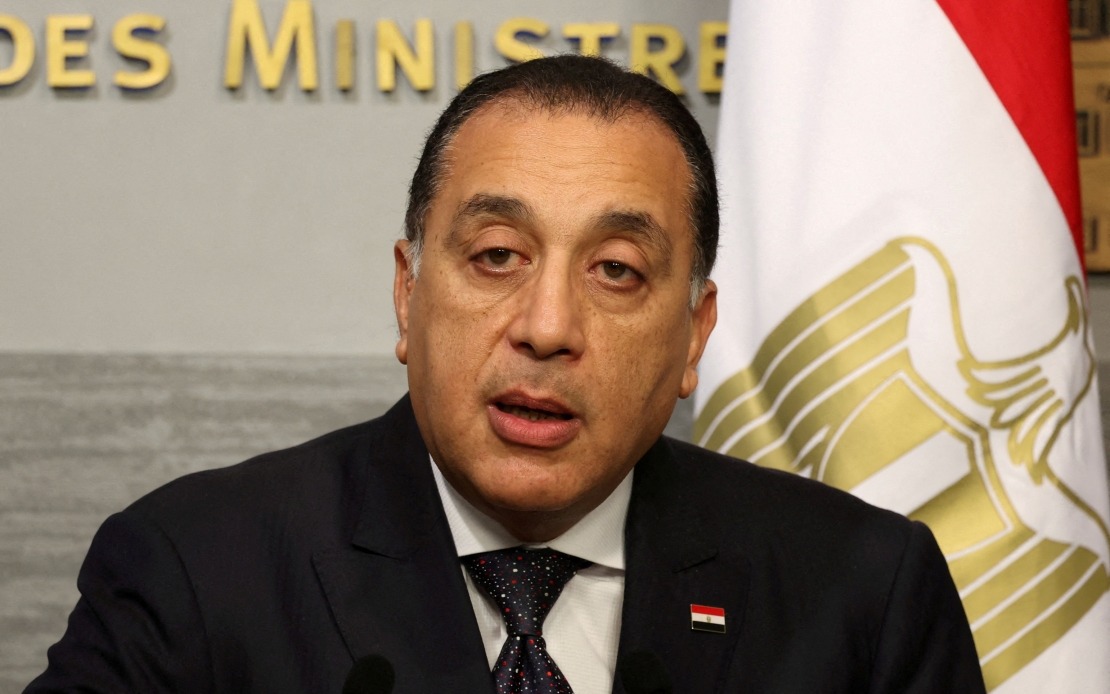
Egypt is moving forward with ambitious plans to launch its first nuclear power facility, with Prime Minister Mostafa Madbouly announcing that the initial reactor at the El Dabaa Nuclear Power Plant should begin supplying electricity to the national grid in 2028. The announcement came during a high-level meeting with Alexey Likhachev, the chief executive of Russia's Rosatom corporation, held alongside ceremonies commemorating the installation of the pressure vessel for the plant's second reactor unit. This milestone underscores the deepening energy collaboration between Cairo and Moscow, a partnership that has weathered geopolitical shifts to remain one of the Middle East's most significant nuclear infrastructure ventures.
The El Dabaa facility, situated approximately 300 kilometres northwest of Cairo in the Mediterranean coastal region of Matrouh Province, represents a transformative infrastructure project for Egypt. When fully operational, the complex will house four separate reactor units, each capable of generating 1,200 megawatts of electrical power. This translates to a total installed capacity of 4,800 megawatts, making it a cornerstone installation in Egypt's longer-term energy architecture. The sheer scale of the undertaking reflects both Cairo's escalating electricity requirements and its determination to diversify away from conventional fossil fuel dependence.
The bilateral cooperation framework underlying the project traces back to December 2017, when Egypt and Russia formalised contractual agreements that established the legal foundation for the entire enterprise. Over the intervening years, despite various international pressures and economic fluctuations affecting both nations, the two countries have maintained momentum on construction and engineering work. The steady progress through successive project phases demonstrates the institutional resilience and political commitment both governments have invested in seeing the initiative through to completion, even as regional circumstances have shifted markedly.
Madbouly characterised the El Dabaa plant as a long-deferred national aspiration that has only become achievable through the depth of cooperation with Russia. The prime minister reiterated that the government remains fully committed to adhering to the agreed implementation schedule, signalling confidence in the project's trajectory despite the complexities inherent in nuclear infrastructure development. His emphasis on meeting timelines reflects the political significance Egypt attributes to the facility, both domestically as a demonstration of government competence and internationally as proof of Egypt's technological advancement.
The nuclear expansion fits squarely within Egypt's broader energy strategy aimed at addressing chronic electricity shortages that have periodically constrained economic growth. As the nation's population continues expanding and industrial capacity demands rise, conventional generation sources—including natural gas and hydroelectric power from the Nile—have struggled to keep pace. By incorporating nuclear generation into the energy portfolio, Cairo aims to establish a more stable, diversified foundation for power supply while simultaneously reducing carbon emissions associated with thermal power stations.
Rosatom's leadership praised Egyptian authorities for their unwavering support throughout the project's execution. Likhachev outlined the phased approach to bringing the four reactors online, with the first unit entering service in 2028 and the remaining three completing their commissioning process by 2030. This staggered activation schedule reflects standard practice in nuclear project management, allowing engineers and operators to thoroughly test systems, train personnel, and establish operational protocols before progressively increasing the facility's contribution to national electricity supply.
The implications of this nuclear expansion extend beyond Egypt's borders. As the Arab world's most populous nation and a pivotal player in Mediterranean geopolitics, Egypt's energy choices carry regional resonance. The successful completion of El Dabaa would demonstrate that major nuclear projects can proceed in the Middle East despite security concerns and political volatility that have derailed similar initiatives elsewhere in the region. For neighbouring countries facing similar energy pressures, the project offers a potential template for pursuing nuclear power as a long-term solution to electricity demand.
From a Malaysian and Southeast Asian perspective, the Egyptian nuclear development holds several instructive lessons. Nations in this region pursuing comparable infrastructure projects can observe how Egypt navigates the regulatory, financial, and technical challenges inherent in establishing nuclear capacity with foreign partnership. The sustained cooperation between Cairo and Moscow despite international tensions also illustrates how energy security imperatives can transcend broader geopolitical divisions, a principle relevant to ASEAN members considering their own energy diversification pathways.
The El Dabaa project additionally underscores Russia's strategic positioning in global nuclear export markets. Even as Western companies face restrictions in certain markets, Russian nuclear technology and expertise remain sought after across Africa, the Middle East, and Asia. Egypt's commitment to the Russian partnership provides Moscow with a flagship demonstration of its nuclear capabilities and strengthens Russia's economic ties throughout the region.
Financial and technical risk management will prove critical as the project advances toward the 2028 commissioning date. Nuclear facilities demand extraordinarily precise construction standards, rigorous quality control, and comprehensive safety protocols at every phase. Any delays in component manufacturing, labour challenges, or regulatory adjustments could push timelines backward. The geopolitical environment also matters; international sanctions or diplomatic tensions could theoretically complicate supply chains or technical cooperation arrangements, though both nations appear committed to preventing such disruptions.
Successful completion of El Dabaa would enhance Egypt's technological credentials and potentially position the nation as a hub for nuclear expertise in Africa and the Middle East. The facility could support advanced medical applications, desalination processes, and industrial heat applications beyond simple electricity generation, multiplying its strategic value. Training Egyptian personnel in nuclear operations and maintenance would build domestic capacity and reduce long-term dependence on foreign specialists.
As Egypt moves toward the 2028 connection milestone, the project exemplifies how large developing economies are embracing nuclear power to bridge widening gaps between energy supply and demand. The initiative also reflects evolving international partnerships in critical infrastructure, where shared technological interests and energy security imperatives often supersede ideological or geopolitical divisions. For observers tracking global energy transitions and nuclear technology diffusion, El Dabaa represents a significant case study in how partnerships between major powers and emerging economies are reshaping the infrastructure landscape.

