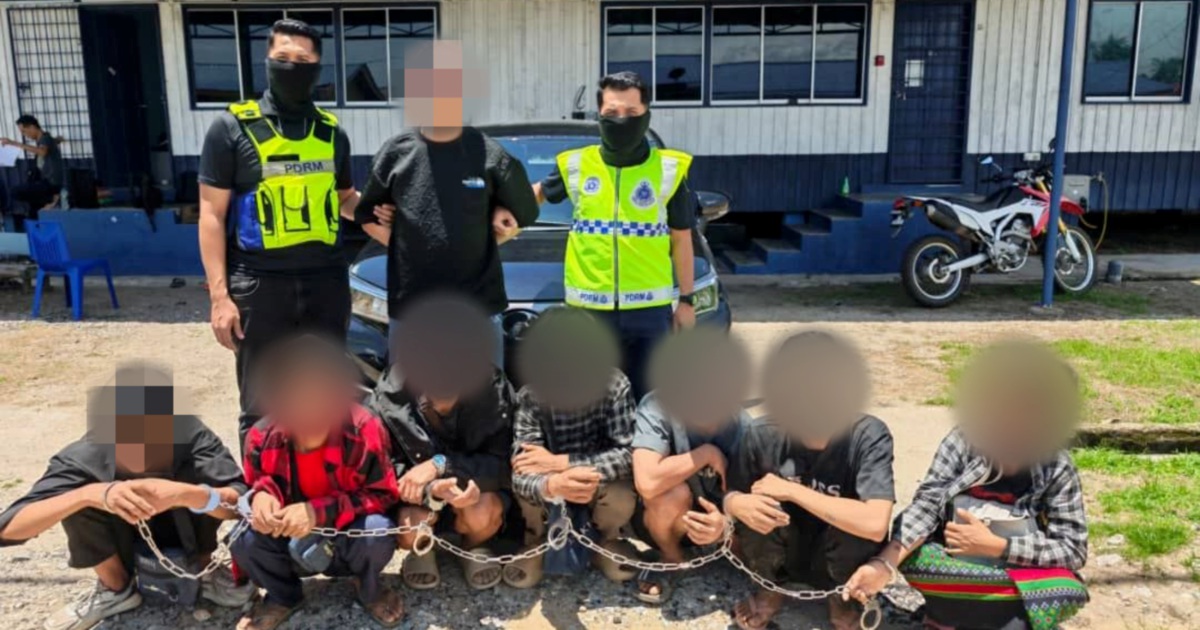
Police in Kelantan have apprehended eight suspects following a coordinated operation targeting human trafficking networks, with the arrests centring on allegations that a Malaysian national was actively transporting undocumented migrants across state lines. The operation, conducted in Kota Baru during the early morning hours, resulted in the detention of seven Myanmar nationals who are believed to have entered Malaysia illegally and were being moved through the region by organised smuggling rings.
The interception represents a significant enforcement action against the pervasive problem of migrant trafficking in Malaysia's northern states, where porous borders and established smuggling networks create persistent challenges for law enforcement. Kelantan's geography, positioned directly adjacent to Thailand and serving as a transit point for irregular migration flows, has made the state a focal point for operations targeting human smuggling syndicates that exploit vulnerable foreign workers seeking employment opportunities.
These arrests underscore the operational sophistication of migrant smuggling organisations, which typically deploy Malaysian nationals as transporters and facilitators to move foreign workers between collection points and employment sites. The involvement of local operatives is crucial to these networks' functioning, as they possess knowledge of road networks, police operations, and regional checkpoints that enable them to evade detection. By recruiting Malaysians as drivers and coordinators, smuggling rings create a buffer between foreign nationals and border authorities, complicating prosecutions and enforcement efforts.
The detention of seven Myanmar nationals points to the continued vulnerability of migrant workers from Myanmar, whose deteriorating domestic conditions have driven sustained outward migration. These individuals, often fleeing economic hardship and political instability, become dependent on smuggling networks that extract substantial fees—sometimes amounting to thousands of ringgit—promising employment in Malaysia. Upon arrival, many discover exploitative working conditions, wage theft, and virtual imprisonment, trapped within systems controlled by their traffickers.
Kelantan's migrant smuggling challenges reflect broader Southeast Asian patterns of irregular migration that have intensified in recent years. The region experiences significant cross-border movement from Myanmar, Bangladesh, and Cambodia, with Malaysia remaining a primary destination owing to perceived employment opportunities relative to origin countries. Criminal networks have institutionalised smuggling operations, establishing established routes and relationships with employers, corrupt officials, and transportation providers that facilitate the systematic movement of undocumented workers.
The operation demonstrates ongoing police efforts to disrupt these trafficking networks through checkpoint operations, intelligence-led investigations, and roadside interventions. However, law enforcement agencies acknowledge that addressing migrant smuggling requires sustained commitment, adequate resourcing, and coordination across multiple state police contingents and federal agencies. The sheer scale of irregular migration flows frequently overwhelms police capacity to identify and apprehend suspects involved in trafficking operations.
For Malaysian employers reliant on migrant labour, particularly in construction, agriculture, hospitality, and domestic work sectors, these enforcement actions represent potential disruptions to workforce continuity. Many businesses have become structurally dependent on undocumented workers willing to accept below-minimum wages and dangerous conditions, creating economic incentives for smuggling networks to continue operations. This economic demand fundamentally sustains trafficking systems despite police interventions.
The legal consequences for migrant smuggling under Malaysian law are severe, with offenders potentially facing imprisonment and substantial fines under immigration statutes. However, prosecutors acknowledge that securing convictions often proves challenging due to evidential requirements and the frequent unwillingness of migrant victims to testify against smugglers, fearing deportation and separation from family members who depend on remittances.
This bust also highlights the regional cooperation challenges in addressing transnational migration networks. While Thailand serves as a transit country and source of irregular migrants, its cooperation with Malaysian authorities on intelligence-sharing and joint enforcement operations remains inconsistent. Myanmar's ongoing instability continues generating migrant outflows that fuel demand for smuggling services, suggesting the fundamental drivers of irregular migration remain unresolved.
The arrested Malaysian suspect will likely face immigration trafficking charges that carry mandatory minimum sentences under federal legislation, signalling authorities' commitment to imposing substantial penalties on local facilitators. Prosecuting domestically recruited smugglers has become a priority strategy, recognising that dismantling networks requires removing both foreign organisers and Malaysian operatives from circulation.
Going forward, Kelantan police are expected to conduct further investigations into the smuggling network's broader structure, identifying upstream organisers, employer connections, and financial flows. Such investigations potentially could yield intelligence enabling authorities to dismantle larger segments of trafficking infrastructure, though observers note that unless addressed through comprehensive migration management reform addressing labour demand, enforcement actions will remain reactive rather than preventive.

