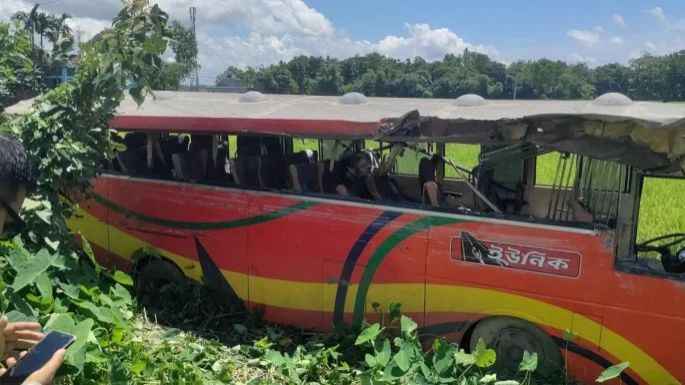
A morning commute turned tragic in Bangladesh's northeastern Sylhet region on Friday when two passenger buses collided head-on, resulting in eight deaths and leaving a quarter-century of people with injuries. The accident unfolded around 7:30 a.m. local time along a major transport corridor roughly 240 kilometres from Dhaka, the nation's capital, prompting immediate emergency response from local authorities.
According to Golam Mostafa, the officer-in-charge at Sylhet's Osmani Nagar police station, a total of 25 passengers sustained injuries ranging from minor to severe in the impact. Rescue teams worked through the morning hours to extract survivors from the damaged vehicles and transport the injured to nearby medical facilities. The precise cause of the collision remains under official investigation, with authorities examining factors ranging from driver error to possible mechanical failure or road conditions at the time of impact.
This tragedy underscores a persistent and troubling pattern across Bangladesh's transportation system. The nation has emerged as a concerning hotspot for fatal road accidents within South Asia, a distinction driven by multiple interconnected factors that extend far beyond individual incidents. Infrastructure deficiencies plague the country's highway network, with many major routes suffering from inadequate maintenance, poor signage, and structural deterioration that compounds risks during monsoon seasons or adverse weather conditions.
The condition of vehicles operating on these roads presents another critical vulnerability. Many of the buses and trucks circulating through Bangladesh lack proper maintenance schedules, with operators prioritizing cost-cutting over safety upgrades. Worn brake systems, faulty steering mechanisms, and bald tyres remain disturbingly common, transforming journeys into gambles with mortality. Passengers boarding these vehicles often have no way to assess whether they are entering a mechanically sound transport or a rolling hazard.
Driver behaviour and competency constitute perhaps the most visible element of Bangladesh's road safety crisis. A culture of aggressive driving, excessive speeding, and widespread disregard for traffic regulations has taken hold among many professional drivers competing in a cutthroat transportation industry. The incentive structure itself encourages recklessness, as drivers attempt to maximise trip frequency to earn adequate income, often operating while fatigued after extended shifts with minimal rest periods.
The regulatory framework designed to manage these risks has proven insufficient. Bangladesh's traffic department operates with limited resources and personnel relative to the volume of vehicles on the roads. Enforcement of traffic laws remains sporadic and unevenly applied, creating an environment where violations go largely unpunished. Random checks are infrequent, vehicle inspections are perfunctory, and driver licensing procedures lack rigorous testing standards that would prevent incompetent operators from obtaining credentials.
For Malaysian readers familiar with their own country's road safety challenges, the situation in Bangladesh represents a cautionary reminder of what can occur when multiple systemic failures align. While Malaysia has made significant strides in reducing fatal accident rates through investment in highway infrastructure, stricter enforcement of traffic laws, and mandatory safety features in vehicles, Bangladesh continues struggling with governance and resources issues that Malaysia resolved years ago.
The toll of such negligence extends beyond the immediate victims and their families. Each fatal collision represents economic loss—productivity lost, medical expenses incurred, and resources diverted toward crisis management rather than prevention. The emotional and social costs ripple through communities, particularly in regions where intercity buses serve as vital economic connectors.
Regional observers note that Bangladesh shares transport and regulatory challenges common to several developing nations in South Asia and Southeast Asia. However, the severity of the problem in Bangladesh appears more acute, with annual fatality rates per vehicle substantially exceeding those in neighbouring countries. This disparity suggests that targeted interventions could yield measurable improvements, provided sufficient political will and investment materialise.
Addressing Bangladesh's road safety crisis would require coordinated action across multiple domains simultaneously. Infrastructure investment must prioritise highway rehabilitation and safety features such as proper lane markings, barriers, and emergency shoulders. Vehicle regulation needs strengthening through mandatory periodic inspections with meaningful enforcement consequences for non-compliance. Driver training and licensing must become genuinely rigorous, with periodic retesting and strict penalties for serious violations.
Crucially, the transportation industry itself requires restructuring to remove incentives for dangerous behaviour. Regulatory frameworks could mandate maximum driving hours, require adequate rest periods, and establish compensation structures that reward safe operation rather than maximum mileage. Technology adoption, including speed governors, dash cameras, and collision avoidance systems, could provide additional layers of protection.
The eight lives lost in Sylhet on Friday represent individual tragedies—families bereaved, communities shaken, and potential unfulfilled. Yet they also serve as a data point in a larger narrative of preventable suffering that Bangladesh must confront. The collision itself was an accident; the conditions enabling such accidents remain thoroughly foreseeable and addressable through deliberate policy choices. Until Bangladesh prioritises road safety with the same intensity it brings to other developmental challenges, such tragedies will regrettably persist.

