Eight men have been indicted by a federal grand jury in Columbus on serious terrorism-related charges connected to an alleged plot targeting a mixed martial arts event that took place at the White House compound in mid-June, the US Department of Justice announced this week. The conspirators face multiple counts including conspiracy to provide material support to terrorists, conspiracy to commit murder on federal property, and conspiracy to murder a federal government official—charges that carry potential life sentences upon conviction.
The scheme uncovered by law enforcement officials reveals a multi-stage attack plan of considerable sophistication. Prosecutors say the defendants intended to deploy explosive-laden unmanned drones around the venue to create chaos and force evacuations of attendees. Once the targeted individuals fled the gathering, the plotters allegedly planned to position snipers at strategic locations to eliminate what they termed "high-value targets" among those leaving the site. The coordinated use of both aerial and ground-based weaponry demonstrates the operational complexity the authorities believe was being organised.
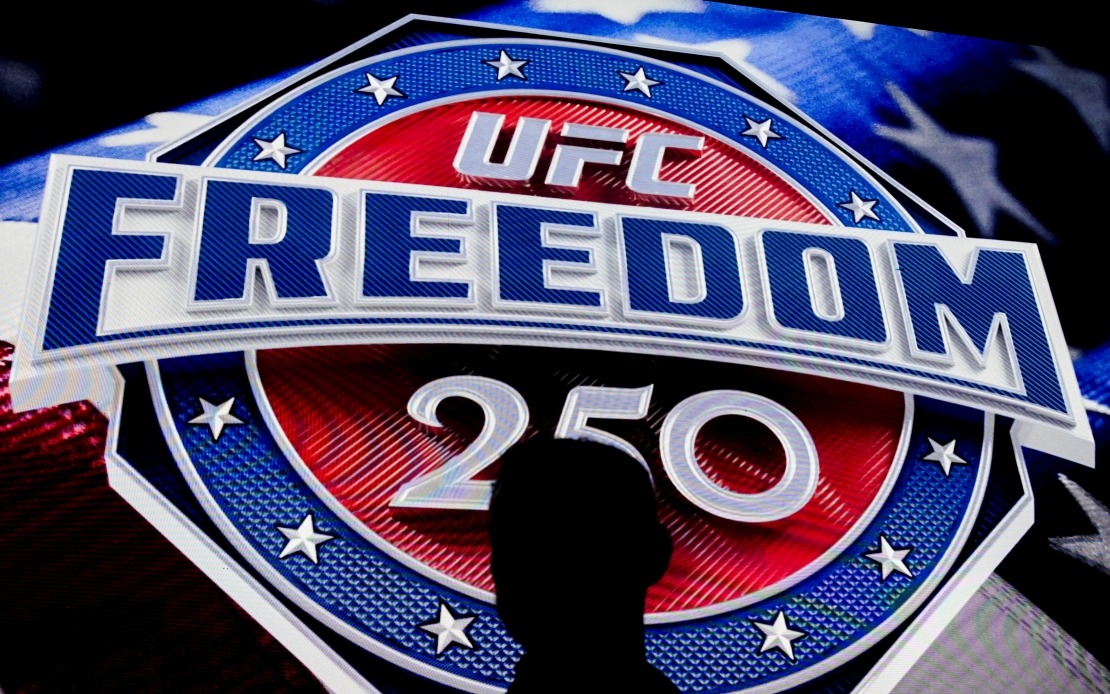
The Ultimate Fighting Championship (UFC) had hosted an event titled "UFC Freedom 250" on June 14 at a specially constructed arena situated outside the South Lawn of the White House. The gathering drew President Donald Trump, members of his immediate family, and several senior cabinet officials to what was ostensibly a celebration marking the 250th anniversary of American independence. While the timing coincided with Trump's 80th birthday, organisers officially framed the event within the broader independence commemoration framework, even though the nation's Independence Day falls on July 4.
Five of the defendants had been arrested earlier in the investigation, but the case gained additional momentum with the apprehension of an eighth suspect this week in West Virginia. That individual, a 21-year-old man, prosecutors assert was specifically designated to function as a sniper in the alleged attack scheme. His younger age and his assigned role in the purported conspiracy underscore the breadth of the recruitment net that investigators say the plotters had cast.
The discovery of this alleged conspiracy illustrates the persistent threat environment surrounding major national security events in the United States, particularly those involving the President and high-level government officials. The White House and associated federal agencies maintain extensive intelligence and protective protocols precisely because of scenarios such as the one authorities have described. The existence of such a coordinated plot—spanning multiple individuals across state lines and involving procurement and preparation of specialized weaponry—points to a conspiracy of substance rather than merely idle threat-making.
For Malaysian observers monitoring developments in American security affairs, this incident underscores the resource intensity required to protect high-profile national events. The Southeast Asian region, with its own experience of managing large-scale gatherings and ceremonial occasions, faces comparable protective challenges when hosting international delegations and senior officials. The sophistication attributed to this alleged conspiracy—particularly the multi-layered approach involving both drone technology and positioned personnel—reflects evolving tactics that security planners worldwide must anticipate and counter.
The federal prosecution of such cases typically unfolds over an extended timeline, with grand jury proceedings followed by trial proceedings that consume months or years. The life-sentence potential indicates that prosecutors view the allegations with exceptional gravity. The coordination demonstrated across state lines and the apparent premeditation involved suggest that investigators uncovered communications and planning documents substantiating the charges rather than fragmentary evidence.
From a regional security perspective, the American experience with drone-enabled threats carries particular relevance to Southeast Asia, where such technology has proliferated and where security agencies continue developing countermeasures. The plotters' apparent selection of this delivery mechanism reflects a broader pattern observable globally of non-state actors attempting to acquire and repurpose commercially available technology for destructive purposes. Malaysia and neighbouring countries maintain their own counter-drone and air-defense capabilities, informed partly by observing international threat developments.
The involvement of a sniper element in the alleged plot harks back to decades of American experience with motivated individuals or small groups attempting attacks on symbolic targets or high-value personnel. The FBI and Secret Service, operating under the Department of Justice, maintain extensive networks of informants and surveillance capabilities specifically designed to detect and disrupt such schemes before they reach operational stages. The successful interdiction of this alleged plot represents another instance of those preventive systems functioning as intended.
Broad questions persist about the ideological motivation animating the alleged plotters. Federal prosecutors typically establish such motivation through communications records, extremist material, and witness testimony during trial proceedings. The timing relative to Trump's tenure and the specific targeting of a presidential event naturally invites consideration of the broader political and social environment within which such alleged conspiracies emerge and are discovered.

