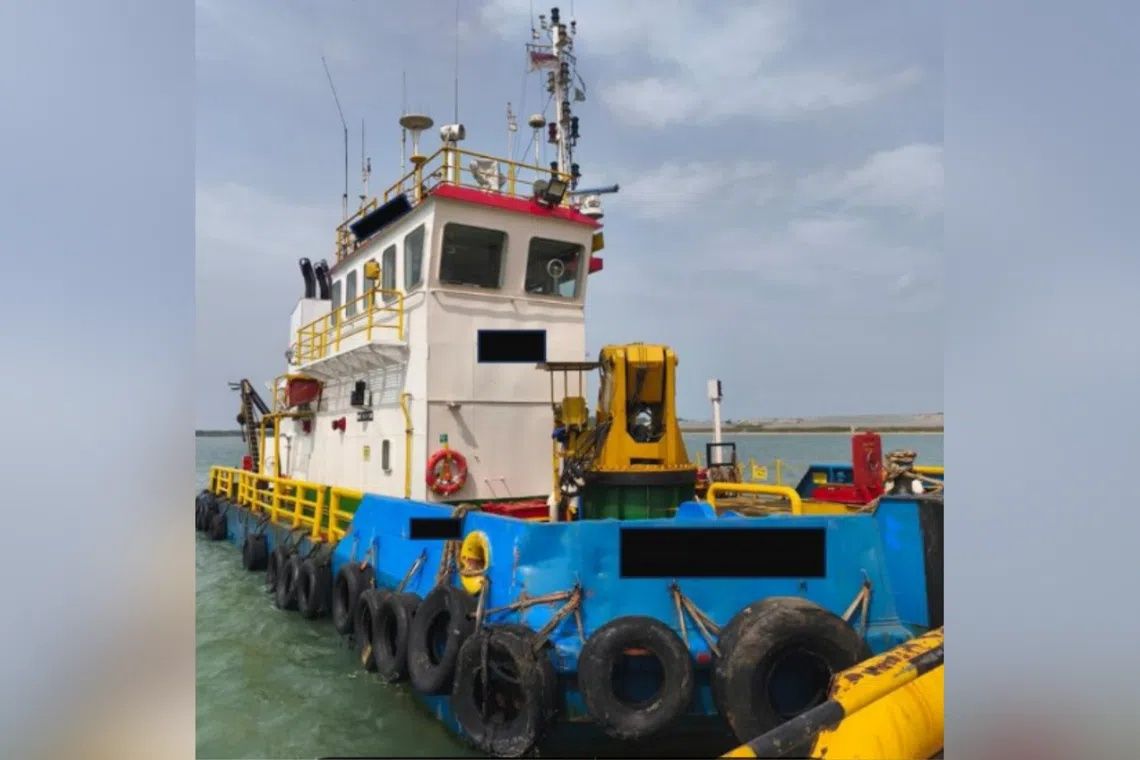
A coordinated enforcement operation by Singapore's Police Coast Guard has resulted in the detention of eight men accused of orchestrating an unlawful fuel heist from a commercial tugboat, underscoring persistent concerns about maritime crime in one of the world's busiest shipping corridors. The suspects, ranging in age from 25 to 54 years old, are scheduled to appear in court on Friday, August 14, facing charges related to the alleged misappropriation of marine gas oil. The predawn raid on August 13 at approximately 1.05 am targeted a Singapore-registered tugboat operating in the waters adjacent to Tuas, a densely trafficked industrial zone that serves as a crucial hub for Singapore's petroleum and logistics operations.
According to police investigations, the accused crew members exploited their positions aboard the vessel to divert approximately S$10,570 worth of marine gas oil through what authorities characterize as an illegal commercial transaction conducted entirely without the knowledge or consent of their employer. The scheme apparently involved the systematic removal of fuel quantities from the tugboat's tanks, which were subsequently sold through unofficial channels to generate illicit personal income for those involved. This type of theft represents a particularly brazen violation of trust, as maritime workers entrusted with expensive fuel supplies weaponized their access and operational knowledge for financial advantage.
The charges contemplated against the detained men fall under the specific provision of theft by servant of property in possession of master, a designation that reflects the hierarchical nature of maritime employment and the unique legal framework governing shipboard crimes. This particular offense categorization acknowledges that crew members occupy a position of trust and custodianship over company assets while aboard a vessel, rendering their unlawful diversion of resources especially serious in the eyes of the law. Should the prosecution successfully establish guilt beyond reasonable doubt, individual defendants face substantial penalties including potential imprisonment extending up to seven years alongside financial fines, creating meaningful consequences intended to deter similar conduct among maritime workers throughout the region.
Singapore's response to this incident reflects the nation's increasingly stringent posture toward maritime crime and fuel theft, which constitute significant threats to port security and the integrity of global shipping operations. The Port of Singapore, ranked among the world's largest and most important transshipment hubs, handles millions of tonnes of marine fuel annually and faces constant vulnerability to organized theft rings targeting valuable petroleum products. Criminal organizations have repeatedly attempted to exploit the complexity of maritime commerce and the constant movement of vessels through congested waters to facilitate fuel smuggling and theft operations that compromise supply chain security across Southeast Asia.
The Police Coast Guard's preventive capacity has grown substantially in recent years as authorities recognize that proactive maritime patrols and random inspections of commercial vessels constitute essential components of comprehensive port security architecture. The operation that led to these arrests exemplifies the type of intelligence-driven enforcement that distinguishes effective maritime policing from reactive responses to reported crimes. By conducting systematic checks during overnight hours when illicit activities are more likely to occur undetected, coast guard personnel increase the perceived risk calculus for potential offenders while demonstrating visible commitment to maintaining order within Singapore territorial waters.
From a regional perspective, the persistent challenges surrounding marine fuel theft carry significant implications for Southeast Asian maritime security and the broader operating environment for legitimate commercial shipping. Malaysia, Indonesia, Thailand, and other nations sharing crowded shipping lanes with Singapore have likewise struggled with fuel theft operations conducted by sophisticated criminal networks that exploit gaps in enforcement and exploit complicit maritime workers. The successful investigation and prosecution of cases such as this one sends important signals throughout the region that professional maritime personnel face real consequences for participation in illegal transactions, potentially encouraging higher compliance standards across regional shipping companies and crew rosters.
The incident also highlights vulnerabilities in supply chain oversight and the challenges posed by crew management systems that may not adequately monitor fuel consumption patterns or detect suspicious inventory discrepancies in real time. Modern maritime operations increasingly incorporate sophisticated fuel tracking technologies and inventory management systems designed precisely to prevent the type of systematic theft described in this case. However, determined workers with specialized knowledge of vessel operations and supply procedures can sometimes circumvent technological controls through social engineering, collusion with shore-based accomplices, or exploitation of operational gaps during port calls and transit operations.
Singapore's official response underscores the government's unambiguous position that maritime crime jeopardizes not merely individual commercial interests but the broader security architecture that enables efficient port operations and safeguards the strategic importance of Singapore's maritime domain. The statement emphasizing police commitment to preventing, deterring, and detecting illicit activities in Singapore waters reflects recognition that maritime enforcement requires sustained investment and professional capacity building among coast guard personnel responsible for monitoring vast ocean areas. The visibility of coordinated operations and public communication regarding enforcement successes contribute substantially to the deterrent effect that formal punishment alone cannot achieve.
For Malaysian shipping companies and maritime operators, this incident serves as a cautionary reminder regarding the necessity of implementing rigorous crew vetting procedures, establishing clear accountability mechanisms, and maintaining vigilant oversight of fuel and cargo management practices throughout their operations. Many regional operators have adopted stricter protocols following high-profile theft incidents, recognizing that reputational damage and insurance complications resulting from security breaches extend far beyond direct financial losses. The investigation also underscores the value of information sharing between maritime authorities across Southeast Asia, where coordinated intelligence regarding suspicious vessels and known criminal networks enhances regional capacity to disrupt organized fuel theft operations before they escalate into larger schemes.

