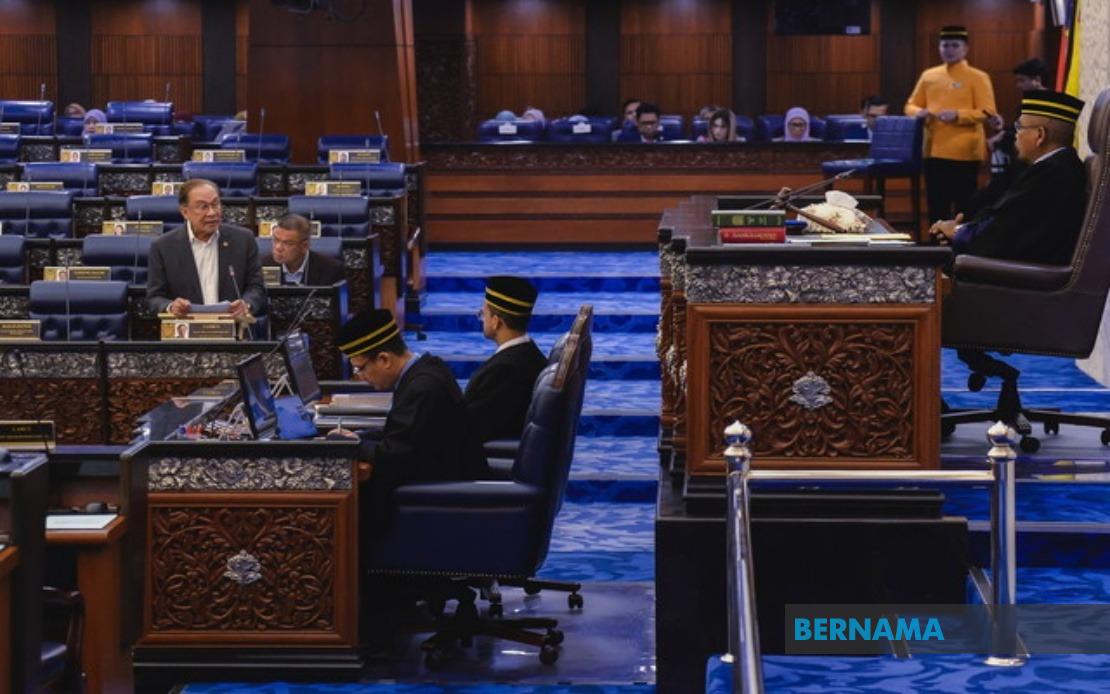
Prime Minister Datuk Seri Anwar Ibrahim has restated Malaysia's strict electoral regulations governing government announcements during campaign periods, emphasising that the prohibition on unveiling new projects or introducing fresh policy initiatives during elections remains firmly in place. Speaking in Parliament during Minister's Question Time, Anwar addressed concerns about enforcement and compliance as three states prepare for upcoming elections, underlining that the restriction operates under the framework of Section 24B of the Election Offences Act 1954.
The government's stance reflects a long-standing commitment to ensuring electoral integrity and preventing the misuse of state machinery for political advantage. Anwar clarified that once nomination day has been declared, campaigning may commence, but with a critical caveat: neither the federal government, state administrations, nor municipal authorities may promote newly conceived projects or announce previously unallocated policies during this sensitive period. This restriction extends across all levels of government administration, creating a uniform standard that applies regardless of which entity or department would ordinarily handle such announcements.
The Prime Minister's clarification came in response to Datuk Seri Dr Shahidan Kassim of Perikatan Nasional, representing the Arau constituency, who sought confirmation that the longstanding ban on government allocations and project announcements after nomination day would continue to be enforced. Shahidan's question specifically addressed compliance mechanisms, reflecting legitimate parliamentary interest in how authorities would oversee adherence to electoral rules during the forthcoming contests in Johor, Melaka and Negeri Sembilan. His inquiry highlighted an ongoing concern about the potential for government resources to be leveraged inappropriately during competitive election cycles.
The distinction Anwar drew between prohibited and permissible announcements carries significant practical implications for government operations during election periods. Projects that have already received formal approval and secured funding allocations within a previous federal budget may legitimately be announced without breaching electoral statutes. This nuance prevents the complete cessation of government communications and allows the continuation of public information about previously committed initiatives. However, any announcement of fresh commitments, newly conceived projects, or policy proposals originating during the campaign period itself remains strictly forbidden, regardless of their potential merit or public benefit.
The election law framework serves a fundamental democratic function by preventing incumbent governments from leveraging their administrative capacity and budgetary control to sway voters through the strategic timing of popular announcements. By prohibiting the announcement of new projects during campaign periods, the legislation aims to level the playing field between ruling and opposition parties, ensuring that electoral competition is determined by policy platforms and candidate quality rather than the ability to promise immediate material benefits. This principle has become increasingly important in Malaysian electoral politics, where voter concerns about development and tangible government investment frequently influence outcomes.
Anwar's restatement of these rules carries particular weight given recent electoral contests and ongoing discussions about electoral fairness. The approach balances governmental continuity with electoral integrity—acknowledging that essential services and previously committed investments must continue, whilst preventing the systematic use of government patronage networks to influence campaign outcomes. This principle extends beyond merely announcing projects; it encompasses the broader concept of preventing government machinery from being mobilised as a campaign tool.
The upcoming state elections in Johor, Melaka and Negeri Sembilan will serve as a test case for enforcement of these principles. Election observers and political analysts will likely scrutinise government announcements and resource allocation during the campaign period, examining whether all parties—government and opposition—adhere to the established rules. The clarity provided by Anwar's parliamentary statement establishes clear benchmarks against which compliance can be measured, reducing ambiguity about what constitutes a violation.
Enforcement mechanisms for electoral law infractions involve multiple institutional actors, including election commission officials, law enforcement agencies, and judicial bodies. The challenge of monitoring government activity across federal, state and local levels requires coordination and sustained attention throughout campaign periods. Previous elections have generated disputes about the precise application of these rules, particularly when government agencies announce ongoing programmes or initiatives that might arguably constitute new projects. Anwar's clarification attempts to establish firmer demarcation lines.
The regulatory framework reflects broader Southeast Asian trends toward strengthening electoral governance and public confidence in democratic processes. Malaysia's approach, codified in the 1954 Election Offences Act and refined through subsequent amendments and judicial interpretations, represents an attempt to maintain democratic legitimacy whilst acknowledging the reality that governments must continue functioning during election periods. Other regional democracies have adopted similarly structured prohibitions, recognising that without such constraints, governing parties maintain inherent structural advantages.
For voters and political observers, Anwar's restatement provides reassurance about the parameters of acceptable government conduct but also highlights the importance of vigilance. Citizens and opposition parties should monitor government activities during campaign periods, reporting apparent violations to appropriate authorities. The credibility of electoral regulations ultimately depends on consistent, transparent enforcement across all government entities and at all administrative levels.
Looking forward, the clarification issued during this parliamentary session establishes the government's position heading into the state elections, signalling to all government departments and agencies that strict adherence to electoral rules is expected. Whether implementation remains consistent across all government institutions, particularly at the state and local level where political pressures may be most acute, will ultimately determine whether the principle achieves its intended effect of protecting electoral fairness and maintaining public confidence in democratic processes.

