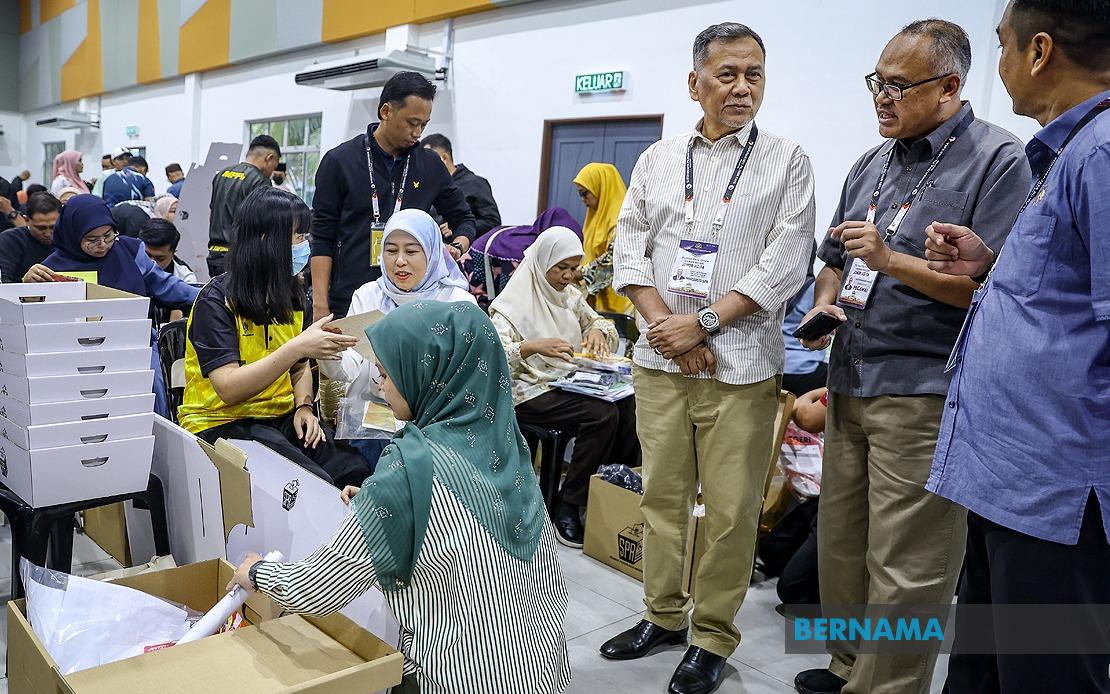
With Johor's 16th state election set to commence tomorrow, the Election Commission has concluded extensive final preparations across the state to guarantee a seamless voting process for millions of registered electors. EC Chairman Datuk Seri Ramlan Harun confirmed today that thorough verification of ballot boxes and election apparatus for all 56 state seats has been completed, underscoring the commission's commitment to operational readiness on polling day.
The verification process represents a crucial safeguard in the electoral framework, designed to eliminate potential irregularities and build public confidence in the democratic process. This meticulous approach proves especially significant given the stakes involved in tomorrow's contest, which will determine which coalition commands the Johor State Assembly for the next five-year term. The chairman emphasised that the integrity checks facilitate the participation of 2.7 million registered voters in fulfilling their fundamental civic obligations.
Across the state, Returning Officers stationed at 56 constituency centres have substantially completed their assigned duties, paving the way for smooth operations from first light tomorrow. The EC chairman's site inspections at the Sultan Ibrahim Jubilee Hall in Pontian and the Permas Multipurpose Hall in Kukup provided him with first-hand assurance regarding on-the-ground readiness levels. These visits underscore the EC's hands-on approach to quality assurance during this critical pre-election window.
On-ground observations reveal the granular nature of preparations underway at individual polling venues. At Sekolah Kebangsaan Bukit Mutiara, EC personnel have labelled materials methodically, arranged polling stations, and installed navigation signage to guide voters through the process. Within the Puteri Wangsa constituency, 74 election officials will supervise operations across 12 converted classrooms, supported by 12 police officers maintaining order and security. The commission has made specific provisions for elderly citizens and individuals with disabilities, reflecting a commitment to inclusive electoral participation.
Similar preparations have progressed across Johor's diverse constituencies. In Kluang, the Mahkota constituency's polling centre at Sekolah Kebangsaan Kampong Melayu is establishing five polling streams to process approximately 3,000 voters efficiently, coordinated by 30 personnel. The Batu Pahat district, particularly in Yong Peng, has emphasised accessibility for senior voters, younger electors, and persons with disabilities at Sekolah Menengah Kebangsaan Dato' Seth.
Maritime constituencies present distinct logistical challenges requiring tailored solutions. In Tenggaroh, Mersing, election officials face the complex task of transporting ballot boxes to four island communities—Pulau Aur, Pulau Pemanggil, Pulau Sibu, and Pulau Tinggi—via the Mersing Jetty. This operation necessitates approximately 50 personnel working in coordination with the Marine Police Force and local district police headquarters to safeguard electoral assets during maritime transit. The tight security protocols reflect recognition of the inherent vulnerability of island-based voting infrastructure.
Election commission officials have issued guidance to voters regarding conduct on polling day. The public has been encouraged to visit assigned polling centres during designated time slots to minimise queuing and congestion, particularly important in high-density constituencies. Citizens are reminded to bring valid identity documentation and comply with instructions from polling staff to maintain orderly proceedings. These measures aim to facilitate rapid vote-casting whilst ensuring procedural adherence.
The electoral contest itself encompasses a notably competitive field, with 172 candidates contesting the 56 state assembly seats. Two major coalitions—Pakatan Harapan and Barisan Nasional—have fielded candidates across every constituency, signalling their commitment to the outcome. Perikatan Nasional has nominated 33 candidates, whilst smaller parties and independent candidates contribute to the competitive landscape. This configuration includes Parti Bersama Malaysia fielding 15 candidates, MUDA contesting four seats, and the Malaysian Orang Asli Party and Socialist Party of Malaysia each running one candidate alongside six independent hopefuls.
The breadth of participation reflects the competitive dynamics shaping contemporary Malaysian state politics. Unlike federal elections where three-cornered contests remain occasional, multi-party competition at the state level illustrates how opposition fragmentation and coalition-building strategies have evolved since 2018. For Johor specifically, the contest carries weight beyond the state itself, as results may signal broader trends affecting federal-level coalition calculations and regional political momentum.
For Malaysian voters and political observers, tomorrow's election provides empirical data regarding electoral preferences and coalition support within a crucial economic and demographic centre. Johor, home to substantial manufacturing capacity, port infrastructure, and cross-border linkages with Singapore, carries economic significance beyond its state assembly responsibilities. Poll outcomes may influence business confidence and investor perceptions regarding political stability in the region.
The EC's methodical preparation process reflects institutional learning from previous elections whilst addressing the practical complexities inherent in Johor's geography and demographics. The attention devoted to accessibility arrangements acknowledges Malaysia's ageing population and growing consciousness regarding inclusive democratic participation. These ground-level details, though procedurally routine, carry symbolic weight regarding the legitimacy and accessibility of electoral institutions.
As voting commences tomorrow across all 56 constituencies, the infrastructure and planning investments finalised today will determine whether the democratic process unfolds without friction. The commission's completion of verification procedures and deployment of adequate personnel across vastly different polling environments—from urban centres to island communities—demonstrates institutional capacity to manage complex logistics. Whether all 2.7 million registered voters can participate smoothly remains contingent upon maintaining this operational momentum through polling day itself.

