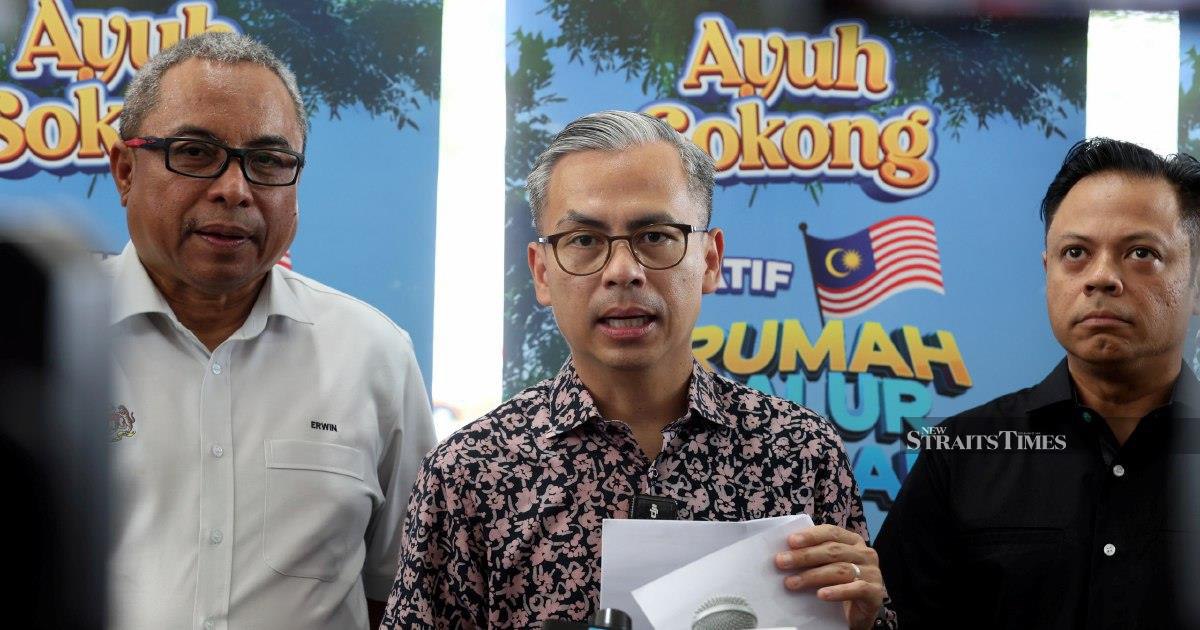
Prime Minister Datuk Seri Anwar Ibrahim has instructed the Election Commission to prepare an updated report on Sarawak's bid to create 17 new state assembly seats, according to government spokesman Datuk Seri Fahmi Fadzil. The directive signals active consideration of the easternmost Malaysian state's long-standing request to expand its legislative representation, a proposal with significant implications for electoral boundaries and political representation across Borneo's largest region.
Sarawak, which holds substantial autonomy over state affairs under Malaysia's federal structure, has been advocating for additional seats to better reflect its population distribution and development patterns. The proposal to add 17 seats would represent a meaningful expansion of the 82-member state assembly, fundamentally reshaping the political landscape in a state that has historically wielded considerable influence within national coalition politics. Such an expansion would increase the assembly's total to 99 seats, substantially altering constituency dynamics and potentially affecting the balance of power within existing political blocs.
The Election Commission's involvement underscores the technical complexity involved in implementing boundary redelineation across Sarawak's vast territory. The state encompasses multiple divisions spanning hundreds of kilometers, from coastal urban centres like Kuching and Sibu to vast rural and indigenous areas. Creating new constituencies requires meticulous analysis of population distribution, geographical accessibility, administrative boundaries, and practical governance considerations. The EC's updated report will likely assess demographic shifts, urbanisation trends, and whether current seat allocation adequately represents all communities across the state's diverse landscape.
Sarawak's political significance within the Malaysian federation extends beyond its 24 parliamentary seats. As a major component of the current ruling coalition, Sarawak-based politicians occupy key ministerial positions and wield influence disproportionate to the state's population. Adding 17 assembly seats could strengthen local representation for communities feeling marginalised by current boundaries and potentially entrench the state's political bloc's leverage within national arrangements. The proposal reflects broader tensions between federal redistribution authority and state autonomy that characterise Malaysian federalism.
Previous boundary reviews in Malaysia have proven contentious, with opposition parties and civil society organisations frequently challenging redelineation processes. Concerns about gerrymandering, rural-urban disparity in constituency sizes, and the dilution of urban voting power have accompanied nearly every major electoral boundary adjustment in recent decades. Sarawak's proposal will likely face similar scrutiny, particularly from parties advocating electoral reform and more equitable representation. The EC's updated analysis will need to address these broader accountability questions while maintaining technical credibility.
The timing of this directive carries political weight. Coming from the Prime Minister's office, it suggests cabinet-level attention to state-level governance issues and coalition management. Sarawak maintains considerable autonomy over state matters and has historically negotiated aggressively for federal recognition of its particular interests. The government's responsiveness to this request may reflect broader coalition stabilisation efforts and efforts to strengthen ties with east Malaysian stakeholders who represent crucial parliamentary votes.
For voters and political parties in Sarawak, the outcome of this EC review could substantially reshape electoral competition. New constituencies would create opportunities for political advancement, potentially fragmenting existing power bases or consolidating particular party strongholds depending on boundary designs. Opposition parties will scrutinise the methodology carefully, as boundary arrangements significantly influence electoral outcomes. The stakes extend beyond Sarawak itself, as changes to state representation could affect national parliamentary composition if seat creation subsequently influences political alignment and coalition dynamics.
The EC's previous boundary reviews have faced criticism for insufficient consultation with affected communities and political parties. An updated report on Sarawak's proposal will require engagement with diverse stakeholders including urban and rural representatives, indigenous community leaders, and political parties across the spectrum. Transparency in the review process will be crucial for public confidence in the outcome, particularly given the sensitive nature of electoral boundary changes and their direct impact on representation and democratic legitimacy.
Implementing 17 new assembly seats would require corresponding amendments to Sarawak's state constitution and supporting legislation, a process requiring state assembly supermajorities. The political feasibility will depend on whether seat creation proposals prove acceptable to the state government and assembly members concerned about their existing constituencies. The EC's analysis will provide the technical foundation for subsequent political negotiations between federal authorities and the Sarawak government regarding implementation timelines and practical arrangements.
Looking forward, the Election Commission's updated report will likely become a crucial reference document in Malaysian electoral politics. Whether it recommends endorsing Sarawak's proposal, suggesting modifications, or recommending alternative approaches will significantly influence state and federal political calculations. The review process itself offers an opportunity for the EC to demonstrate commitment to equitable representation while addressing legitimate concerns about current constituency configurations. For Malaysia's broader democratic development, how this boundary review unfolds will signal whether federal institutions can balance state autonomy with national electoral standards and public confidence in fair representation.

