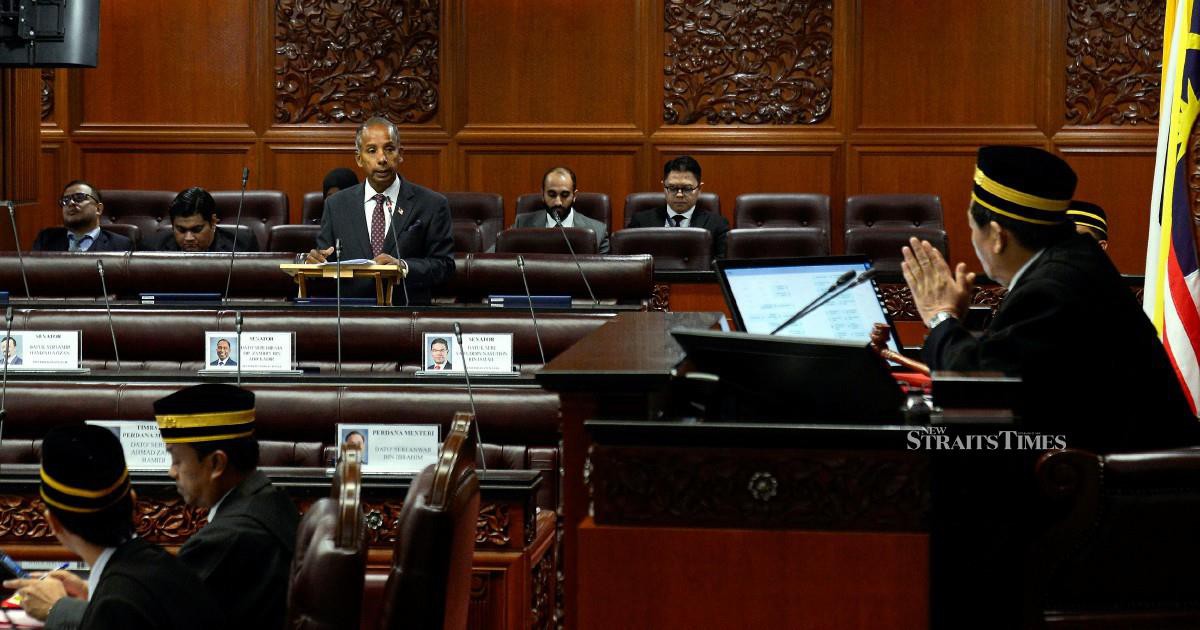
The Election Commission has agreed to investigate an initiative that would potentially broaden the scope of postal voting to include auxiliary police personnel deployed across Malaysia's most sensitive installations. Deputy Minister in the Prime Minister's Department (Law and Institutional Reform) M. Kulasegaran announced the move in Kuala Lumpur, signalling tentative support from the government for measures intended to facilitate electoral participation among security personnel.
Auxiliary police forces form a critical component of Malaysia's domestic security apparatus, with their responsibilities centring on the protection of strategically important facilities and infrastructure networks that are deemed vital to national operations. These officers often work in environments and schedules that make conventional voting participation challenging, including remote locations, shift-based rosters, and mandatory presence at protected sites during polling periods. The practical difficulties faced by these personnel in exercising their constitutional voting rights have become an ongoing concern for policymakers and administrative bodies.
The proposal represents a recognition that existing electoral mechanisms may inadvertently create barriers for certain categories of workers whose occupational duties serve the state interest. By extending postal voting facilities specifically to auxiliary police, the government would acknowledge that professional obligations to secure critical national assets should not result in disenfranchisement or diminished access to the democratic process. This principle aligns with broader international practices where election authorities accommodate security personnel with alternative voting mechanisms.
Postal voting has previously been available in Malaysia to specific groups, though the current framework remains relatively restricted compared to some neighbouring democracies in Southeast Asia. The introduction of postal facilities for auxiliary police would represent a modest expansion of this system, though questions remain about how extensively such provisions might ultimately extend to other occupational groups facing similar scheduling constraints. The Election Commission's willingness to conduct a formal study suggests that administrative and logistical feasibility will form the basis of their deliberation.
Implementing such a system would require careful design to ensure voting integrity while removing practical obstacles. Authorities would need to establish protocols for verifying voters, managing paper or digital ballot submissions, and preventing any potential misuse of postal mechanisms. The logistics become considerably more complex when considering the geographical dispersion of auxiliary police units across the nation and the need to coordinate with multiple agencies responsible for critical infrastructure security.
The timing of this initiative comes amid broader discussions in Malaysia about electoral accessibility and the barriers facing various demographic and occupational groups. Public sector employees, healthcare workers, and military personnel in other countries have successfully utilised postal voting systems, and adapting such models to the Malaysian context could serve as a preliminary step toward more comprehensive electoral reform. However, policymakers must balance inclusivity with security concerns inherent to the voting process itself.
From a regional perspective, Southeast Asian nations have demonstrated varying approaches to ensuring that uniformed and auxiliary personnel can participate meaningfully in elections. Some countries have established dedicated voting periods for security forces, while others employ postal or proxy mechanisms. Malaysia's consideration of postal voting for auxiliary police reflects a gradual evolution toward recognising that democratic participation and professional security obligations should not constitute competing demands.
The Electoral Commission's study will likely examine international best practices, assess the estimated number of auxiliary police requiring such facilities, and evaluate the administrative machinery necessary for implementation. Additionally, the review process should address concerns about maintaining electoral secrecy and preventing any perception that voting choices might be influenced by workplace pressures or command structures, particularly important for personnel working in hierarchical security environments.
Road testing the system through a phased implementation with auxiliary police could also generate valuable data for future expansion of postal voting to other occupational categories facing similar challenges. Teachers on examination invigilation duty, healthcare workers during epidemiological emergencies, and airport security personnel represent other groups whose professional obligations sometimes conflict with standard polling day participation. A successful auxiliary police pilot programme might establish a template for broader reforms to electoral access.
Kulasegaran's announcement reflects administrative pragmatism rather than revolutionary change, yet it acknowledges a legitimate gap in the current system. The eventual outcome will depend on whether the Election Commission's study identifies workable solutions that satisfy both the practical needs of auxiliary police and the institutional safeguards required to protect electoral integrity. This initiative, though seemingly technical in nature, symbolises the ongoing refinement of Malaysia's democratic infrastructure to accommodate an increasingly complex security and workforce environment.

