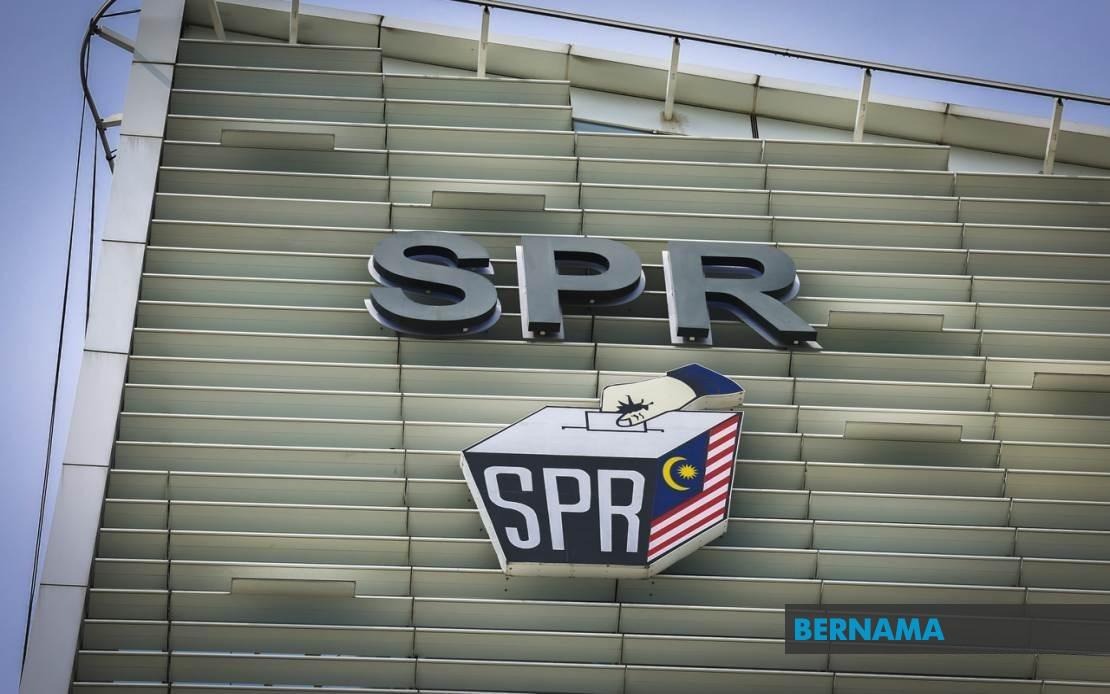
Malaysia's Election Commission will undertake a comprehensive examination of a proposal to extend postal voting privileges to auxiliary police officers deployed across the country's strategic facilities and essential services. Deputy Minister in the Prime Minister's Department (Law and Institutional Reform) M. Kulasegaran made this announcement in Parliament, confirming that the commission has formally acknowledged the initiative and will weigh its merits against operational, legal, and procedural considerations.
The proposal emerged from Senator Datuk Salehuddin Saidin, who raised concerns about the estimated 27,000 auxiliary police officers currently working without early or postal voting eligibility. These officers are stationed throughout Malaysia's critical sectors, including government ministries, airports, ports, energy utilities, financial institutions, and petroleum facilities. Unlike regular police and armed forces personnel, auxiliary police remain ineligible for the existing postal voting categories despite fulfilling similar security functions and facing comparable scheduling constraints during elections.
Salehuddin's motion highlighted a significant operational dilemma for security agencies. Releasing all auxiliary police officers simultaneously for voting on polling day could compromise security at strategically important locations where their presence is mandatory. This creates a genuine conflict between citizens' democratic rights and national security imperatives. The senator argued that a tailored solution allowing officers on duty to vote early or by post would resolve this tension without disrupting either the electoral process or protective operations.
Currently, Malaysia's postal voting system accommodates three defined categories under existing regulations. Category 1A covers Election Commission staff, election workers, members of the armed forces and police, and accredited media personnel actively engaged during the election period. Category 1B extends to Malaysian citizens permanently residing abroad. Category 1C encompasses selected government department and agency personnel required to work on polling day. Auxiliary police officers fall outside all three classifications, creating a regulatory gap that Salehuddin sought to address.
Kulasegaran indicated that the Election Commission's review will necessarily consider multiple dimensions beyond simple eligibility expansion. The commission must evaluate how auxiliary police voting arrangements would integrate with existing operational requirements, examine whether current election law and regulations permit such modifications, and determine implementation mechanisms that maintain electoral integrity. The deputy minister emphasized that any changes must preserve the smooth functioning of both the voting process and critical government services across Malaysian infrastructure.
To facilitate voting participation more immediately, Kulasegaran also encouraged auxiliary police and all citizens to consider transferring their voter registration to their current place of residence rather than maintaining constituencies tied to their hometown. This practical suggestion would allow officers to vote locally at their posted locations without requiring leave or postal facilities, though it addresses only those willing to shift their registration rather than those preferring to vote in their original constituencies.
The auxiliary police workforce spans an impressively broad range of Malaysia's vital sectors. Beyond traditional security roles at government facilities, these officers protect transportation hubs including airports and ports, guard energy and utility infrastructure essential to national operations, maintain security at financial institutions handling the nation's monetary systems, and secure petroleum and gas facilities critical to Malaysia's economic foundation. Their widespread deployment across these essential services underscores why scheduling conflicts during elections present genuine operational challenges that standard solutions cannot easily resolve.
Salehuddin's proposal specifically recommended that the government, working through the Election Commission, the Home Ministry, and relevant agencies, conduct a detailed study of the postal voting extension. He suggested that such an examination should include potential amendments to the Election (Registration of Electors) Regulations 1981, indicating that legislative change may ultimately prove necessary to formalize any expansion of auxiliary police voting rights. This comprehensive approach acknowledges that regulatory frameworks require formal updating to accommodate policy shifts.
The motion's reception in the Dewan Negara marks a notable procedural development in Malaysia's legislative calendar. Dewan Negara President Datuk Awang Bemee Awang Ali Basah observed that this represented the first government administrative matter debated under the Adjournment Speech session since that procedure was introduced in 2022 under Senate Standing Order 16. This observation suggests that the auxiliary police voting issue resonated sufficiently to warrant attention through an increasingly utilized parliamentary mechanism.
The timing of this proposal reflects broader considerations about inclusive democratic participation and practical governance. As Malaysia modernizes its electoral processes and adapts regulations to contemporary workforce patterns, the auxiliary police voting question exemplifies how traditional voting arrangements sometimes misalign with operational realities of the modern state. The growing security sector's importance to national infrastructure means that accommodating their voting participation requires deliberate policy attention rather than assuming existing categories adequately serve all circumstances.
For Malaysian voters in security roles and critical infrastructure positions, this proposal carries direct implications for their ability to exercise democratic rights without jeopardizing operational requirements. For the broader electorate and electoral administration, the review will test whether Malaysia's election framework possesses sufficient flexibility to accommodate legitimate operational needs while maintaining voting accessibility. The Election Commission's forthcoming examination will likely inform how Malaysia approaches similar questions regarding other workforce categories facing comparable scheduling challenges.
The parallel motion tabled by Senator Datuk Phoong Jin Zhe concerning cross-border e-commerce platforms demonstrates that the Senate continues addressing contemporary economic and regulatory challenges affecting Malaysian businesses. These concurrent discussions indicate Parliament's engagement with practical governance matters extending beyond traditional political debate, suggesting an institutional focus on resolving real-world conflicts between democratic rights, operational necessities, and economic competitiveness.

