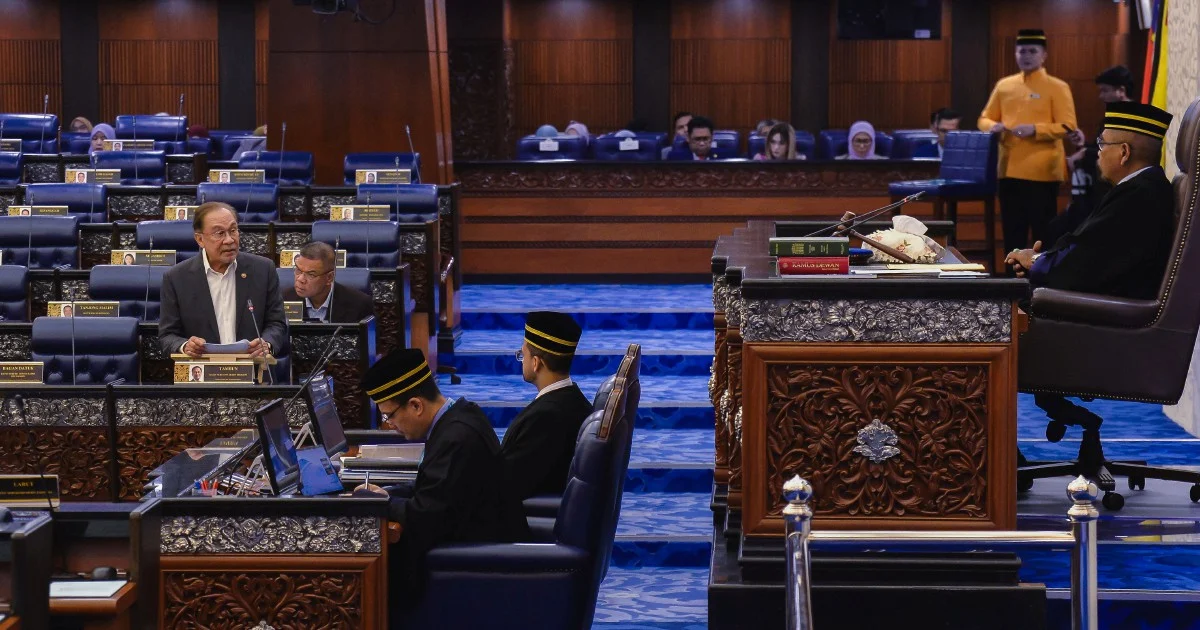
The Election Commission has been granted explicit authority to intervene when a caretaker government overreaches by announcing major policies or committing public funds in violation of established electoral rules, Prime Minister Datuk Seri Anwar Ibrahim declared. This reaffirms the regulatory body's mandate to police the conduct of administrations that remain in office during the transition period between the dissolution of parliament and the swearing in of a new government.
The commitment represents a significant tightening of electoral oversight during Malaysia's election campaigns, a period when incumbent governments traditionally face heightened scrutiny to prevent them from exploiting their position. Caretaker administrations occupy a uniquely delicate position within the democratic framework—they retain executive authority over daily governance while simultaneously operating under restrictions that prevent them from taking steps that might influence electoral outcomes or benefit their political fortunes.
Financial commitments and policy announcements have historically represented the most contentious area of caretaker governance. Without clear enforcement mechanisms, administrations might approve major expenditures, allocate development funds to swing constituencies, or launch new initiatives designed to burnish their electoral appeal. The Election Commission's expanded authority to intervene in such decisions provides a legal bulwark against abuse, ensuring that taxpayer resources remain neutral during the campaign period rather than becoming tools of political advantage.
The practical implementation of this enforcement power presents considerable complexity. Distinguishing between legitimate routine governance and impermissible campaign-related spending requires nuanced judgment. Essential government operations—paying civil service salaries, maintaining defence and security infrastructure, managing health services—must continue uninterrupted. Simultaneously, discretionary expenditures, infrastructure inaugurations, or announcement of new programmes might deserve scrutiny depending on their timing, scope, and apparent electoral motivation.
Malaysia's electoral framework has evolved significantly in recent cycles as stakeholders recognised the necessity of clearer caretaker guidelines. Previous elections witnessed controversies where administrations approved spending or announced major decisions that critics alleged crossed the line from routine governance into campaign-style politics. The Election Commission has progressively refined these boundaries, though ambiguities inevitably persist in borderline cases requiring judgment calls about intent and impact.
The Prime Minister's statement regarding enforcement carries particular weight given Malaysia's recent political volatility. The nation has experienced several snap elections and leadership transitions within compressed timeframes, creating multiple instances where caretaker governments exercised power. Each transition offered opportunities for systematic study of problematic practices and areas requiring tighter regulation. Drawing on this accumulated experience, the election authority has developed more sophisticated criteria for evaluating whether particular decisions breach electoral propriety.
Regional observers have noted that Malaysia's approach to caretaker governance reflects broader Southeast Asian democratic practices. Neighbouring countries have similarly grappled with establishing clear boundaries for interim administrations, recognising that electoral integrity depends partly on preventing incumbent advantage through abuse of fiscal and policy-making powers. Stricter Malaysian enforcement could influence regional discussions about election administration standards.
The determination to enforce guidelines carries implications for civil service neutrality and political culture. Civil servants advising caretaker governments must navigate uncertainty about what recommendations their political leaders will accept and what the Election Commission might later challenge. This tension, while necessary to preserve electoral fairness, creates practical complications for the administrative apparatus. Clear communication and detailed guidance become essential to help officials understand permissible boundaries while maintaining necessary government functions.
Political parties benefiting from enforcement of caretaker restrictions generally welcome the Election Commission's vigilance, while incumbent administrations may perceive it as constraining. This inevitable polarisation reflects the fundamental tension between electoral fairness and executive prerogative. The Prime Minister's endorsement of enforcement suggests the government seeks legitimacy through demonstrating commitment to impartial democratic processes, even when that commitment potentially constrains its own authority during caretaker periods.
Investigative capacity represents another practical consideration. The Election Commission must develop expertise in identifying problematic financial decisions and policy announcements, requiring technical knowledge of budgeting, government programmes, and political calendars. Building institutional capability to analyse government decisions and distinguish routine from questionable patterns demands significant resources and sustained commitment beyond election periods.
The stated enforcement commitment establishes clearer expectations for future caretaker administrations regardless of which coalition holds power. By publicly reaffirming the Election Commission's authority and the government's support for that authority, Prime Minister Anwar has signalled that electoral integrity takes priority over short-term political advantage. This positioning potentially enhances both the government's democratic credentials and public confidence in the election process.
Longer-term democratic development in Malaysia depends substantially on building institutions capable of impartially enforcing electoral rules against all parties without fear or favour. The Election Commission's enhanced mandate, backed by prime ministerial support, represents progress toward that objective. Subsequent implementation will reveal whether the institution possesses sufficient independence, resources, and political backing to fulfil these responsibilities consistently, particularly when caretaker governments resist restrictions on their authority.

