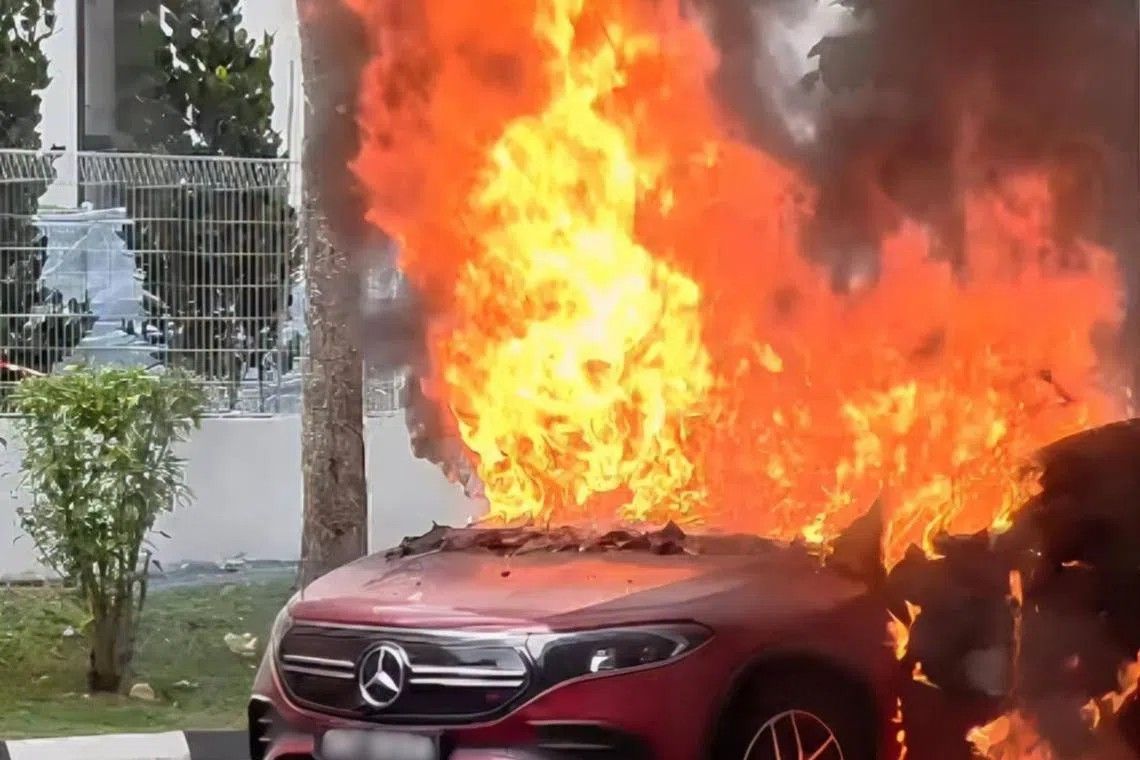
A fully electric vehicle erupted into flames outside a multi-storey carpark in Singapore's Woodlands estate on the morning of July 21, adding to mounting concerns about battery safety in the region's rapidly expanding electric vehicle market. The Singapore Civil Defence Force responded to an alert at approximately 10.10am regarding a fire near the entrance of Block 548 Woodlands Drive 44, located close to the Vista Point area. Firefighters contained and extinguished the blaze using a single water jet, and no injuries were sustained in the incident. The exact cause remains under investigation, though preliminary evidence points to an internal battery malfunction.
The vehicle owner provided crucial details about how the emergency unfolded, speaking to Shin Min Daily News shortly after the incident. She was exiting the carpark when an acrid burning smell alerted her to potential danger. Upon stopping her vehicle and investigating, she discovered thick smoke pouring from the interior compartment. The fire's origin appeared to be in the narrow space between the driver and front passenger seats—precisely where the vehicle's battery pack is housed. This observation reinforces emerging patterns in electric vehicle fire incidents across Asia, where thermal runaway in battery cells frequently initiates fires in these locations.
With the flames intensifying and spreading deeper into the vehicle's interior, the driver sought immediate assistance from security personnel stationed nearby at the carpark. Despite their efforts to contain the situation using standard fire extinguishers, they were unable to suppress the blaze. As the fire continued to advance and threatened to become uncontrollable, concerned parties wisely evacuated the area, fearing potential explosion hazards. The decision to call the Singapore Civil Defence Force proved critical, as the incident required professional firefighting equipment and expertise beyond what portable extinguishers could provide.
Photographic evidence captured after the fire's suppression revealed the extent of the damage inflicted on the vehicle. The interior had been almost entirely charred beyond recognition, with the dashboard severely warped and deformed by intense heat. The structural supports for both front seats were exposed, indicating that flames had consumed the seat cushioning and backing materials. The battery compartment beneath the front seats showed signs of catastrophic failure, with no discernible battery cells or components visible in the aftermath. These destruction patterns are consistent with lithium-ion battery thermal runaway events, where cells within the pack experience rapid temperature escalation leading to internal short circuits.
The timing of this incident carries significance for Southeast Asia's automotive sector, which has embraced electric vehicle adoption at an accelerating pace. Singapore, as a developed market with strict vehicle safety standards, has seen a surge in EV registrations over the past three years. This carpark fire represents one of the more visible battery-related incidents in the region, occurring in a densely populated residential area with hundreds of residents in proximity. The incident took place during daylight hours with multiple witnesses present, ensuring immediate professional response, yet underscores vulnerabilities in residential charging infrastructure and vehicle safety protocols.
The recovery and removal of the damaged vehicle occurred at 12.15pm, several hours after the initial alert. By this point, SCDF personnel had thoroughly doused the vehicle and ensured that no residual thermal energy remained capable of reigniting the battery materials. Removing such vehicles requires specialised handling, as lithium-ion battery remnants can spontaneously re-ignite if moisture seeps into damaged cells or if temperature fluctuations trigger delayed exothermic reactions. The towing operation would have been conducted with precautions to prevent further exposure of battery components to ambient conditions.
This incident arrives amid broader discussions about battery technology standards and thermal management systems in the region. While electric vehicles offer environmental benefits and reduced operating costs, manufacturers continue refining battery chemistries and protective circuitry to prevent thermal runaway events. The investigation into this particular fire's cause will likely examine whether the vehicle had experienced prior damage, whether charging infrastructure was faulty, or whether manufacturing defects in the battery pack itself triggered the failure. Such investigations are crucial for improving design specifications and safety protocols across the industry.
For Malaysian motorists and policymakers watching Singapore's experience, the incident raises important questions about battery safety standards, carpark safety protocols, and insurance coverage for electric vehicle incidents. Malaysia's own electric vehicle market is expanding, with several models now available through both domestic and international manufacturers. Residential carparks, particularly in established housing estates and apartment complexes, must grapple with the implications of housing increasingly powerful battery packs in confined spaces where fires could spread rapidly to nearby vehicles or structures.
The response by Singapore's Civil Defence Force demonstrates the preparedness of developed emergency services, yet residential carpark management remains a vulnerability point across Southeast Asia. Many older carpark facilities lack dedicated electric vehicle charging bays with fire suppression systems or adequate ventilation for battery off-gassing. As EV adoption accelerates throughout Malaysia and the broader region, infrastructure upgrades and safety training for property managers will become essential. The Woodlands carpark incident serves as a practical reminder that transitioning to electric mobility requires not only vehicle technology improvements but comprehensive ecosystem development encompassing charging infrastructure, maintenance protocols, and emergency response readiness.

