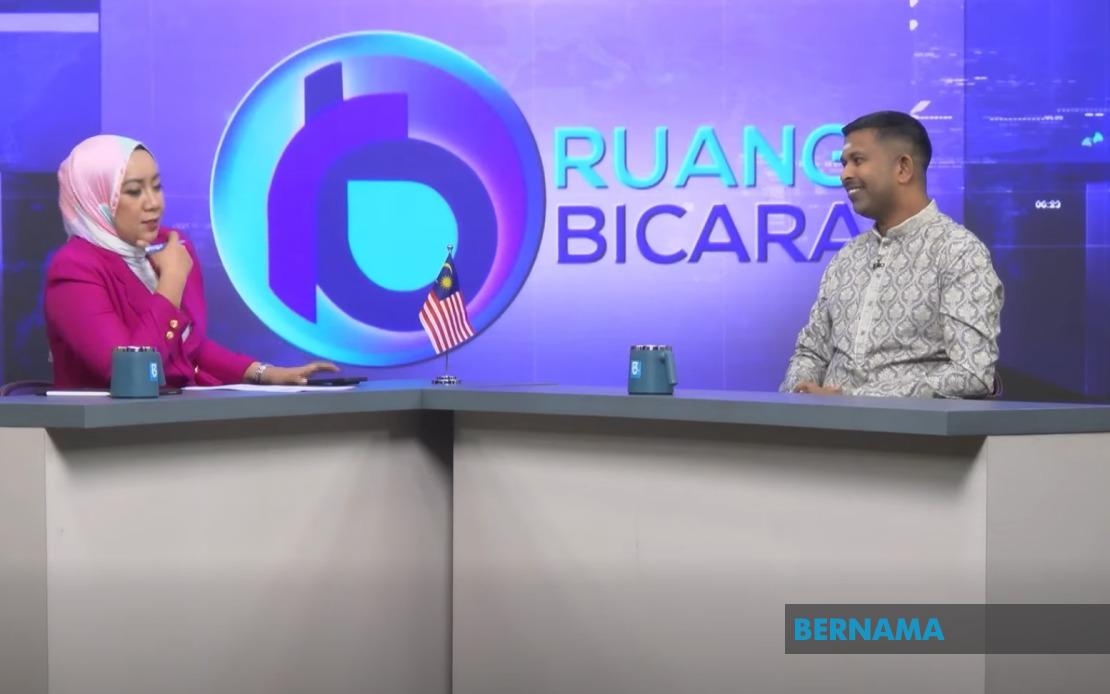
Strengthening the position of the Malay language as Malaysia's national tongue demands a comprehensive, whole-of-nation approach that extends beyond government corridors to encompass educational institutions, commercial entities, and citizens themselves, according to prominent legal and linguistic scholars engaged in the ongoing national conversation about language preservation and development.
Prof Dr Ramalinggam Rajamanickam, who serves as a professor of law at Multimedia University and sits on the Board of Governors of Dewan Bahasa dan Pustaka, articulated this position during a television discussion, emphasizing that the constitutional foundation for the language remains robust. The Malay language's status as the national language is firmly established under Article 152 of the Federal Constitution, yet translating this legal recognition into consistent, quality usage across all segments of society remains an ongoing challenge requiring deliberate institutional and cultural shifts.
The constitutional architecture protecting the Malay language extends beyond the fundamental law itself. The National Language Act 1963/67 provides statutory enforcement mechanisms that mandate the use of the national language in official proceedings and government business. However, Ramalinggam stressed that legal protection alone proves insufficient without active monitoring and implementation by responsible ministries, suggesting that enforcement gaps may exist despite the existence of formal legislative safeguards. This observation points to a potential disconnect between the letter of the law and its practical application across government departments and agencies.
Central to contemporary concerns about the language's vitality is not merely the frequency of its usage, which generally remains adequate, but rather the quality and purity of the language as practised daily. The emergence of "bahasa rojak"—a colloquial term describing the mixing of Malay with English, Chinese dialects, and other languages—alongside casual abbreviations prevalent on digital platforms, has created linguistic challenges that merit serious attention from language guardians and educators. While such linguistic blending reflects the natural evolution of living languages and may pose minimal concern in informal social contexts, the casual adoption of hybrid speech patterns threatens the maintenance of grammatical standards in formal and official domains where clarity and precision carry institutional and legal weight.
The distinction between informal and formal language use forms a critical threshold in this debate. Ramalinggam emphasized that while social media users enjoy considerable freedom in linguistic expression, including the creative mixing of languages and use of abbreviations, official government communications, legal documents, and academic discourse must adhere to rigorous standards of grammatical correctness and structural propriety. Universities therefore bear particular responsibility to model and enforce proper language usage, ensuring that the national language functions as a genuine medium of scholarly and scientific knowledge transmission rather than devolving into casual or corrupted forms.
A particularly significant dimension of this challenge emerges from rapid technological advancement and the global ascendancy of artificial intelligence systems. Rather than passively awaiting technological development to accommodate the Malay language, Malaysia should proactively engineer solutions that empower the language to command technology and drive innovation in digital domains. This represents a philosophical reversal of the typical relationship between emerging technology and language adaptation, positioning the national language as an active agent rather than a passive recipient of technological change. The initiative requires coordinated effort from government bodies, university researchers, technology developers, and linguistic specialists working collaboratively to ensure the Malay language acquires the vocabulary, structures, and digital infrastructure necessary to function as a language of science, technology, economics, and artificial intelligence.
The historical precedent for Malay assuming such an elevated role exists in the region's own past. The language once served as the lingua franca facilitating commerce, diplomacy, and cultural exchange across maritime Southeast Asia, demonstrating its capacity to function as a sophisticated medium for complex transactions and ideas. Contemporary evidence of this potential appears in the language's appeal to international scholars and students in countries including China, Japan, and India, where universities and research institutions have established programs dedicated to Malay language and cultural studies. These international academic communities recognize in Malay a language worthy of serious scholarly engagement, suggesting untapped potential for transformation into a language of global knowledge production and technological innovation.
The broader philosophical framework underlying language development initiatives must acknowledge the compatibility between linguistic nationalism and genuine multilingualism. Ramalinggam's articulation of this position resists the false dichotomy often presented in public discourse between championing the Malay language and maintaining proficiency in other international tongues. National identity and linguistic patriotism need not entail the diminishment of English, Mandarin, or other languages valuable for commerce, diplomacy, and cross-cultural communication. Rather, the goal should establish the national language as the foundational element of collective identity while permitting and even encouraging individual and institutional multilingualism that serves practical and cultural purposes.
The responsibility for elevating language status cannot rest exclusively with any single institution or sector. The government must demonstrate commitment through consistent implementation of existing language laws and development of new policies supporting language standardization and technological adaptation. Higher education institutions must cultivate linguistic excellence among students, ensure that academic discourse maintains high standards of language usage, and conduct research into language evolution, technological adaptation, and cultural transmission. The private sector possesses resources and platforms to promote quality language usage within commercial communications and professional environments. Civil society, media organizations, and cultural institutions can reinforce positive attitudes toward linguistic excellence through public campaigns, content production, and community engagement.
The implications of success or failure in this endeavor extend beyond mere linguistic conservation to encompass deeper questions of national identity, cultural continuity, and Malaysia's positioning within regional and global knowledge economies. A Malay language that serves as a genuine medium of scientific innovation, technological mastery, and intellectual advancement would substantially strengthen its practical utility and cultural prestige among younger generations who increasingly evaluate language choices through economic and professional lenses. Conversely, allowing the language to stagnate in its utility or quality risks rendering it a ceremonial rather than functional element of national life, potentially undermining long-term intergenerational transmission and cultural cohesion.

