The Endau state constituency in northern Johor is shaping up as one of the most ideologically polarised contests in the state election, pitting a two-term incumbent heavily invested in tourism infrastructure against an economist-intellectual proposing sweeping sectoral transformation. With four candidates competing for the seat and nearly 29,000 registered voters, the July 11 polling day will likely serve as a microcosm of wider voter sentiment across the peninsula regarding economic development priorities and governance philosophy.
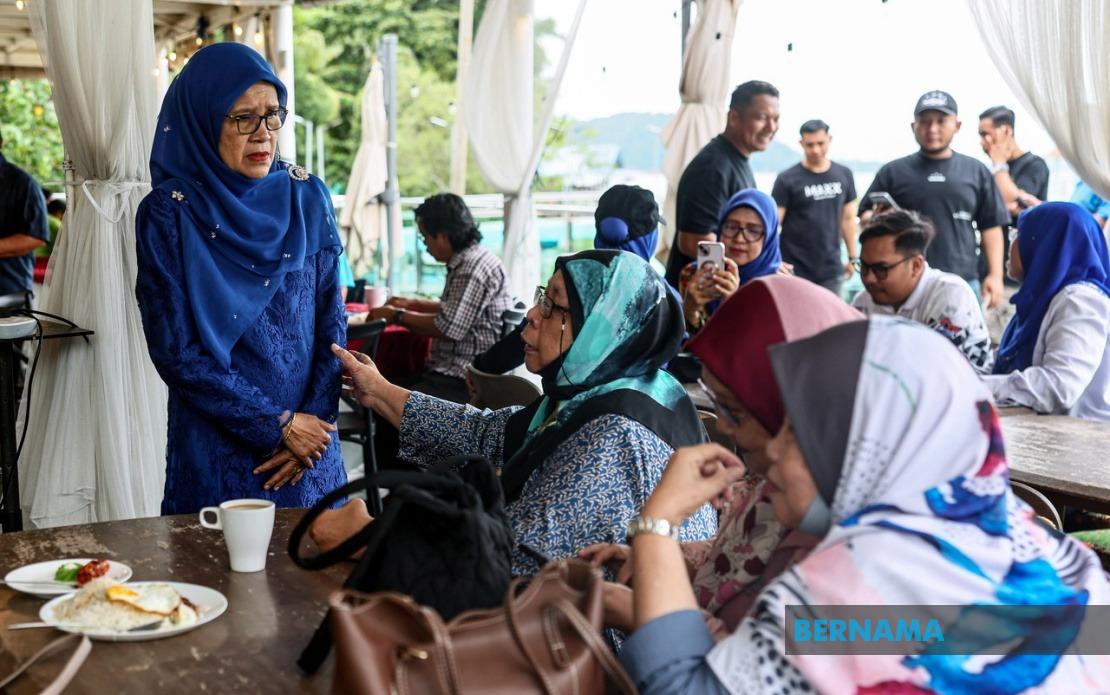
Alwiyah Talib, the incumbent representing Barisan Nasional and locally known as Kak Awi, has constructed her re-election strategy around the tangible projects she has delivered during her tenure. Her approach reflects a development-focused pragmatism centred on leveraging Endau's existing tourism assets, particularly the island attractions surrounding Mersing, to build a more diversified inland economy. This dual-pronged tourism strategy addresses a fundamental economic vulnerability in the constituency: its historical dependence on island-based attractions that, while successful in drawing weekend visitors and generating occupancy rates for chalets and resorts, have not fully activated the broader hinterland's commercial potential.
The incumbent's vision for repositioning Mersing from a mere transit hub to a destination in its own right carries strategic significance for the region's longer-term economic resilience. Her emphasis on developing homestay operations around locations such as Pulau Mawar, Pantai Air Papan, and Teluk Gorek reflects a shift towards distributed tourism benefits that could theoretically reach smaller entrepreneurs and local communities beyond the established resort operators. This grassroots tourism model aligns with broader Southeast Asian trends towards experiential and community-based travel offerings. However, Alwiyah's tourism initiatives must also address sustainability concerns and potential environmental impacts that have become increasingly salient in Malaysia's tourism debates.
Beyond tourism, Alwiyah has prioritised education infrastructure as a second pillar of her campaign narrative. The proposed secondary school in Pekan Endau directly addresses a documented capacity constraint, as existing students in the area currently depend almost entirely on SMK Ungku Husin. This infrastructure commitment resonates with Malaysian voters' persistent prioritisation of education access, particularly in less-urbanised constituencies where school availability directly influences family settlement patterns. Alwiyah's framing of educational development as inclusive, extending from primary through tertiary levels, attempts to position her as a holistic planner rather than a transactional administrator.
Her challenger, 42-year-old Saiful Nizam Samat, represents a fundamentally different analytical framework. As a PhD candidate in economics competing for the first time under Pakatan Harapan's banner, Saiful brings academic credentials and systems-thinking approaches that contrast sharply with Alwiyah's project-centric methodology. Rather than emphasising completed or proposed individual developments, Saiful proposes the 'Fishermen's Economy 2.0' as an overarching reform agenda designed to restructure how primary sector activities generate downstream economic activity. This approach reflects contemporary development economics discourse emphasising value chain integration and multiplier effects rather than discrete infrastructure investment.
The 'Fishermen's Economy 2.0' concept positions fisheries modernisation as a catalyst for broader SME ecosystem development, theoretically addressing the root causes of youth outmigration that Alwiyah's projects might only partially arrest. Saiful's argument contains internal logic: if fishing communities gain sustainable income through improved methods and market access, local spending would automatically support surrounding service businesses, creating organic employment without requiring separate intervention programmes. This systems-based thinking appeals to educated voters concerned with structural economic problems but may appear abstract to constituencies primarily concerned with immediate, visible development.
Saiful's educational platform similarly reflects a more integrated approach, encompassing TVET and STEM programming alongside the proposed Endau Children's Education Fund. Rather than focusing on physical infrastructure like schools, he emphasises skills alignment with labour market demands and financial access barriers to education continuation. The explicit commitment to curbing youth urban migration through local economic opportunity creation demonstrates awareness that educational development disconnected from employment prospects merely exports trained workers to Kuala Lumpur or Singapore rather than retaining human capital in Endau.
The four-way contest also includes Hasnul Hakimi Hussien representing Perikatan Nasional and Jati Awang as the Parti Orang Asli Malaysia candidate. Alwiyah's previous association with PN before switching to BN adds complexity to the incumbent narrative, potentially exposing her to criticism regarding political consistency. The ASLI candidate's presence, though likely peripheral to final outcomes, reflects the constituency's indigenous population dimension, an element neither major challenger has prominently featured in publicly available campaign messaging.
Geographically, Endau occupies a distinctive position within Johor's political landscape as a northern rural constituency facing migration pressures and economic transition similar to other peninsular hinterland seats. The 28,767 registered voters represent a relatively modest electorate compared to urban constituencies, suggesting that personalised constituency service and individual candidate visibility could meaningfully influence outcomes. Both Alwiyah and Saiful have invested effort in public articulation of their platforms, though their communications styles reflect their backgrounds: Alwiyah emphasising sincerity and perseverance, Saiful emphasising intellectual rigour and systemic analysis.
The broader context involves 172 candidates competing across 56 state seats in Johor's 16th state election, with early voting scheduled for July 7. This election occurs within Malaysia's shifting political dynamics, where rural constituencies increasingly contest between incumbent coalitions and opposition alternatives, often pivoting on contrasting visions of development and governance. Endau's contest specifically encapsulates tensions between development-as-infrastructure-delivery and development-as-economic-system-reform, reflecting divisions within Malaysian political discourse regarding optimal policy approaches.
Voters in Endau face a genuine choice between different analytical frameworks and implementation philosophies. Alwiyah's track record approach offers continuity and demonstrated commitment to constituency-specific challenges, with tangible infrastructure projects that voters can observe and evaluate. Saiful's reform formula promises deeper structural transformation but necessarily involves greater implementation uncertainty, relying on successful policy execution and spillover effects that may take time to materialise. The outcome will likely hinge on whether Endau voters prioritise visible developmental progress or embrace systemic economic reform premised on revised sectoral approaches and institutional innovation.

