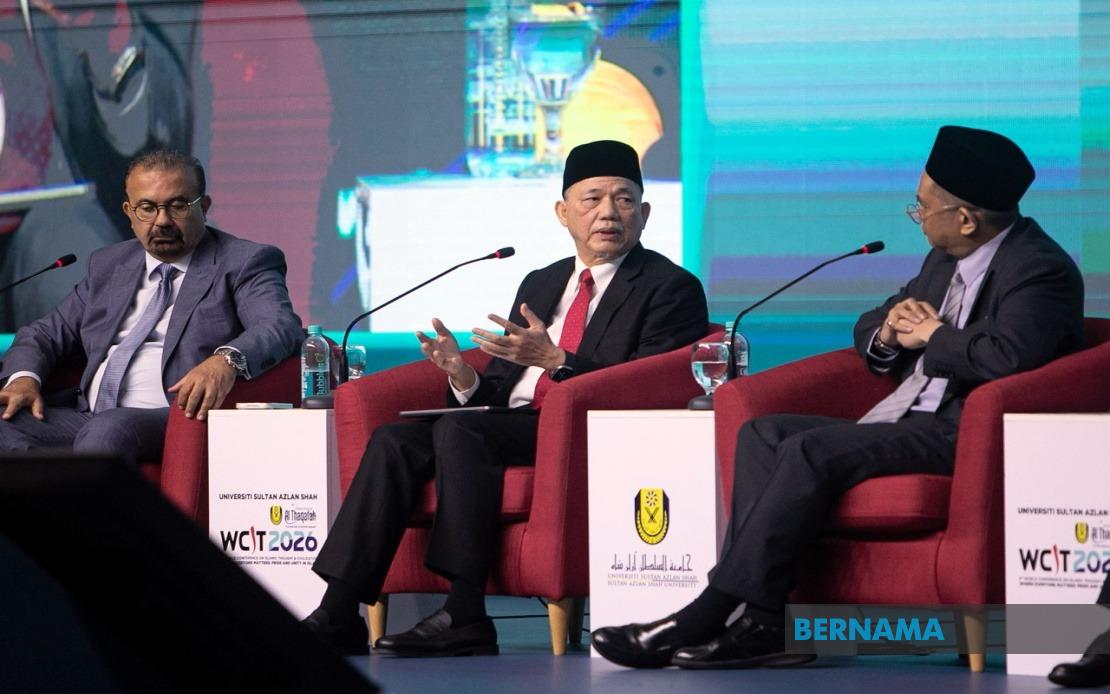
The escalating tensions between the United States and Iran underscore a fundamental shift in global security dynamics, according to Deputy Prime Minister Datuk Seri Fadillah Yusof, who warned that energy security and maritime stability can no longer be treated as separate policy domains. Speaking as a panellist at the 8th World Conference on Islamic Thought and Civilisation here, Fadillah, who also holds the Energy Transition and Water Transformation portfolio, articulated how geopolitical upheaval thousands of kilometres away now reverberates through Malaysian households and businesses.
The interconnection Fadillah describes extends far beyond traditional energy markets. Disruptions in critical shipping corridors such as the Strait of Hormuz create cascading economic effects that reshape global supply chains almost instantly. When tensions rise in these strategic waterways, shipping insurance premiums climb, transportation costs surge, and the price of importing fuel and essential goods spirals upward. These seemingly distant events thus translate into concrete impacts on electricity tariffs, petrol pump prices and the cost of everyday consumer goods that ordinary Malaysians depend upon.
The Deputy Prime Minister's remarks highlight Malaysia's vulnerable position within this interconnected system. As a nation with substantial energy imports and heavy reliance on international trade, Malaysia faces compounded risks when maritime security deteriorates. The country's geographical location makes it particularly susceptible to supply chain disruptions originating from the Middle East and beyond. Any instability affecting major shipping routes or energy-producing regions carries direct consequences for Malaysia's economic stability and energy security, whether through price inflation or physical disruption to vital supplies.
Fadillah's emphasis on Malaysia's diplomatic approach reflects the nation's pragmatic calculation that confrontation serves no national interest. Rather than aligning with any particular power bloc, Malaysia continues to advocate for principles that have underpinned its prosperity for more than a century: an open, rules-based international trading system that respects the sovereignty of all nations. This stance, while occasionally criticized as fence-sitting, represents a deliberate strategy to insulate the economy from the worst effects of great power competition.
The Strait of Melaka, which sits at Malaysia's doorstep, amplifies these concerns considerably. As one of the world's most critical maritime chokepoints, through which roughly one-third of global maritime trade passes, any disruption here threatens not only Malaysia but the entire global economy. Chinese manufacturers depend on this route for their raw materials; European and American consumers rely on goods that transit these waters; regional neighbours from Singapore to Indonesia face equivalent vulnerabilities. Malaysia's voice in advocating for stability and freedom of navigation in these waters thus carries outsized importance.
The cascading economic effects Fadillah outlined demand serious policy attention. Insurance costs represent an underappreciated but substantial drag on international commerce, one that disproportionately affects smaller economies and developing nations that lack alternative logistics networks. When insurers demand higher premiums for vessels transiting contested waters, these costs embed themselves throughout supply chains, raising prices for businesses and consumers alike. Similarly, energy cost fluctuations driven by geopolitical risk premia hit Malaysia's energy-intensive industries such as petrochemicals and manufacturing particularly hard.
Matthew understanding the energy-maritime nexus also illuminates Malaysia's strategic energy transition challenge. As the nation shifts toward renewable energy and reduced fossil fuel dependence, the security of maritime routes remains essential for transporting equipment, materials and components necessary for this transition. Solar panels from China, wind turbine parts from Europe and lithium batteries from global suppliers all move through vulnerable maritime corridors. The rush to decarbonize cannot proceed independently from maritime stability.
Malaysia's measured, diplomatic posture toward recent escalations reflects institutional learning from past experiences. Rather than react emotionally to provocative developments, the government has chosen careful engagement with all stakeholders, emphasizing Malaysia's commitment to international law and the rules-based order. This approach protects Malaysian interests by avoiding unnecessary entanglement while maintaining relationships with major trading partners and security providers essential to regional stability.
The broader implication of Fadillah's comments extends to Southeast Asian regionalism more generally. Countries throughout the region share Malaysia's vulnerabilities regarding maritime security and energy dependence. The Association of Southeast Asian Nations, despite its consensus-based structure, has recognized these shared interests in maintaining freedom of navigation and unimpeded regional commerce. Collective advocacy for these principles gives smaller nations greater voice than they could achieve individually.
Looking forward, Malaysia faces the challenge of building energy security resilience while navigating an increasingly contested maritime environment. Diversifying energy suppliers, developing strategic petroleum reserves, and investing in renewable capacity all form part of a broader hedging strategy. Simultaneously, maintaining strong diplomatic relationships across the international community remains crucial for securing Malaysia's interests through peaceful means rather than military competition.
Fadillah's intervention in this global debate signals Malaysia's recognition that the country cannot remain passive in face of these developments. By articulating the connections between energy stability and maritime security, and emphasizing Malaysia's stake in maintaining a peaceful, rules-based international system, the Deputy Prime Minister positioned the nation as a thoughtful participant in regional and global security discussions. For Malaysia's policymakers and business leaders, understanding these linkages has moved from academic exercise to urgent practical necessity.

