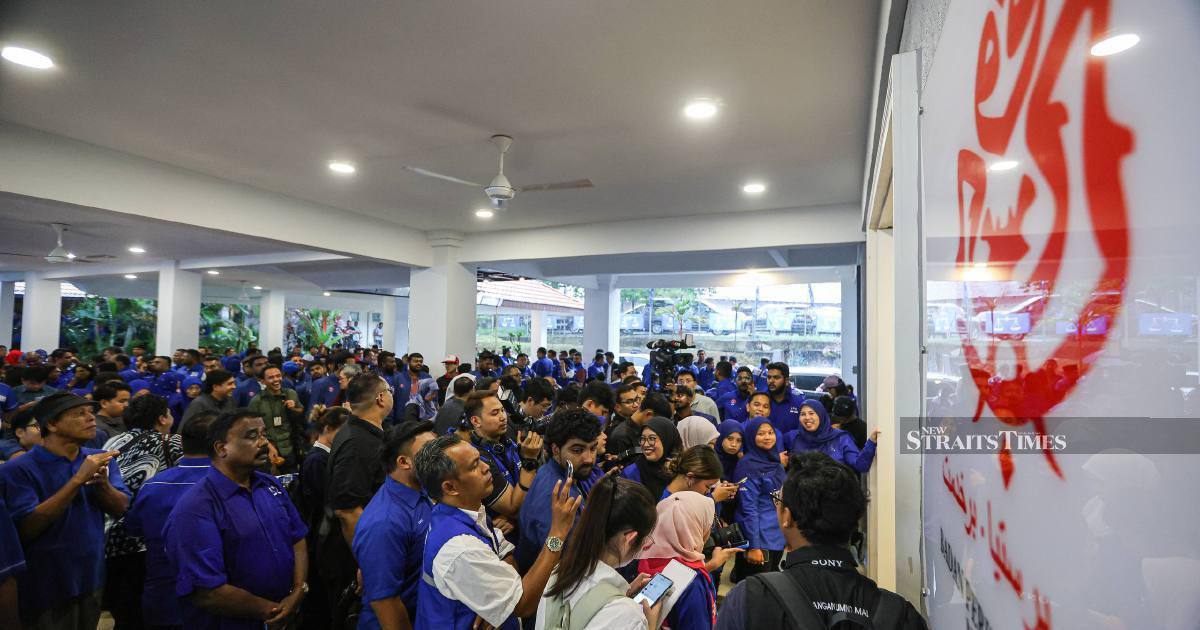
Political momentum gathered at Johor Umno's headquarters in Johor Baru as Barisan Nasional prepared to reveal the names that would carry its banner into the 16th state election. The headquarters became a focal point for coalition members, party officials and rank-and-file supporters eager to witness the unveiling of the crucial candidate slate, with the atmosphere charged by the anticipation of which hopefuls would secure the coveted nomination to contest for state seats.
The convergence of BN stalwarts and grassroots members at the gathering reflected the significance the coalition places on the Johor contest. As the largest and economically dynamic state on the Peninsular mainland, Johor remains a strategic prize in Malaysia's electoral mathematics, determining not only the composition of the state assembly but signalling broader shifts in political support across the country. The presence of senior coalition figures underscored the high stakes involved in fielding a competitive and cohesive lineup.
For Umno specifically, the Johor election represents a crucial opportunity to consolidate its standing in a state where it has traditionally maintained considerable organisational strength. The party has invested substantially in party machinery and ground-level preparation ahead of the election, with candidate selection becoming the tangible manifestation of months of internal strategising and negotiation. The candidate announcement event thus served as a public demonstration of readiness and unity within coalition ranks.
The gathering also reflected the evolving dynamics within Barisan Nasional itself. The coalition's composition and internal balance have shifted through successive political cycles, with each state election offering a fresh testing ground for how its constituent parties negotiate candidate allocation and campaign coordination. Johor, as a multi-party state where other BN members including MIC and MCA also contest, requires delicate calibration of candidate numbers and seat distribution to maintain coalition cohesion.
From a grassroots perspective, the candidate announcement holds immediate relevance for party members and voters across the state's various administrative divisions. Constituents in each electoral district will learn who their candidates are, providing clarity on the faces that will campaign and represent their interests should they win office. For party activists, confirmation of candidates enables them to mobilise supporters and undertake campaign activities with defined leadership and strategic direction.
The timing of candidate announcements in Malaysian elections carries particular weight. Premature announcements can invite speculation and alternative claims from rival coalitions, while delayed announcements risk reducing campaign runway and dampening organisational momentum. By convening this gathering, BN was signalling completion of its internal selection processes and readiness to transition from planning into active campaign mode.
For opposition parties monitoring developments, the candidate slate would provide intelligence about BN's strategic priorities, the constituencies deemed winnable or defendable, and the relative positioning of different party factions within the coalition. Candidate profile analysis—encompassing incumbency status, demographic representation, professional background and geographical origin—frequently offers insights into broader campaign strategy that extend beyond the mere names disclosed.
The event also underscores the continued relevance of physical gathering and ceremonial announcements in Malaysia's political culture, even in an age of digital communication and social media campaigning. The assembly of supporters generates visual and social media content that amplifies campaign messaging, creates a sense of collective participation among party members, and sets the emotional register for the electoral campaign period ahead.
From a Malaysian electoral governance standpoint, state elections occupy a distinct position between federal contests and local government polls. As intermediary institutions of political power, state assemblies wield substantive authority over land administration, state development plans and resource allocation. The quality and calibre of candidates therefore carries implications extending beyond personality or individual capability to questions of governance capacity and policy competence at the state level.
Johor's electoral history demonstrates significant volatility in voting patterns across different state and federal election cycles, with voter preferences shifting appreciably between contests separated by only months. This unpredictability places additional pressure on coalitions to ensure their candidates are not merely party loyalists but individuals capable of connecting with diverse voter constituencies and articulating locally-resonant priorities alongside broader coalition messaging.
The candidate announcement process also illuminates the internal power structures and negotiating dynamics within Malaysia's major political organisations. Distribution of candidacies among different party factions, regional interests and demographic groups frequently reflects deeper factional alignments that may not be immediately visible to external observers. The composition of Johor's candidate lineup therefore encoded information about prevailing internal power balances within Umno and across the BN coalition.