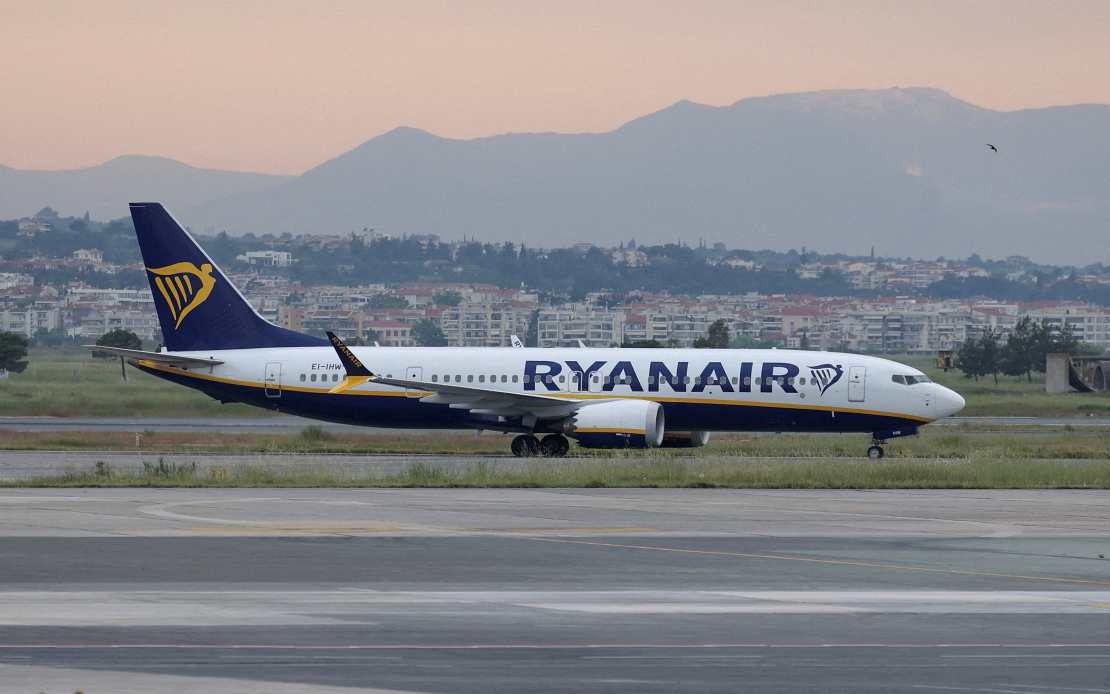
A routine flight between two major European cities descended into terror when mechanical failure of a commercial aircraft's engine nearly claimed a passenger's life, according to findings released by American aviation authorities this week. The July incident aboard a Ryanair service operating from Thessaloniki in Greece to Munich demonstrated both the violence inherent in modern jet propulsion systems and the fragility of the barriers that separate passengers from the lethal external environment at altitude.
The US National Transportation Safety Board has determined that the right engine powering the Malta Air flight—operating commercially under the Ryanair brand—suffered complete failure of a fan blade during the initial climb following departure from Thessaloniki International Airport. This catastrophic mechanical breakdown released high-velocity fragments that traversed the pressurised cabin's envelope, creating conditions that nearly proved fatal to at least one traveller. The investigation represents a sobering reminder of how swiftly routine air travel can transform into a survival situation, a consideration particularly relevant for the millions of Asian passengers relying on budget carriers operating across the region's increasingly dense aviation networks.
The NTSB report documents a cascade of structural damage initiated by the engine separation. Fragments from the failed fan blade penetrated multiple sections of the aircraft's fuselage, striking both the cabin windows and the lower exterior skin adjacent to the right wing mounting area. The fuselage breach proved especially severe at row 11, where a passenger cabin window completely disintegrated under impact, exposing the interior to the aircraft's external environment. The catastrophic nature of this breach becomes apparent when considering that cabin pressurisation differential at cruise altitude can exceed eight pounds per square inch—sufficient force to eject large objects and individuals outward with tremendous violence.
The passenger seated at position 11F experienced the full force of this depressurisation event. According to investigators, the force created by the rapid pressure differential partially pulled the injured traveller through the destroyed window opening. This scenario represents one of aviation's most terrifying possibilities, yet the outcome differed from worst-case catastrophe only because of immediate action by nearby passengers. Fellow travellers managed to physically restrain and retrieve the victim, pulling them back into the cabin before the forces at work could claim them entirely. This human intervention likely prevented a fatality and underscores how passenger awareness and quick thinking sometimes provide the final safety margin when engineered safeguards fail.
Beyond the mechanical catastrophe itself, investigators uncovered evidence pointing toward a bird strike as the probable cause of the engine failure. Examination of the engine components revealed avian remains, including feathers, lodged throughout various sections of the power plant. This finding emphasises a persistent vulnerability in commercial aviation: despite technological advances in engine design, bird ingestion remains a recognised and periodic hazard. The incident echoes other high-profile cases where bird strikes have incapacitated aircraft engines, though few result in structural breaches affecting passengers directly. For regional carriers operating routes across Southeast Asia, where migration corridors overlap with busy flight paths and weather patterns create seasonal concentrations of wildlife, this hazard warrants particular attention in safety protocols and fleet management strategies.
The aircraft's crew responded appropriately to the emergency, executing procedures that brought the damaged aircraft safely back to Thessaloniki for an emergency landing. No additional casualties occurred during the descent and landing sequence, though the passenger who had been partially ejected sustained injuries requiring medical attention. The successful resolution of this incident reflects training standards and procedures that functioned as intended when primary systems failed—a validation of the defence-in-depth approach underlying modern aviation safety culture.
This event carries implications beyond the specific flight involved. The discovery of mechanical failure coupled with evidence of bird strike highlights the ongoing tension between aircraft design and the natural world through which commercial aviation operates. Engine manufacturers continuously refine blade materials and configurations to enhance bird strike resistance, yet perfection remains elusive. For operators across the Asia-Pacific region, where commercial aviation growth continues at double-digit annual rates, understanding and managing such risks becomes increasingly critical as flight frequencies and fleet sizes expand.
The involvement of the US National Transportation Safety Board in investigating a European aircraft incident reflects international protocols governing aviation accident investigation. The NTSB's engagement underscores how the global aviation system operates through coordinated frameworks where technical expertise and investigative resources flow across borders to understand incidents and prevent recurrence. This cooperative approach has fundamentally shaped modern aviation's safety record and remains essential as Asian carriers expand their role in global aviation networks.
For the broader commercial aviation sector, particularly budget carriers that dominate regional routes across Southeast Asia, the incident reinforces the critical importance of rigorous maintenance schedules and engine inspection protocols. Early detection of blade fatigue or damage can prevent catastrophic failure events before they develop. Airlines operating on thin margins cannot afford complacency regarding mechanical reliability, as incidents producing injuries create not only human costs but also regulatory scrutiny and operational disruptions.
The passenger who experienced this harrowing encounter faces a long recovery from injuries sustained during the incident. Their survival depends entirely on the quick action of fellow travellers and the aircraft's structural integrity holding long enough for crew intervention. This element of human interdependence—the way strangers became rescuers in a moment of crisis—provides a contrasting narrative to the mechanical failure that created the danger in the first place. As commercial aviation continues its expansion across the region, such incidents remind travellers of both the sophistication of modern aircraft and their ultimate dependence on multiple systems functioning together.

