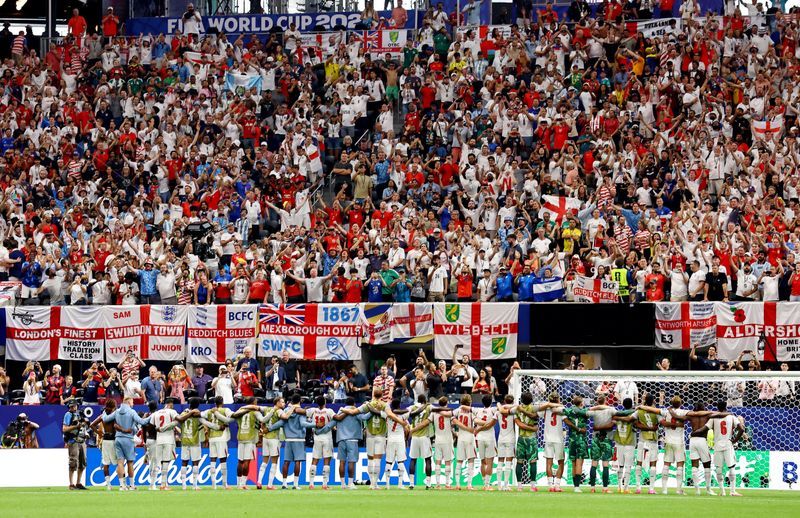
England's passage to the World Cup knockout stage came at considerable cost to the nerves of manager Thomas Tuchel and supporters alike, as an underdog DR Congo side pushed the tournament favourites to the brink before falling to a 2-1 defeat in Atlanta on Wednesday. The result secured England's place in the last 16 but exposed troubling patterns that have characterised their campaign since opening with a commanding 4-2 victory over Croatia, raising questions about whether the European powerhouse possesses the defensive solidity required for a deep tournament run.
The script for England's group phase had suggested growing concerns among observers and analysts tracking their progress. A goalless stalemate against Ghana followed by a laboured 2-0 win over Panama revealed an inconsistency that contrasted sharply with the confidence generated by their opening performance. When Brian Cipenga capitalized on slack defending to put DR Congo ahead inside ten minutes, those accumulated doubts crystallized into something more tangible and immediate. For the first time in the tournament, England found themselves chasing a game, a position rendered more precarious by the uncomfortable historical fact that no England side had previously won a World Cup match after trailing at the interval.
The atmosphere inside Atlanta's stadium transformed from anticipatory to deeply uneasy as the Congolese players executed a textbook defensive approach, committing themselves to every contest and building a protective barrier around goalkeeper Lionel Mpasi that appeared almost impenetrable. England's attacking players created chances but squandered them with the kind of profligacy that deepens doubt rather than building confidence. The television coverage captured the anxiety rippling through the England support, with one supporter's anxious expression becoming emblematic of the tension suffusing the stands as the first half progressed toward conclusion.
DR Congo's ambitions of securing a famous upset received genuine encouragement when Yoane Wissa struck the post shortly before halftime, a moment that suggested the impossible might yet become achievable. Moments later, captain Harry Kane's forceful appeals for a penalty decision met only the referee's dismissal, leaving England trudging into the break facing the very real prospect of elimination if they failed to alter the game's trajectory in the second half. The half-time interval offered Tuchel an opportunity to reorganize his approach and tactical shape, though the mountain to climb had grown considerably steeper.
The transformation following the resumption proved gradual rather than immediate, with England beginning to impose greater control through sustained pressure and intelligent movement. Jude Bellingham drew a superb save from Mpasi with a well-executed header, while Declan Rice delivered several dangerous crosses that invited aerial threat into the Congolese penalty area. Marcus Rashford saw his efforts thwarted by last-ditch defending, and Bellingham's late opportunity again met the goalkeeper's outstretched hands. Yet breakthrough remained elusive, and the frustration visibly accumulated on Tuchel's face as he worked his technical area, at one point vocally criticizing defender Djed Spence over an ineffective throw-in routine.
Tactical adjustments gradually shifted the momentum, with Tuchel relocating Rice to the right back position and introducing midfielder Eberechi Eze to inject fresh energy into the midfield's creative thrust. The 75th-minute equalizer, when Kane executed a glancing header that brushed past Mpasi's fingertips, released a cathartic explosion of relief through the stadium. That goal, England's 83rd by their captain in international colours, fundamentally altered the psychological dynamic, transforming despair into possibility and possibility into expectation. Kane's second goal arrived barely minutes later, sealing a comeback that ranks as England's first World Cup victory from a losing position since defeating Cameroon in the 1990 quarter-finals exactly three decades prior.
Tuchel's post-match assessment emphasized the mental resilience and team cohesion required to navigate such adversity. The manager stressed that adversity itself was not merely acceptable but inevitable at this stage of the tournament, and that maintaining conviction without surrendering composure represented the essential difference between progression and elimination. His remarks suggested recognition that England's pathway forward would continue to present obstacles and difficulties of varying types, each requiring distinct tactical and psychological responses.
Kane echoed those sentiments while acknowledging the contrasting challenges that different opponents would present. Whereas DR Congo had forced England to solve a defensive puzzle, Mexico would likely present problems of a fundamentally different character, demanding that Tuchel's side demonstrate resilience against sustained attacking pressure. This upcoming encounter carries additional complications beyond those of standard knockout football, as Mexico's traditional venue of the Azteca Stadium sits approximately 2,200 metres above sea level, creating atmospheric conditions that significantly affect both oxygen availability and ball movement.
The altitude consideration adds another layer of complexity to England's preparation, as the thinner air will demand enhanced physical adaptation and conditioning beyond what was required during the humidity and tension of the Atlanta encounter. Defenders will need to maintain concentration despite oxygen deprivation, attackers must adjust to a ball that travels farther and faster than at lower elevations, and overall team rhythm requires recalibration for conditions unlike those experienced in previous matches. For England, the path to the knockout stages has been considerably more tortuous than many pre-tournament analyses anticipated, yet their capacity to recover from adversity, however uncomfortable that process proves to be, may ultimately define their tournament trajectory.
The psychological toll of surviving DR Congo's genuine threat should not be underestimated when considering England's preparation for Mexico. Teams that escape elimination only after severe pressure sometimes experience reactive tendencies or overconfidence in their next match, either of which could prove costly against opposition that, like Mexico, brings considerable experience and tactical sophistication to knockout competition. England's defensive frailties remain unresolved, their attacking efficiency continues to require improvement, and Tuchel must now shepherd his squad toward a venue where every physical and technical aspect of their performance will be tested simultaneously. The coming days will reveal whether surviving the DR Congo scare galvanizes England toward greater cohesion, or whether the accumulated damage of a tournament marked by unconvincing performances has created fractures too deep to repair.

