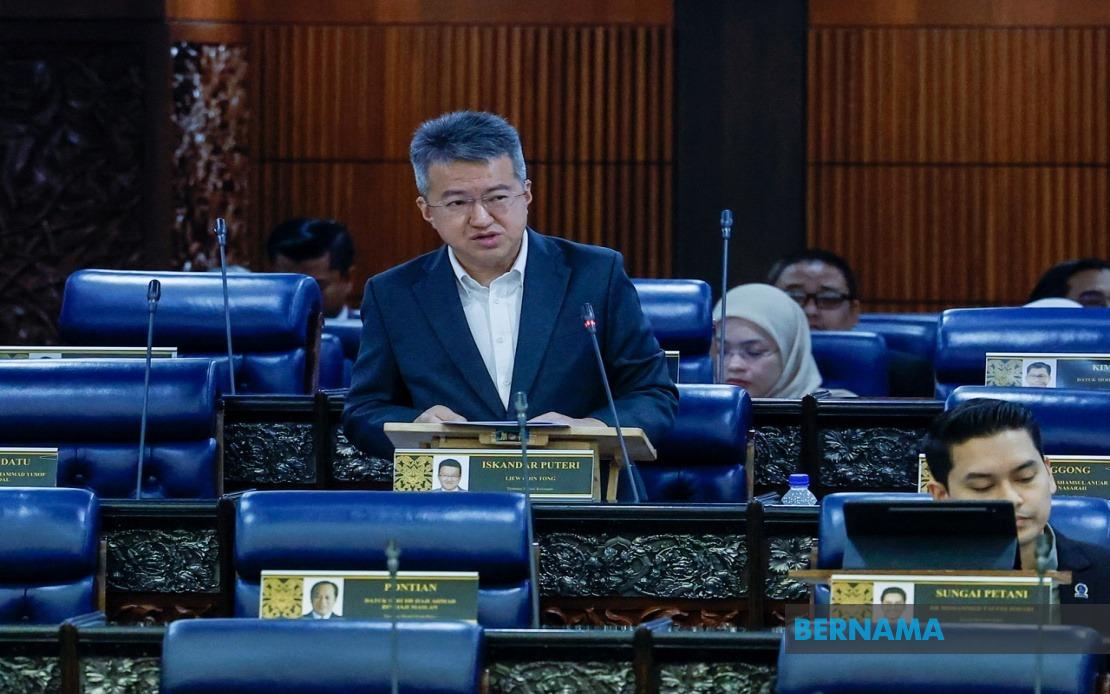
Malaysia's Employees Provident Fund has made tangible progress in helping workers secure their retirement future through the i-Legasi initiative, which has facilitated the transfer of RM46.3 million in accumulated savings to family members across 63 approved applications serving 86 beneficiaries, according to Deputy Finance Minister Liew Chin Tong in Parliament this week.
Introduced on February 1 this year, the i-Legasi scheme represents a significant shift in how EPF members can optimise their retirement wealth during their lifetime. The programme allows workers aged 55 and above who have accumulated retirement savings beyond the Adequate Savings benchmark of RM650,000 to voluntarily transfer portions of their excess funds to the EPF accounts of immediate family members. This mechanism is particularly valuable for members seeking to support younger relatives' retirement preparation while still maintaining their own financial security.
The initiative addresses a critical gap in Malaysia's retirement planning ecosystem, where generational wealth transfer has historically been constrained by rigid fund withdrawal rules. By enabling surplus savers to redirect their excess beyond adequacy thresholds, the scheme acknowledges that retirement security is not uniformly distributed across families and creates pathways for intergenerational financial support. For Malaysian households managing multiple dependents or facing uneven earning trajectories, this flexibility provides meaningful relief.
Liew's parliamentary response highlighted encouraging statistics on broader retirement adequacy trends among Malaysia's workforce. As of May 31, approximately 3.04 million active EPF members aged 18 to 60—representing 38.3 per cent of the 7.94 million members in that age bracket—had achieved the Basic Savings target appropriate for their age group, with the age-60 benchmark set at RM390,000. This marks measurable progress from the previous year's achievement rate of 35 per cent, or 2.71 million members, reflecting improved savings discipline across the workforce.
The question posed by Port Dickson MP Datuk Seri Aminuddin Harun reflected legitimate anxieties gripping Malaysian workers as the nation hurtles toward demographic ageing. With Malaysia projected to become an aged society by 2030—defined as countries where over 7 per cent of the population exceeds 65 years—the adequacy of pension savings has shifted from peripheral policy concern to central economic imperative. Rising living costs compound these pressures, as inflation erodes purchasing power and forces workers to contemplate whether their accumulated funds will sustain multi-decade retirements.
The government's response strategy extends beyond i-Legasi itself, signalling commitment to multifaceted intervention. Officials indicated plans to strengthen collaboration between government and the EPF in designing comprehensive policies that enhance contribution incentives while expanding social protection mechanisms. This holistic approach recognises that retirement adequacy cannot rely solely on individual savings discipline but requires structural supports—whether through employer incentives, tax advantages, or enhanced safety nets—to ensure systemic resilience.
For Southeast Asian observers, Malaysia's approach offers instructive lessons in managing pension system evolution. Unlike fully-privatised schemes or centralised state systems, Malaysia's defined-contribution provident fund model places responsibility primarily on individual workers, making policy innovation around savings adequacy especially crucial. The i-Legasi scheme demonstrates how existing institutional frameworks can be adapted to address contemporary challenges without wholesale restructuring, potentially serving as a template for neighbouring economies wrestling with similar demographic and economic pressures.
The three-per-cent improvement in Basic Savings achievement rates within a year suggests that policy interventions, combined with greater financial awareness among workers, can meaningfully shift retirement preparedness trajectories. However, the statistic also underscores persistent vulnerability: the fact that 61.7 per cent of the target age group remain below adequacy benchmarks indicates that the majority of Malaysia's workforce continues inadequately prepared for retirement, notwithstanding economic growth and employment expansion.
The relatively modest transfer volumes through i-Legasi so far—RM46.3 million across five months—suggest the scheme serves a niche function primarily benefiting higher-earning cohorts who accumulate surplus savings. This raises equity considerations: while the initiative effectively supports the top tier of savers, systemic inadequacy among lower and middle-income workers demands parallel interventions targeting contribution rates, employer participation, and voluntary savings incentives among these more vulnerable segments.
Moving forward, the EPF and government face the challenge of scaling retirement adequacy improvements while managing demographic transition costs. Malaysia's transition toward an aged population will inevitably strain public finances through healthcare and social welfare demands, making robust private-sector retirement savings increasingly indispensable. The i-Legasi initiative, while administratively elegant, addresses the distribution of existing wealth rather than generation of new retirement capital—meaning simultaneous focus on increasing savings rates, particularly among younger cohorts and informal-sector workers, remains essential for long-term sustainability.

