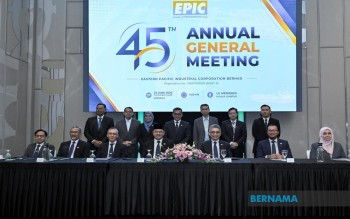
Eastern Pacific Industrial Corp Bhd (EPIC) has unveiled an aggressive expansion roadmap that targets annual revenue of RM700 million and net asset value of RM1 billion by the close of 2030, reflecting the company's confidence in sustained growth across its integrated oil and gas solutions, port management, and renewable energy portfolios. The ambitious targets outlined in the company's EPIC Strategic Business Plan 2025-2030 represent a significant acceleration from current performance levels, with Group Chief Executive Officer Dr Ts Muhtar Suhaili projecting that revenue will climb from the present RM411.9 million to RM700 million within five years, whilst NAV is expected to nearly double from approximately RM700 million to RM1 billion.
The growth trajectory outlined by management is underpinned by exceptionally strong recent financial results that demonstrate the company's operational momentum. For the financial year ending December 31, 2025, EPIC achieved net profit of RM20.6 million, representing a substantial 24 percent increase from RM16.6 million in the preceding year. This expansion in earnings was accompanied by record-breaking revenue of RM411.9 million, up from RM403.8 million previously, extending an unbroken string of growth years dating back to 2022. The company's consistent financial progression underscores the durability of its business model and management's ability to capitalise on emerging market opportunities.
Several key catalysts drove EPIC's superior performance in 2025, providing credibility to the forward guidance. The acquisition of Rahar Niaga Sdn Bhd strengthened the company's operational capabilities, whilst newly secured contracts for Pan Malaysia Maintenance, Commissioning and Modification services, alongside Hook-Up and Commissioning work, provided meaningful revenue contributions. Additionally, increased offshore rig arrivals in Malaysian waters and higher cargo volumes at the company's port facilities generated incremental earnings, suggesting that broader market dynamics remain supportive of the group's expansion plans.
Management's confidence extends into the near term, with Muhtar declaring 2026 to be positioned as another record-breaking year for the company. This bullish outlook is grounded in tangible contract wins and geographic diversification. EPIC has secured multiple contracts with Petronas that extend well beyond its traditional base in Terengganu, now spanning the southern region of Peninsular Malaysia including Pengerang and Melaka. The company's recent penetration of Sabah represents an important strategic achievement, marking EPIC's expansion into East Malaysia and reducing geographic concentration risk. The group's current approved contract value for oil and gas services ranges between RM1.3 billion and RM1.5 billion, though actual revenue realisation will depend on the issuance of work orders and purchase orders by clients.
The renewable energy sector represents a significant frontier for EPIC's diversification strategy. The company is actively bidding to participate in the hybrid hydro-solar project at Kenyir in partnership with its parent company, Terengganu Inc, positioning itself at the intersection of Malaysia's energy transition priorities. Successful acquisition of such projects would provide long-term cash flow visibility whilst aligning EPIC with the country's decarbonisation objectives and renewable energy targets. The hybrid nature of the proposed Kenyir facility offers technical synergies that could leverage EPIC's existing engineering and project management expertise.
International expansion forms another cornerstone of EPIC's medium-term strategy. The board has mandated management to pursue growth opportunities across neighbouring Asian markets as part of the 2030 plan, recognising that regional integration and the search for new revenue sources beyond Malaysia will be essential to achieving the ambitious financial targets. Simultaneously, the company continues to evaluate opportunities in West Asia despite acknowledged geopolitical headwinds in that region. This dual approach hedges against concentration risk whilst maintaining optionality as regional energy markets evolve.
EPIC's recent expansion into Sabah and Sarawak illustrates management's commitment to executing the international and interregional elements of this strategy. In February 2025, EPIC, through subsidiary EPIC OG Sdn Bhd, formalised a collaboration agreement with Begas Energy Sdn Bhd to deliver project management services for the Terminal Turnaround, Maintenance and Modification contract in Sabah. This partnership not only strengthens EPIC's operational footprint in East Malaysia but also positions the company as a trusted service provider in a resource-rich region where energy infrastructure upgrades will likely remain a priority for years to come.
For Malaysian investors and the broader region, EPIC's strategic pivot carries several implications. The company's ability to diversify revenue streams—particularly through renewable energy and geographic expansion—signals recognition that the traditional oil and gas sector, whilst still robust, faces structural headwinds from global energy transition pressures. By building capability in hybrid solar-hydro systems and expanding into underexplored Asian markets, EPIC is hedging against long-term energy market shifts whilst positioning itself to serve emerging regional demand. The company's track record of contract wins with Petronas and new clients suggests that Malaysian energy infrastructure remains a fertile ground for integrated solutions providers, even as the sector undergoes transformation.
The appointment of multiple new contracts across peninsular Malaysia and East Malaysia also reflects broader trends in how Malaysian energy companies are managing aging assets and transitioning their portfolios. Companies like Petronas are increasingly outsourcing specialised maintenance and modification work to dedicated service providers rather than performing such work in-house, creating a sustained demand pool for firms like EPIC that possess the technical expertise, safety credentials, and project management capability to execute these missions reliably. This trend may persist regardless of oil and gas pricing cycles, providing structural support to EPIC's near-term revenue growth.
Looking outward, the sustainability of EPIC's aggressive 2030 targets hinges on several variables beyond management control. Petroleum prices and production levels in key Malaysian fields will influence client spending on maintenance and capital projects. The regulatory environment around renewable energy bidding, including tariff structures and project allocation mechanisms, will determine whether EPIC can successfully enter the renewables sector at attractive returns. Regional geopolitical stability, particularly in Southeast Asia and West Asia, will shape the company's capacity to expand internationally. Nevertheless, the board's decision to pursue these targets reflects a calculated assessment that demand for integrated oil and gas services, port facilities, and clean energy infrastructure will remain robust across the 2025-2030 window, justifying continued investment in capability and geographic reach.

