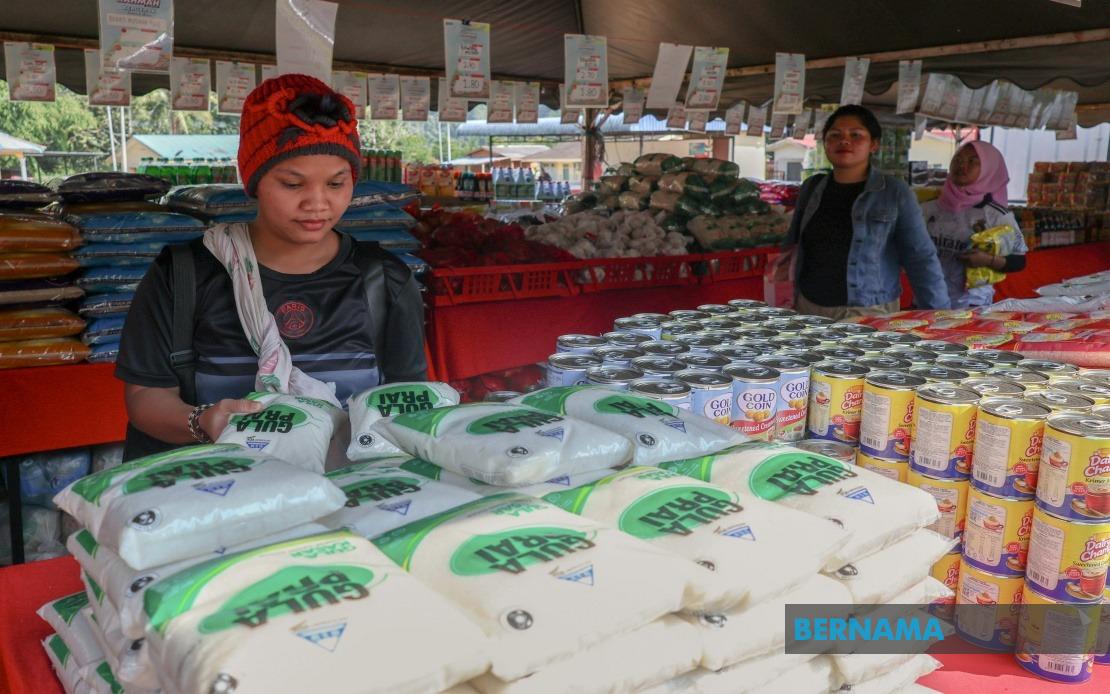
The Domestic Trade and Cost of Living Ministry (KPDN) has confirmed that its Essential Goods Distribution Programme is delivering tangible results in narrowing the price gap between urban and rural Malaysia, a persistent challenge that has long disadvantaged remote communities. The initiative, which controls prices for seven essential commodities including sugar, wheat flour, cooking oil, white rice, liquefied petroleum gas, RON95 petrol and diesel, has proven instrumental in bringing affordability to regions where supply chains have traditionally been costly and inefficient. According to parliamentary testimony this week, the programme has become a crucial tool in the government's broader effort to manage the cost of living across diverse geographical areas.
Before the programme's rollout, rural and remote residents faced a stark economic disadvantage simply because of where they lived. Transportation distances, limited infrastructure, and sparse competition among retailers meant that essential items carried significant markups by the time they reached consumers in far-flung communities. The Pulau Libaran zone in Sabah exemplifies the scale of price distortions that existed prior to intervention. Liquefied petroleum gas, a commodity essential for cooking in many Malaysian households, previously sold for RM39 per cylinder in that area—a staggering 46 per cent premium over the controlled price of RM26.60. Similarly, packet cooking oil, a staple in Malaysian kitchens, retailed at RM3.50 per packet compared to the controlled rate of RM2.50, representing a 40 per cent markup. These disparities underscore why targeted price management in remote zones has become non-negotiable for social equity.
The scope of this year's implementation is substantial. KPDN has earmarked RM250 million from the federal budget to sustain and expand the programme across six priority states: Sabah, Sarawak, Terengganu, Kelantan, Pahang and Kedah. This investment reaches across 212 distinct zones encompassing 828 distribution areas and 1,532 points-of-sale, collectively serving 1.03 million residents. The concentration of resources reflects policy priorities, with Sabah alone receiving RM107.3 million to operate 78 zones, 228 distribution areas and 587 retail outlets, benefiting approximately 492,566 people. Within Sabah, the Libaran constituency—which prompted the parliamentary inquiry—receives RM1.76 million annually to operate eight distribution areas and nine points-of-sale, directly assisting 17,061 households.
Ensuring programme integrity and preventing diversion of subsidised goods to unintended recipients has emerged as a critical operational challenge. KPDN has implemented a layered governance structure to combat potential leakages and maintain accountability. The ministry has established standardised operating procedures governing all deliveries, ensuring that goods flow through authorised channels and reach designated beneficiaries without entering parallel markets. Additionally, KPDN has constituted Programme Monitoring and Coordination Committees operating at both the ministry headquarters level and within each participating state, creating multiple checkpoints for oversight and rapid problem resolution. This administrative infrastructure represents an acknowledgment that logistics alone are insufficient; sustained human oversight and coordinated enforcement are essential to programme success.
The human impact of price stabilisation extends beyond simple accounting of rupiah-and-sen savings. When a family in a remote Sabahan village can purchase cooking oil at controlled prices, the difference translates into discretionary income that can be redirected toward education, healthcare, or other development priorities. The Outcome Evaluation Committee convened to assess programme results found encouraging responses from target populations, with the majority of surveyed recipients confirming that the initiative has meaningfully alleviated their cost-of-living pressures. Significantly, community feedback has emphasized sustained demand for programme continuation, suggesting that rather than viewing subsidised pricing as temporary relief, rural residents recognise it as structural support necessary for livelihood stability.
The geographical distribution of the programme reveals strategic thinking about where intervention generates greatest impact. East Malaysia—encompassing Sabah and Sarawak—dominates the allocation, reflecting both the geographical challenges of serving dispersed island and interior communities and the political imperative of ensuring development reaches Malaysian citizens regardless of location. The inclusion of Peninsular states such as Terengganu, Kelantan, Pahang and Kedah signals that rural disadvantage is not confined to Borneo; portions of the east coast and northern regions also face chronic accessibility and affordability challenges. This multi-state approach underscores a recognition that cost-of-living management requires geographically differentiated solutions rather than one-size-fits-all policies.
From a policy perspective, the Essential Goods Distribution Programme illustrates the tension between market mechanisms and developmental objectives in Malaysia's mixed economy. Rather than allowing pure price signals to determine distribution patterns—an outcome that would likely result in commercial suppliers bypassing low-margin rural markets—the government has intervened directly to assert that certain commodities should be universally accessible at standardised rates. This approach reflects a judgment that some goods are sufficiently fundamental to human welfare that equity considerations should override commercial efficiency calculations. However, the reliance on government funding and administrative capacity to maintain the programme also raises questions about fiscal sustainability and whether such arrangements can scale as rural populations and consumption patterns evolve.
The programme's mechanics reveal how modern governance navigates the challenge of targeted intervention at scale. The 1,532 points-of-sale scattered across 212 zones suggest a decentralised retail network rather than centralised distribution, allowing residents in communities of varying sizes to access subsidised goods without undertaking arduous journeys to distant centres. This spatial logic reduces the implicit transaction costs—time, transport expenses, opportunity costs—that rural residents would otherwise bear even if nominal prices were controlled. Effective implementation therefore depends not merely on price regulation but on thoughtful design of distribution infrastructure that accounts for the geography of where people actually live and work.
Looking forward, the programme's continuation and potential expansion will likely feature prominently in political discourse around cost-of-living management heading into future electoral cycles. For KPDN and its partner agencies, the challenge now is to maintain the momentum of implementation, continuously verify that goods reach intended beneficiaries rather than leaking into informal markets, and remain responsive to feedback from rural communities about whether the commodities selected and price points established genuinely reflect their most pressing affordability concerns. The parliamentary question from Datuk Suhaimi Nasir suggests that constituency representatives view the programme as a tangible policy success worthy of highlighting to constituents, particularly in areas where transport costs and supply limitations have historically worked against residents' economic interests.

