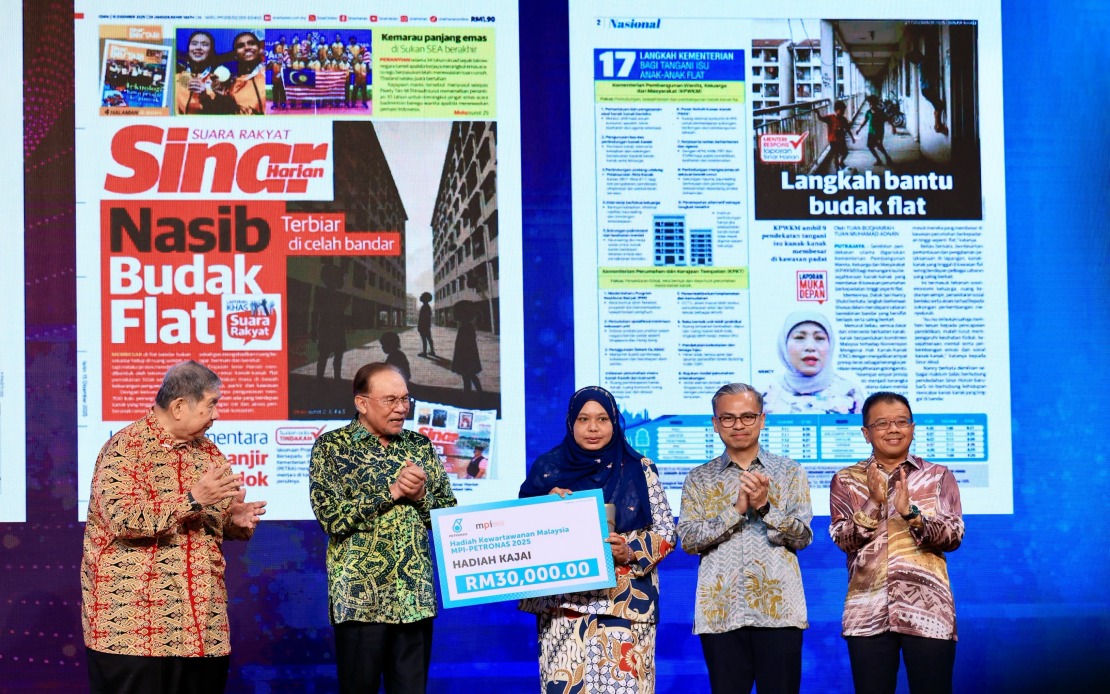
Communications Minister Datuk Seri Fahmi Fadzil has underscored the indispensable role of media organisations in maintaining healthy democratic systems and creating an informed citizenry capable of making sound decisions. Speaking at a gathering of the nation's news industry, Fahmi highlighted how journalism serves as a pillar of institutional accountability and public trust, reinforcing the democratic process at both national and local levels.
The minister's remarks come at a juncture when information ecosystems across Southeast Asia face mounting pressures. With digital platforms expanding access to content while simultaneously amplifying unverified claims, the distinction between credible reporting and deliberate falsehoods has become increasingly blurred for many readers. Fahmi recognised these contemporary challenges, pointing specifically to the escalating problem of misinformation and disinformation that threatens informed public discourse. The proliferation of false narratives—whether through social media, messaging applications, or other digital channels—has created a more complex media landscape that demands renewed commitment to journalistic standards.
Fahmi articulated his gratitude to media practitioners nationwide, calling upon them to maintain their professional integrity and commit themselves to factual, truth-based reporting. His appeal emphasised that the media's fundamental obligation extends beyond commercial interests or political considerations; rather, it must centre on the welfare of the general population and the advancement of national interests. This framing positions journalism not merely as an industry but as a public service essential to the functioning of democratic governance.
The Communications Minister attended the Malaysian Journalists' Night (MWM) 2026 alongside Prime Minister Datuk Seri Anwar Ibrahim, an event that carried significant symbolic weight. The occasion featured the MPI-PETRONAS Malaysian Journalism Awards 2025, which recognised outstanding practitioners and contributions to the profession. By participating in such ceremonies, government leadership demonstrates formal acknowledgment of journalism's democratic value, even as complex relationships between media and state institutions continue to evolve across the region.
The gathering assembled approximately 1,000 participants representing a cross-section of Malaysia's media ecosystem and related sectors. Beyond journalists and editors from news organisations, the attendees included officials from various government departments and agencies, representatives from private enterprises, academics from universities and research institutions, and media industry partners. This inclusive composition reflected the interconnected nature of modern information systems, where government, business, education, and journalism intersect on matters of public importance.
Organised on an annual basis by the Malaysian Press Institute (MPI), the Malaysian Journalists' Night has evolved into a marquee event within the nation's media calendar. The gathering serves multiple functions simultaneously: honouring professional achievement, celebrating journalistic excellence, and facilitating networking among stakeholders. Beyond ceremonial aspects, such platforms provide opportunities for the media sector to strengthen strategic relationships with government bodies and corporate entities, creating channels for dialogue on matters affecting the industry's operational environment and professional development.
The context of Fahmi's remarks becomes clearer when considering regional patterns. Across Southeast Asia, governments have grappled with questions about media freedom, information warfare, and the balance between enabling press independence and addressing genuine public harms from deliberate falsehoods. Malaysia's approach, as reflected in the minister's speech, emphasises partnership and shared responsibility rather than adversarial positioning. By framing ethical journalism as a collaborative endeavour benefiting society broadly, the government signals openness to working constructively with media institutions rather than viewing them primarily as critical oversight bodies.
The emphasis on ethical and responsible practice speaks to ongoing professional challenges within the industry itself. Malaysian newsrooms, like their counterparts elsewhere, navigate tension between commercial pressures, audience demands for sensational content, and editorial commitments to accuracy and fairness. Fahmi's message supports media organisations attempting to maintain professional standards amid these competing forces, implicitly validating editorial independence as essential rather than obstructive.
The recognition of journalism awards carries particular significance in this climate. By celebrating excellence in reporting, investigations, and feature writing, the MPI-PETRONAS awards program reinforces professional standards and incentivises quality journalism. Such recognition matters both for the individual journalists whose work is honoured and for the broader industry seeking to maintain public confidence in its institutions during a period when media trust has declined in many democracies.
Fahmi's insistence on the relationship between independent media and strong democracy aligns with international consensus among democratic scholars and practitioners. Yet implementation remains challenging. Media independence requires not only freedom from government interference but also sustainable business models, professional training, access to information, and legal protections for journalists. Malaysia's media landscape continues to navigate these practical realities while maintaining democratic principles.
Looking forward, the minister's emphasis suggests that government engagement with media questions will continue emphasising partnership frameworks and shared commitment to societal wellbeing. For Malaysian and regional newsrooms, this creates both opportunities and responsibilities—opportunities to collaborate on legitimate public interest concerns, and responsibilities to maintain editorial independence and credibility. The challenge lies in distinguishing between government communication goals and journalistic imperatives, ensuring that partnership does not compromise the watchdog function essential to democratic health.

