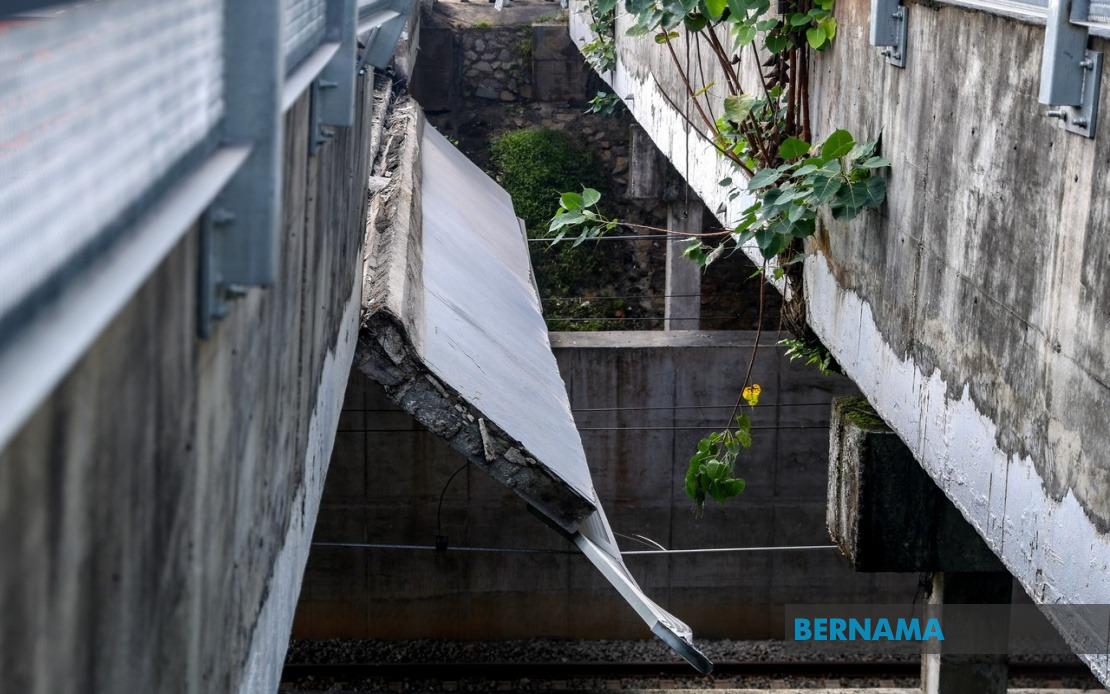
A lorry collision with railway infrastructure on the Kulai-Kempas Baru line in Johor has triggered significant disruptions to Electric Train Service operations, forcing Keretapi Tanah Melayu Berhad (KTMB) to implement alternative transport arrangements for commuters. The incident, which occurred when a heavy vehicle struck the rail corridor, caused structural damage and compromised the overhead line system that powers the ETS network. In response, KTMB established shuttle bus services operating between JB Sentral Station, Kempas Baru Station, and Kulai Station to ferry affected passengers and maintain continuity of service while restoration efforts proceed.
Three major ETS routes emanating from JB Sentral faced direct operational impact on the morning of the incident. ETS 9442, which connects JB Sentral to Padang Besar, ETS 9524 running between JB Sentral and KL Sentral, and ETS 9326 serving the JB Sentral to Butterworth corridor all required passenger rerouting. The scale of the disruption reflected the criticality of the Kulai-Kempas Baru section within Johor's broader rail transport network, which handles substantial daily passenger volumes travelling between northern Peninsular Malaysia and the southern corridor.
KTMB's contingency arrangement utilised shuttle bus fleets to bridge the gap created by the line closure, with services operating from both terminus stations to transport passengers around the affected section before they could rejoin ETS trains at Kulai Station for onward travel to their destinations. This approach prioritised passenger mobility while minimising the need for cancellations, though it inevitably added journey time to affected travellers. The operator made clear that passengers unwilling to proceed with the modified routing had access to full refunds, with KTMB staff stationed at affected stations to process requests and provide further assistance.
The underlying cause of the service suspension was structural damage to critical railway infrastructure. A concrete parapet structure had detached and made contact with the overhead line system on both tracks, causing immediate electrical hazards and rendering the corridor unsafe for train operations. This type of damage underscores the vulnerability of rail networks to external incidents and the cascading effect such events can trigger across broader transport systems. The presence of overhead line infrastructure, while essential for ETS operations, creates specific failure modes when struck by large vehicles or falling debris.
Restoration efforts faced logistical complexity that extended the recovery timeline beyond the initial incident. KTMB reported that the contractor responsible for the incident, Transmare-Chemie (M) Sdn Bhd, initially lacked access to the 120-tonne heavy crane required to safely remove the damaged parapet from the rail corridor. Such specialized equipment is essential for managing large-scale structural removal in sensitive infrastructure environments, and equipment availability constraints are not uncommon in Malaysia's transport sector during incident response. The company confirmed that crane deployment was expected to commence at approximately 10 am, though this timeline represented an estimate rather than a guaranteed completion point.
The complexity of returning the line to service extended beyond mere physical removal of debris. KTMB stipulated that full operational clearance required not only completion of lifting and removal works but also comprehensive technical inspections and formal safety certification. This multi-stage verification process reflects international rail safety standards and the regulatory obligations governing Malaysian rail operators. The cautious approach—explicitly stating that reopening timelines remained undetermined pending engineering assessment—prioritised passenger safety over service restoration speed, a principle essential to maintaining public confidence in rail infrastructure.
Not all rail services in the affected area faced identical disruptions. The Shuttle Selatan regional service network experienced partial suspension, with the Kulai-Kempas Baru-Kulai route remaining closed while the Pasir Gudang-JB Sentral and reciprocal services continued operating. This segmentation reflected the geographic specificity of the damage and allowed KTMB to preserve connectivity on undamaged sections of the broader network. The distinction between ETS and Shuttle Selatan services demonstrates the tiered nature of Johor's rail operations, with different service classes serving distinct passenger demographics and journey purposes.
The incident gained particular significance given that it represented a secondary disruption to the same corridor. On the preceding day, a lorry transporting flammable liquids had skidded near the rail line, generating power supply disruptions and delays across Shuttle Selatan and ETS services. This sequence of incidents within a 24-hour window raised questions about the adequacy of safety barriers and traffic management measures protecting the rail corridor from vehicular encroachment. The concentration of two significant incidents suggested systemic vulnerabilities in the interface between road transport and railway infrastructure in this region.
For Malaysian commuters and businesses relying on the JB Sentral hub, the disruption represented more than mere inconvenience. The station serves as the primary rail interchange for southern Peninsular Malaysia, connecting regional networks with national routes extending to Kuala Lumpur, Penang, and northern states. Service interruptions at this juncture disrupt commercial supply chains, leisure travel, and daily commuter patterns across multiple states. The logistics of moving passengers via shuttle buses, while functional, introduces schedule uncertainty and reduces the competitive advantage rail transport holds over private vehicles for time-sensitive journeys.
KTMB's coordination with multiple stakeholder agencies—including the contractor responsible for the incident, technical engineering teams, and safety certification authorities—highlighted the interdependencies inherent in Malaysian rail operations. Public transport operators cannot unilaterally expedite restoration without safety verification from independent authorities, creating potential friction between operational desires and regulatory requirements. This structural reality means that incident response timelines often extend beyond what operators or passengers might prefer, reflecting the institutional safeguards embedded in rail transport governance.
The incident also underscored infrastructure resilience concerns that extend beyond this specific corridor. Malaysia's rail network faces ongoing challenges in protecting overhead line systems and track beds from vehicular interference, particularly on routes traversing areas with substantial truck traffic. Urban sprawl and industrial development along rail corridors, combined with the vehicle-centric transportation culture in many Malaysian regions, create ongoing pressure points where rail infrastructure intersects with road networks. Long-term solutions may require grade separation investments or enhanced protective barriers at identified high-risk junctions.
For passengers affected by the disruption, the immediate situation involved accepting modified journey parameters—longer travel times via shuttle buses—in exchange for reaching destinations rather than cancellation alternatives. The availability of shuttle bus services demonstrated KTMB's capacity to implement contingency arrangements quickly, though the fundamental question remained when normal ETS operations would resume. Restoration timelines dependent on equipment availability, weather conditions, and engineering assessments created uncertainty that extended beyond the initial incident announcement.
Looking forward, the incident illustrated vulnerability points within Malaysia's regional transport infrastructure that warrant strategic attention. The concentration of critical rail routes through corridor sections exposed to external hazards creates systemic risk that could benefit from enhanced protection measures, improved traffic management coordination with road authorities, and potentially redundancy features on major corridors. As Malaysia continues investing in rail expansion and modernization, addressing these intersection challenges represents an essential complement to capacity and technology enhancements.

