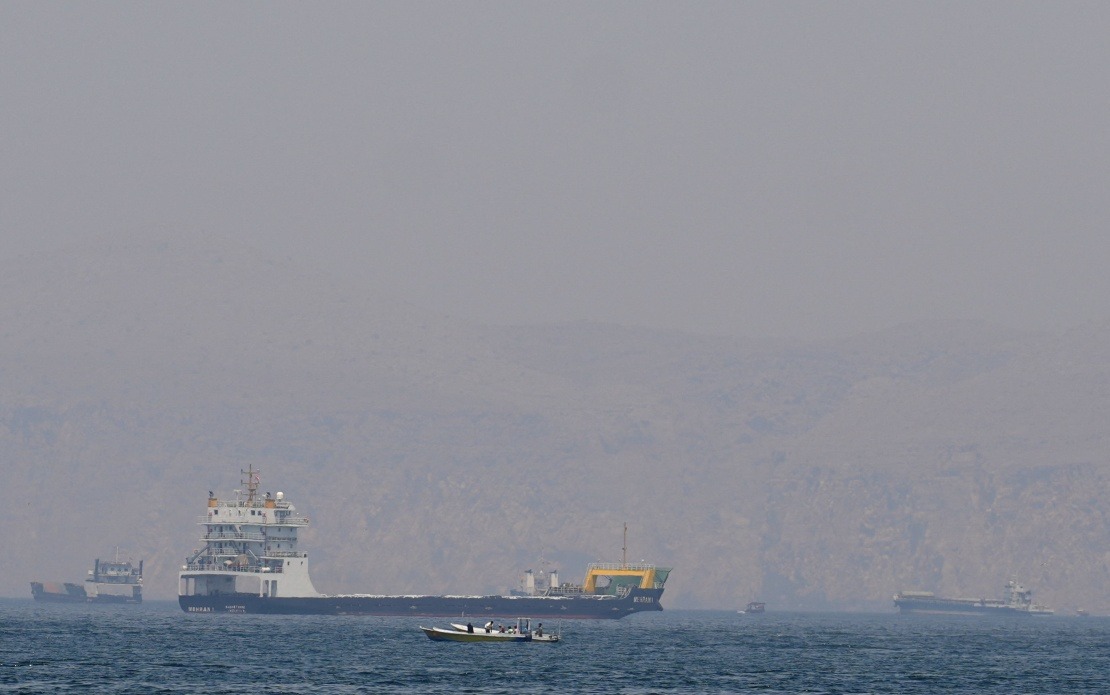
The European Union and the Gulf Cooperation Council have issued a forceful joint statement rejecting what they describe as unlawful attempts by any nation to assert sovereignty or control over the Strait of Hormuz, one of the world's most critical maritime passages. The declaration, made following a high-level security forum, represents a coordinated Western and Gulf response to escalating tensions that have disrupted global shipping and raised concerns across the Indo-Pacific region, including Malaysia, which relies heavily on stable maritime trade routes.
The joint statement emphasizes that no bilateral arrangement or agreement between nations can legitimately restrict the right of passage through international straits. Under established international law, particularly the UN Convention on the Law of the Sea, all countries enjoy the right to transit through such waterways without interference, toll collection, or mandatory authorisation from any coastal state. This principle underpins the global trading system that Southeast Asian economies depend upon, making the EU-GCC position directly relevant to Malaysia's interests as a maritime trading nation.
The statement was issued following the High-Level Forum on Regional Security and Cooperation held in Brussels on July 13, co-chaired by EU foreign policy chief Kaja Kallas and Bahraini Foreign Minister Abdullatif bin Rashid Al-Zayani, representing the GCC Ministerial Council. The participation of senior officials from both blocs underscores the international significance of maintaining freedom of navigation through the strategically vital waterway, which handles roughly one-third of global seaborne traded oil and supports commerce flowing to and from Asian markets.
Critically, the joint statement condemns Iranian attacks on commercial vessels transiting the strait with exceptional severity, labelling such actions violations of international law and UN Security Council Resolution 2817. The two blocs argue these attacks have endangered civilian lives and seafarers from numerous nationalities, creating humanitarian concerns alongside security challenges. For Malaysian shipping companies and those operating in the region, such incidents represent tangible risks to crew safety and cargo security, making the EU-GCC condemnation politically and commercially significant.
The statement demands that Iran immediately and unconditionally cease all attacks and interference with maritime navigation, while maintaining the Strait of Hormuz as an open passage free from conditions, transit fees, or service charges. By explicitly rejecting the imposition of fees or permits, the EU and GCC are protecting the principle of cost-free transit that benefits all trading nations, particularly those without the military capability to guarantee safe passage independently. Malaysia, as a developing maritime economy, benefits substantially from this framework.
The two blocs stressed that security concerns affecting one regional state constitute shared challenges for all nations dependent on the waterway's stability. This language reflects a collective security concept where maritime freedom and shipping protection become mutual responsibilities rather than individual state concerns. The call for continued coordination between EU and GCC members signals an intention to maintain pressure on Iran while potentially deterring further escalation through a unified international stance.
Despite pledging commitment to restraint and diplomatic dialogue as pathways to resolution, the EU and GCC joint position effectively creates diplomatic cover for policies aimed at containing Iranian actions. The emphasis on freedom of navigation and condemnation of attacks establishes clear parameters for acceptable behaviour while theoretically leaving space for negotiated settlements. However, the absence of concrete enforcement mechanisms or specific consequences raises questions about how these principles will be upheld when challenged.
The geopolitical context underpinning this statement extends beyond immediate strait security concerns. The broader US-Iran tension continues to influence regional dynamics, with periodic military exchanges creating unpredictable operational environments for international shipping. The reference to a Pakistan-brokered memorandum of understanding signed in June intended to bring peace illustrates the complexity of Middle Eastern politics, where diplomatic initiatives often struggle to translate into sustained de-escalation on the ground.
For Southeast Asian nations including Malaysia, the EU-GCC statement carries implications beyond symbolic diplomatic coordination. It represents affirmation from major trading partners that freedom of navigation principles remain non-negotiable in international relations. Malaysian exporters, energy importers, and shipping companies operating through or around the Strait of Hormuz derive assurance from explicit international endorsement of unobstructed passage rights. The statement reinforces established legal frameworks that developing maritime economies can invoke when challenging restrictions on legitimate shipping activity.
The declaration also highlights growing coordination between European and Gulf Arab interests, a partnership that has deepened considerably in recent years. For Malaysia and other ASEAN members, this EU-GCC alignment demonstrates that maritime security and freedom of navigation attract support from diverse geopolitical actors, suggesting broader international consensus on maintaining open shipping lanes. This consensus strengthens Malaysia's position in advocating for stable, rules-based maritime governance within regional and global forums.
Looking forward, the practical effectiveness of the EU-GCC position depends on sustained enforcement and credible deterrence against further violations. The statement alone cannot prevent determined state actors from pursuing strategic objectives in contested waters, but it establishes clear international expectations and creates diplomatic costs for violations. For Malaysia and other trading nations, monitoring implementation of these principles and participating in maritime security coordination becomes strategically important.
The longer-term challenge involves translating unified diplomatic positions into mechanisms that genuinely protect commercial shipping without militarising international waters. The EU and GCC commitment to continued coordination suggests ongoing efforts to develop such mechanisms, potentially including intelligence sharing, escort services, or multinational maritime patrols. Malaysia's potential participation in these frameworks warrants careful consideration of both security benefits and diplomatic implications.
Ultimately, the EU-GCC statement represents a significant assertion of international law principles against unilateral attempts to control critical waterways. For Malaysia and Southeast Asia, the endorsement of freedom of navigation from major Western and regional powers reinforces the rules-based maritime order upon which regional prosperity depends. Maintaining this consensus while pursuing diplomatic solutions remains the preferable path to addressing underlying regional tensions.

