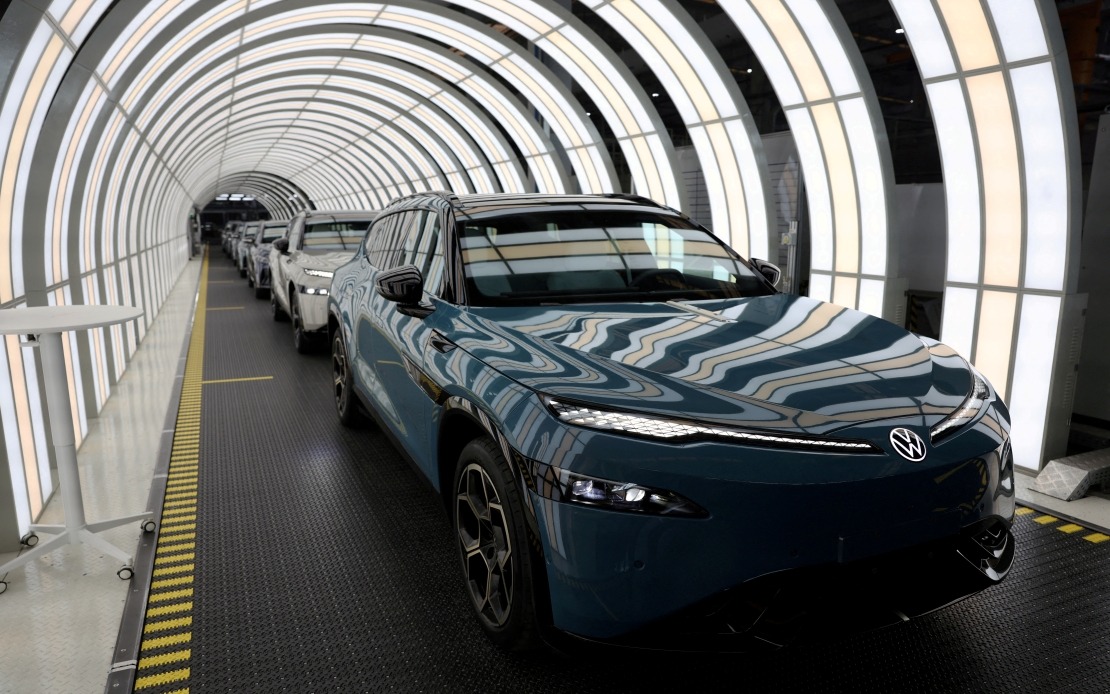
Europe's electric vehicle landscape is undergoing significant structural change as Western manufacturers recalibrate their supply chains in response to protective trade measures. A comprehensive analysis by Transport & Environment, the European transport advocacy group, reveals that major automakers including BMW, Dacia, Volvo, Smart and Tesla have substantially reduced their reliance on Chinese manufacturing facilities, shifting production capacity back toward the European continent following the European Union's introduction of tariffs on Chinese-origin electric vehicles.
The data presents a striking reversal in sourcing patterns among established Western brands. During the first quarter of 2024, Chinese factories supplied 38 per cent of the electric vehicles sold in Europe by Western companies, but this proportion contracted dramatically to just 23 per cent in the opening months of this year. The research, which drew upon production and sales information compiled by GlobalData, demonstrates how tariff policy can rapidly influence manufacturing location decisions even within integrated global supply chains.
Tesla's experience exemplifies this broader trend among Western producers. The American electric vehicle manufacturer, which has significant production capacity in Shanghai, saw the proportion of its China-manufactured vehicles destined for European sales decline from 23 per cent to 19 per cent over the same comparative period. This adjustment, while less dramatic than the aggregate Western brand shift, still signals meaningful reorientation of Tesla's European supply strategy, possibly reflecting concerns about future tariff escalation or uncertainty regarding trade relations.
The tariff regime has not, however, deterred Chinese automakers from pursuing aggressive European market expansion. Companies such as BYD and Geely have maintained momentum in exporting vehicles to Europe despite the additional duties imposed by Brussels in 2024. This apparent contradiction stems from the structure of Chinese automotive capacity. The country maintains substantial excess production capability that would otherwise sit idle, making even tariff-burdened exports economically rational for manufacturers seeking to utilize existing facilities and maintain market presence during a period of slowing domestic demand.
One notable exception to this pattern is SAIC, whose European sales have contracted sharply since the tariff framework took effect. The Chinese manufacturer operates under significantly harsher tariff conditions than competitors such as BYD and Geely, facing duties nearly double those applied to its rivals. The European Union's investigation into subsidies throughout SAIC's supply chain concluded that the company benefited more extensively from state support mechanisms than other Chinese producers, resulting in substantially higher trade barriers that have proven economically prohibitive for market-oriented operations.
Perhaps most significantly for the broader competitive landscape, Chinese automakers have responded to tariff pressure not by retreating but by establishing manufacturing footholds within Europe itself. Since the EU initiated its subsidy investigation in 2023, Chinese companies have announced plans for ten production facilities across the continent. This represents a fundamental strategic pivot, transforming Chinese firms from export-dependent competitors into integrated European manufacturers capable of circumventing tariff constraints while building deeper regional supply chain relationships.
The expansion strategy reflects sophisticated longer-term thinking among Chinese producers. By establishing local manufacturing capacity, companies can qualify for European origin requirements, access local supply chains, and build brand credibility with regional consumers and regulators. This transition from export model to production presence represents a more permanent competitive positioning than tariff-dependent trade relationships. For European policymakers, such facility announcements present complex trade-offs between protecting domestic manufacturers and attracting investment and employment in manufacturing sectors.
Another dimension of Chinese market adaptation involves product portfolio diversification. Rather than relying exclusively on battery electric vehicles, which face tariff barriers and intensifying competition, Chinese manufacturers have increasingly promoted plug-in hybrid vehicles as an alternative pathway into European markets. The proportion of Chinese-manufactured plug-in hybrid vehicles sold in the European Union has expanded remarkably, rising from just 3 per cent market share in 2024 to 13 per cent in the current year. This product shift exploits a regulatory grey area where plug-in hybrids face different emissions standards and tariff treatments than pure electric vehicles.
For Southeast Asian markets and observers, these developments carry important implications. The EU's tariff strategy demonstrates how developed economies are willing to employ trade restrictions to reshape industrial competition, a precedent that may influence regional trade policy discussions. Additionally, the acceleration of Chinese production capacity in Europe suggests that Chinese automakers, despite tariff challenges, remain committed to global market penetration and possess sufficient capital to invest in new production facilities. As these companies establish European operations, they may subsequently explore regional manufacturing and export opportunities throughout Asia, competing directly with Japanese, Korean, and increasingly Malaysian-based automotive producers.
The reorientation of global EV supply chains triggered by EU tariffs illustrates how trade policy, while intended to protect domestic industry, generates countervailing business responses that restructure international competition. Western manufacturers face shorter-term production adjustment costs but benefit from tariff protection and regulatory familiarity. Chinese competitors simultaneously confront higher trade costs but accelerate localization strategies that may ultimately prove more sustainable. The outcome remains uncertain, but the strategic repositioning of multiple manufacturers suggests that Europe's automotive landscape will look substantially different within the next three to five years, with implications extending throughout global vehicle markets.

