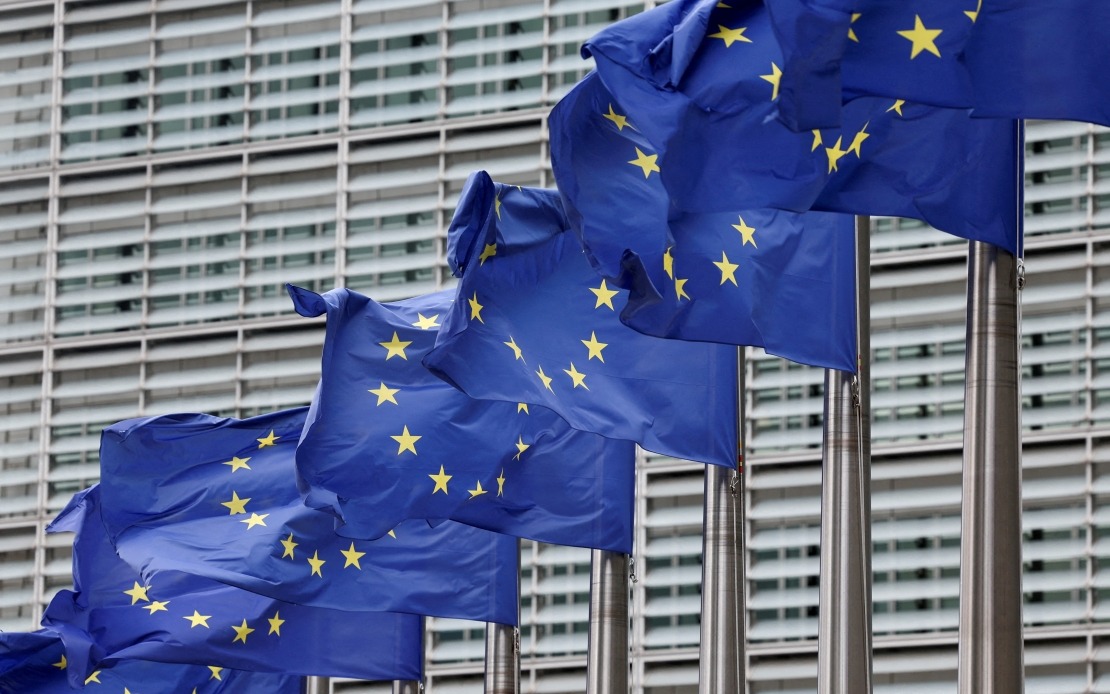
The European Union's foreign policy establishment gathers this week in the Belgian capital to tackle one of the Middle East's most contentious issues: whether to escalate economic pressure on Israel over its continued expansion of settlements into Palestinian territories. The Monday meeting in Brussels will see diplomats from across the bloc wrestle with a question that has consistently exposed fractures within Europe's normally unified diplomatic front, particularly as the region's geopolitical tensions show little sign of abating.
Brussels has prepared a comprehensive menu of potential measures for member states to consider, centring on commercial restrictions that would target goods originating from Israeli settlements. These proposals represent an escalation from past rhetoric, moving from diplomatic criticism into concrete trade mechanisms designed to alter Israel's calculations regarding settlement expansion. The options on the table reflect months of internal discussion within European Commission corridors about how to maintain the EU's stated opposition to settlements while translating that position into measurable economic consequences.
The fundamental challenge confronting EU ministers is procedural as much as political. Should these restrictions be formally classified as foreign policy sanctions, they would require unanimity among all 27 member states—a threshold that has repeatedly proven insurmountable on this issue. Alternatively, if structured as trade measures, they would need only a qualified majority: backing from 15 nations representing at least 65 per cent of the bloc's combined population. This technical distinction carries enormous practical weight, potentially determining whether any measures can actually be implemented or remain merely aspirational.
Internally, the EU's membership presents a stark picture of divergence. Spain, Ireland, and Belgium have emerged as vocal advocates for substantial sanctions, viewing settlement expansion as an intolerable violation of international law that demands forceful response. Their position reflects both principled opposition to what they characterise as colonial practices and growing pressure from constituents increasingly sympathetic to Palestinian grievances. Conversely, Germany and several other influential member states have resisted such moves, citing concerns about effectiveness, potential backlash, and the preservation of diplomatic channels that might eventually facilitate negotiations.
This particular split mirrors broader European divisions that have become increasingly pronounced since October 2023, when regional conflict intensified dramatically. Whereas the EU once presented itself as a unified diplomatic actor capable of coordinating responses to global crises, the Israeli-Palestinian question has repeatedly exposed the impossibility of consensus on Middle East policy. The settlement sanctions debate thus becomes emblematic of Europe's broader struggle to maintain cohesion on contentious international matters where member states harbour fundamentally different strategic interests and values.
For Malaysia and other Southeast Asian observers, the EU's internal struggles carry significance beyond European borders. As a regional bloc that has similarly grappled with maintaining consensus among diverse members on controversial international questions, Malaysia understands intimately the challenges of balancing principle with pragmatism in foreign policy coordination. The EU's experience demonstrates how competing national interests, domestic political pressures, and varying threat assessments can frustrate even well-intentioned efforts at multilateral action on matters of global concern.
The meeting agenda extends beyond Israeli settlements to encompass the continuing regional dimensions of international conflict. Ministers will address developments surrounding Iran, reflecting Europe's persistent anxiety about nuclear proliferation and regional military escalation. Simultaneously, they must grapple with consequences of the Russian invasion of Ukraine, where further sanctions against Russian individuals, entities, and organisations appear likely despite uncertainty about whether a comprehensive trade restrictions package can secure approval. This clustering of Middle Eastern, Persian Gulf, and Eastern European crises underscores the complexity of contemporary diplomacy and the EU's struggle to maintain strategic coherence across multiple geographic theatres.
Ukrainian Foreign Minister Andrii Sybiha's participation in informal consultations signals continued EU commitment to supporting Kyiv's position on the Russian conflict, even as internal disagreements constrain the bloc's ability to undertake swift, unified action on other fronts. The presence of Ukraine's chief diplomat at these discussions underscores how European priorities remain substantially shaped by the ongoing security crisis on the continent's eastern flank, potentially affecting the bandwidth and political capital available for addressing Middle Eastern issues with comparable urgency.
For Malaysian policymakers and analysts observing these developments, several lessons emerge about the limitations and possibilities of multilateral diplomacy. The EU's experience demonstrates that even wealthy, institutionally sophisticated blocs comprising liberal democracies with longstanding relationships cannot easily forge consensus on questions where member states perceive fundamentally different strategic interests. The settlement sanctions debate will likely conclude with either a lowest-common-denominator outcome satisfying no one, or continued postponement pending further diplomatic manoeuvres—outcomes familiar to anyone who has participated in ASEAN consensus-building exercises.
The broader implication concerns the future architecture of international responses to contested geopolitical situations. If the EU cannot unite 27 comparatively aligned democracies on measures against Israeli settlement expansion, prospects for broader global consensus on Middle Eastern questions appear limited. This reality may push individual member states toward more assertive unilateral stances, fragmenting what remains of the multilateral approach to international problem-solving that many Malaysian observers have advocated as essential for regional stability and development.

