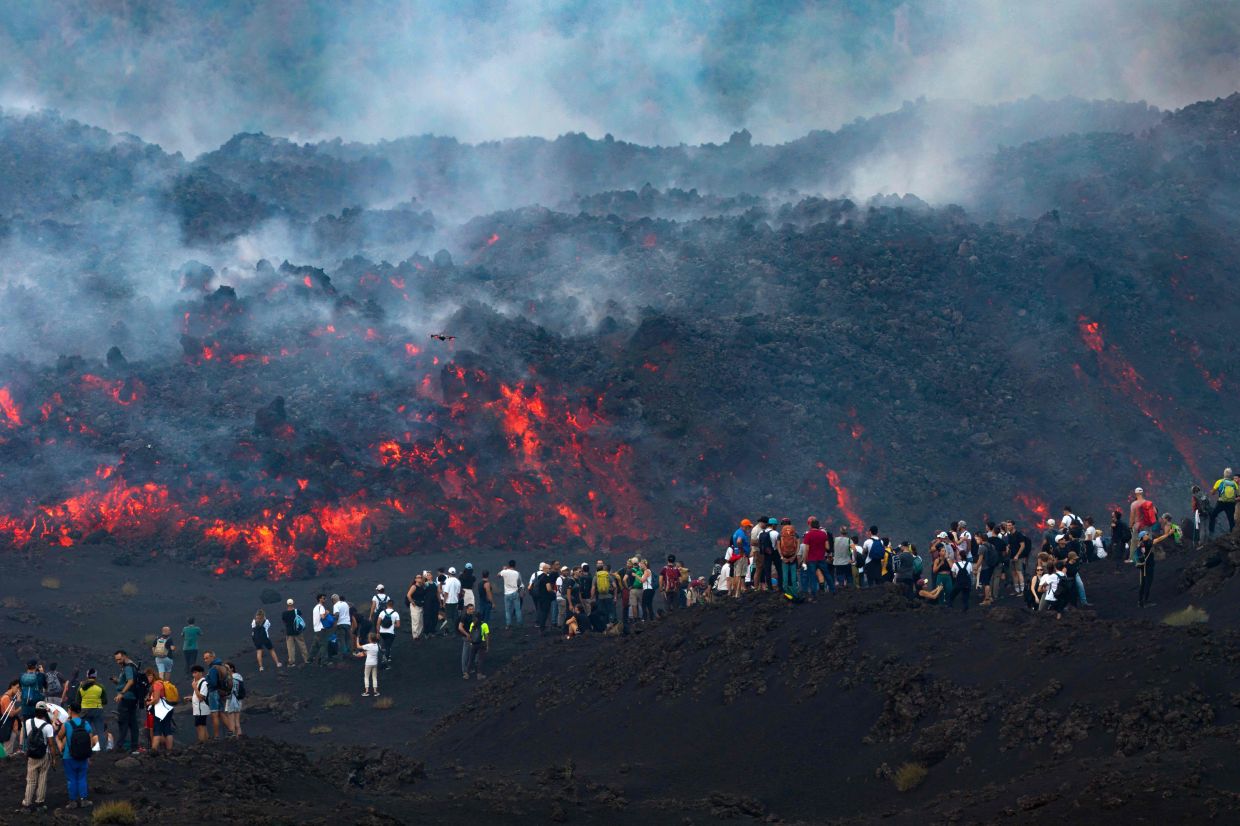
The ongoing eruption of Mount Etna, Europe's most active volcano, is proving as much a magnet for tourists as it is a logistical headache for Sicily's tourism infrastructure. Vivid footage and photographs of molten lava cascading down the volcano's slopes have sparked unprecedented demand for guided tours, with tour operators reporting visitor numbers triple their typical summer figures as people race to witness the spectacle firsthand.
Situated on the island of Sicily, Etna dominates the eastern landscape and stands as the continent's tallest active volcano. The current eruption cycle, which has persisted for several days, has demonstrated the volcano's volatile temperament while simultaneously transforming it into an unexpected tourist phenomenon. The eruption has already forced authorities to close Catania airport, the primary aviation hub serving the island and a crucial gateway for the estimated 12 million annual passengers who transit through this eastern Sicilian facility, according to 2024 figures.
Guide Etna, one of the region's established tour operators, typically accommodates several dozen visitors on evening expeditions to observe the eruption from vantage points along the slopes. The operation has experienced an extraordinary surge in demand, with Daniele Perricelli, the 41-year-old guide who leads these excursions, reporting approximately 300 daily booking requests—triple the average summer volume. Perricelli attributes this surge to the combination of accessibility and the primal human attraction to natural spectacles, noting that visitors are drawn to "this unique beauty" that can be experienced with a degree of relative safety.
Ernesto Maria Magri, another experienced local guide, has characterised the phenomenon as a "touristic eruption" that appeals to large numbers of people precisely because the danger can be managed through proper precautions and expert guidance. However, this assessment must be weighed against the chaotic conditions now developing on the volcano. Magri has observed that not only are tourists scaling the slopes, but many local residents are equally eager to witness the lava flows firsthand, often congregating in disorderly clusters that create additional hazards.
The most troubling aspect of the current situation is the substantial number of visitors attempting to reach the lava without any professional oversight. Perricelli estimates that as many as 2,000 people now climb the volcano every evening, a volume that has rendered the established footpaths dangerously overcrowded. The guide has expressed particular alarm at the apparent lack of preparation among many climbers, reporting sightings of visitors wearing inappropriate footwear such as flip-flops while ascending unstable volcanic terrain. This casual approach to what remains a hazardous environment prompted Perricelli to call for enhanced vigilance from authorities responsible for visitor management and safety enforcement.
The risks inherent in unsupervised climbing stem from Etna's fundamentally unstable composition and the rapidly evolving conditions along the slopes. Perricelli emphasises that a knowledgeable guide is essential for navigating the mountain safely, as the terrain shifts with volcanic activity and hazards that appear dormant may suddenly become active. The ground itself contains unstable pockets, thermal vents, and sudden fissures that only experienced locals can reliably identify. For the uninitiated, the volcano presents numerous concealed dangers that cannot be readily discerned even by careful observation.
Regarding the question of proximity to active lava flows, guides clarify that visitors can indeed approach within several metres of volcanic flows in the lower-altitude sectors where the lava has already begun cooling and solidifying. Current regulations permit unaccompanied climbers to reach approximately 2,400 metres elevation, with professional guidance required beyond this threshold. This regulatory framework theoretically allows for safe viewing of the phenomenon, yet the sheer number of unguided visitors operating on the slopes suggests that many are either unaware of these provisions or disregarding them entirely.
Public attention was drawn to safety lapses following social media criticism of television personality Diletta Leotta, who posted photographs that appeared to show her positioned perilously close to actively glowing lava. These images sparked online debate about the wisdom of encouraging such close-range exposure, even as tour operators maintained that carefully managed proximity remains achievable. The incident highlights the tension between the Instagram-era imperative to document extraordinary experiences and the genuine physical hazards that such documentation may entail.
Italy's civil protection agency has responded by issuing a yellow alert—the second-highest designation on a four-tier warning scale ranging from green to red—indicating frequent eruptions with the potential for explosive episodes. The atmospheric consequences have proven substantial, with ash emissions forcing Catania airport to suspend operations repeatedly over recent days. Italian news sources report that hundreds of flights have been cancelled since Saturday alone, disrupting travel plans across the broader Mediterranean region and demonstrating how a single volcano can reverberate through commercial aviation networks.
The closure of Catania airport carries particular significance for Sicily's tourism sector, as the facility represents the primary entry point for international visitors to one of Italy's most celebrated destinations. The combination of flight cancellations and the volcano's newfound status as a destination unto itself creates competing pressures on the island's tourism infrastructure. While the dramatic eruption attracts visitors willing to brave the hazards, the same eruption simultaneously impedes their ability to arrive and depart via conventional means.
This convergence of circumstances—spectacular natural phenomena, inadequate visitor management, insufficient preparation among participants, and infrastructure strain—illustrates the complex relationship between geological events and tourism in the modern era. Etna's eruption offers a case study in how natural wonders can rapidly overwhelm local systems designed for ordinary circumstances. For Malaysia and other Southeast Asian destinations with significant volcanic activity, including Indonesia's numerous active volcanoes, the Mount Etna situation offers cautionary lessons about the need for robust safety protocols and visitor management frameworks that can scale rapidly when geological events capture global attention and draw unexpected crowds.

