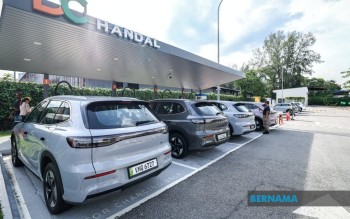
Malaysia's electric vehicle sector is poised for substantial growth over the coming three to five years, with technological expertise flowing from established EV markets like China to support this expansion. However, the head of Xi'an LINCHR New Energy Technology Co Ltd has issued a pointed caution: importing overseas charging solutions without meaningful localisation risks creating infrastructure poorly suited to the country's unique operating environment. Yuan Qingmin, chairman of the company, presented this perspective while participating in the Global Automotive and Technology Expo at the Malaysia International Trade and Exhibition Centre from August 26 to 28, underscoring a tension that many developing markets face when adopting technologies pioneered elsewhere.
The relationship between EV uptake and charging infrastructure is fundamentally symbiotic, with bottlenecks in one domain inevitably constraining progress in the other. Malaysia's policymakers and industry stakeholders must therefore grapple with the reality that a robust charging network is not merely convenient but essential infrastructure for meeting electrification targets. Yuan's remarks reflect a deeper understanding of this interdependence, particularly given China's early leadership in both EV manufacturing and the supporting ecosystem of charging stations and smart grid integration. Yet his insistence that localisation requires deliberate research, development, and adaptation suggests that blindly transplanting Chinese solutions would constitute a strategic misstep.
LINCHR's testing technology commands more than 70 per cent of China's market share, giving the firm substantial credibility in a rapidly evolving sector. The company's decision to partner with local manufacturer Swift Bridge Technologies demonstrates a recognition that meaningful technology transfer requires collaboration rooted in understanding local contexts. This collaboration extends across multiple dimensions: charging infrastructure standards, product design, technology specifications, and engineering solutions tailored to regional requirements. Such partnerships differ fundamentally from simple equipment sales, instead representing a commitment to building genuine local capacity and expertise.
One concrete example of necessary adaptation involves the physical design of charging station components. Malaysia's tropical climate—characterised by high humidity, intense heat, and salt-laden air in coastal regions—poses distinct challenges for electronic equipment. LINCHR has responded by implementing oil-immersed insulation designs for printed circuit boards, a modification specifically intended to enhance resistance to salt spray corrosion and moisture ingress. This seemingly technical adjustment reflects a broader principle: equipment that functions adequately in China's diverse climates may degrade prematurely under Malaysia's unrelenting humidity and saline conditions, ultimately reducing infrastructure reliability and increasing maintenance costs.
Standardisation and testing protocols represent another critical frontier for technology localisation. In March of the previous year, LINCHR, Swift Bridge Technologies, and the Standards and Industrial Research Institute of Malaysia formalised a tripartite cooperation agreement aimed at establishing charging infrastructure testing and certification standards applicable to Malaysia's context. Subsequent work has focused on developing testing methodologies and upgrading laboratory equipment to ensure that charging stations deployed locally meet both safety and performance criteria suited to Malaysian conditions. This collaborative approach to standards-setting distinguishes genuine technology transfer from mere vendor relationships, embedding quality assurance at foundational levels.
The emergence of Chinese smart charging solutions in Malaysia occurs against a backdrop of the country's broader energy transition ambitions. As Southeast Asia's second-largest economy by GDP, Malaysia's EV market trajectory will significantly influence regional adoption patterns, supply chain development, and technology investment flows across the broader ASEAN community. Malaysian success in establishing appropriate charging infrastructure standards and locally adapted technologies could therefore serve as a template for neighbouring countries pursuing similar electrification objectives, magnifying the stakes of getting localisation decisions correct.
Yuan's perspective that technology transfer extends beyond mere replication reflects maturity in thinking about how emerging markets integrate advanced technologies. Simply mimicking China's approach, while potentially meeting minimum functionality requirements, would neglect the specific environmental, regulatory, and operational contexts that define Malaysia's charging ecosystem. The alternative approach—genuine partnership combining foreign technical expertise with local knowledge, climate awareness, and continuous improvement through R&D collaboration—positions Malaysia to develop an EV charging infrastructure genuinely optimised for its own conditions rather than optimised for somewhere else.
The trajectory of EV charging technology itself is evolving in directions that amplify the importance of localised development pathways. Yuan noted that as vehicles become increasingly connected and intelligent, charging infrastructure will need to accommodate bidirectional energy flows, enabling vehicles to feed surplus electricity back into the grid. This vision of EVs as mobile energy storage assets interacting dynamically with electrical networks represents a substantial departure from today's unidirectional charging paradigm. Implementing such sophisticated systems in Malaysia would require not merely adapting existing Chinese technology but developing entirely new local capabilities in vehicle-to-grid integration, real-time energy management, and grid interaction protocols suited to Malaysia's electrical infrastructure and regulatory frameworks.
The participation of government agencies, energy companies, operators, and industry stakeholders at GATE 2026 reflects growing recognition that EV charging infrastructure transcends narrow commercial concerns, instead representing strategic national infrastructure warranting coordinated development. LINCHR's visibility at this forum signals growing confidence among Chinese technology firms in Malaysia as a significant regional market, while also creating opportunities for knowledge exchange and relationship-building among the ecosystem of actors essential for successful deployment.
For Malaysian policymakers and industry participants, Yuan's emphasis on adaptation over replication carries important implications for how technology partnerships are structured and evaluated. Rather than prioritising lowest-cost equipment imports, frameworks should incentivise arrangements that deepen local technical capacity, establish domestic testing and certification capabilities, and ensure that infrastructure specifications reflect Malaysia's specific operating environment. This approach requires longer investment horizons and more complex partnerships than simple procurement, but ultimately yields charging networks better performing, more durable, and more attuned to supporting Malaysia's EV market maturation.

