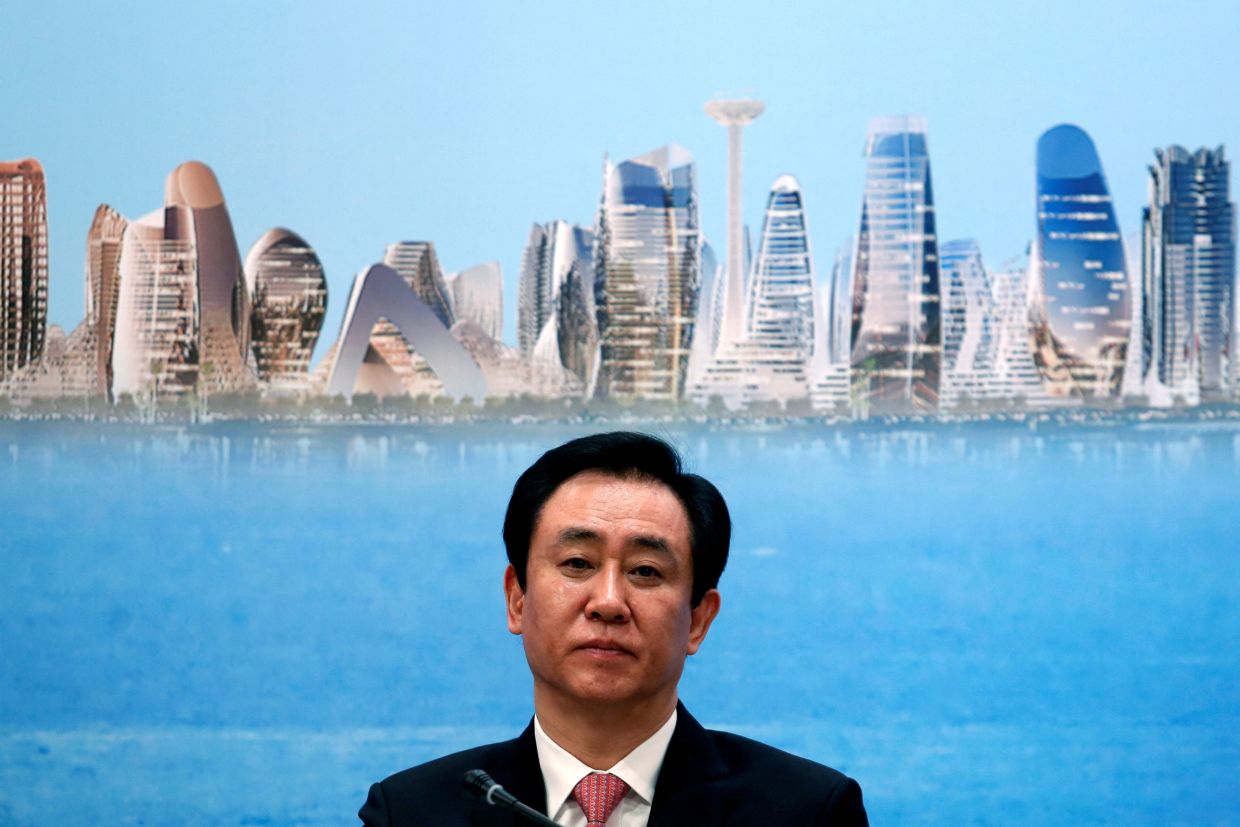
Hui Ka Yan, who once commanded a fortune exceeding US$45 billion and held the title of Asia's richest businessman, now faces life imprisonment following a court verdict delivered in Shenzhen on Thursday. The founder of China Evergrande Group, the world's most heavily indebted property developer, pleaded guilty in April to eight charges spanning misuse of funds, fundraising fraud, illegally soliciting public deposits, unauthorised lending arrangements, securities fraud and bribery. The sentencing represents the dramatic conclusion to one of Asia's most spectacular financial collapses, though it offers scant consolation to the millions of creditors and ordinary investors left holding catastrophic losses.
Hui's downfall stands as a cautionary tale in China's property sector, an industry that has functioned as a crucial pillar of the nation's economic growth for decades. Evergrande once commanded the position of China's premier real estate developer, amassing unprecedented market share through aggressive debt accumulation and relentless expansion. The firm's spectacular unravelling has reverberated far beyond Shanghai's financial district, exposing structural vulnerabilities within the world's second-largest economy and triggering widespread contagion throughout regional and global markets. With defaulted liabilities totalling approximately US$300 billion, Evergrande's crisis has served as a visible symbol of deeper malaise afflicting China's property landscape, where overleveraged developers and speculative excess had accumulated over many years.
The court's pronouncement included sweeping additional penalties alongside the life sentence. Authorities confiscated all of Hui's personal property and imposed fines totalling 8.82 billion yuan (approximately US$1.31 billion) against Evergrande itself, with its principal subsidiary Hengda receiving fines of 7 billion yuan. Five other senior executives received prison sentences ranging from six to eighteen years, whilst an additional fifty-six individuals connected to Evergrande received various criminal convictions on the same day. This coordinated judicial reckoning signals the Chinese government's determination to hold corporate leadership accountable for what the court characterised as crimes involving "particularly huge amounts and egregious circumstances."
The broader liquidation process now underway reveals just how substantial the financial damage has become. A Hong Kong court ordered Evergrande's formal liquidation in 2024, with the Hong Kong Stock Exchange subsequently delisting the company, terminating its existence as a publicly traded entity. However, the actual recovery of creditor funds has proceeded at an agonisingly slow pace. As of August of last year, liquidators had managed to convert only approximately US$255 million worth of assets into cash, representing a tiny fraction of the US$45 billion in total creditor claims now pending against the company. This vast chasm between available assets and outstanding obligations means that even with criminal prosecutions and asset seizures, ordinary investors face the grim prospect of recovering only pennies for every dollar they invested.
The human cost of Evergrande's failure extends well beyond statistical measures of financial loss. The collapse of wealth-management products directly harmed millions of ordinary Chinese citizens, many of them retirees or workers from lower-income brackets who had entrusted their life savings to investment vehicles marketed by the company. When these investments evaporated, homeowners and creditors took to social media to express their anguish, with comments captured in one prominent online forum encapsulating the sense of betrayal: "All ordinary citizens have paid the cost," read one entry, whilst another sardonically observed that "imprisonment is meant to protect him. If he comes out, his life is in jeopardy." Such commentary underscores the depth of public anger and the real hardship inflicted on millions of households across China.
Hui's trajectory from rural poverty to billionaire status represents the quintessential narrative arc of China's reform era, yet his fall reveals the risks embedded within a system where rapid accumulation outpaced regulatory oversight. Born in a modest village in Henan province and raised by his grandmother, Hui founded Evergrande in 1996 during China's early privatisation period. Through two decades of relentless expansion and increasingly bold financial engineering, he transformed the venture into China's largest property developer by contracted sales volume. By 2017, Forbes ranked him as Asia's wealthiest individual with a net worth of US$45.3 billion, a staggering achievement that seemed to validate his business model even as hidden vulnerabilities accumulated within Evergrande's bloated balance sheet.
The eventual unravelling began when Evergrande proved unable to service its mounting debt obligations, triggering defaults on billions of dollars in wealth-management products beginning in 2021. This inability to meet commitments sparked domestic protests that rippled across Chinese cities, creating social stability concerns for government authorities already managing slowdown pressures throughout the economy. The defaults also triggered international legal proceedings, with liquidators now pursuing claims in foreign courts to recover offshore assets and frozen dividends that Hui and other senior executives had extracted from the company during its boom years. These efforts have targeted approximately US$6 billion in dividends and executive compensation that flowed to insiders whilst the company's underlying financial condition continued to deteriorate.
Regulatory authorities have mounted complementary enforcement actions against both Hui personally and Evergrande's corporate entities. China's securities regulator imposed a US$6.6 million fine against Hui in 2024 and imposed a lifetime ban from securities market participation, following investigations that determined Evergrande's flagship unit had systematically inflated earnings reports and engaged in securities fraud. These regulatory findings underscore that criminal conduct extended well beyond the eight counts to which Hui eventually pleaded guilty, suggesting that prosecutors likely possessed additional evidence of malfeasance that remained unexposed in formal legal proceedings.
The implications for Malaysia and Southeast Asian markets warrant serious consideration. Hui's conviction demonstrates how Chinese regulatory authorities are now willing to pursue aggressive criminal prosecutions against prominent business figures, signalling a harder line on financial fraud and corporate misconduct. For Malaysian investors and businesses with exposure to Chinese property developers or financial products, the Evergrande saga serves as a stark reminder of counterparty risks and the importance of rigorous due diligence. The slow liquidation process, now entering its second year with minimal asset recovery, shows that even when criminal convictions occur, creditor compensation remains painfully limited.
Regional financial institutions and investment funds that held Evergrande exposure experienced significant losses that reverberated through Malaysian and Southeast Asian portfolios. The property crisis in China has also indirectly dampened regional economic growth, as Chinese demand for Southeast Asian commodities and manufactured goods softened alongside the retrenchment in the domestic property sector. Going forward, Malaysian policymakers and regulators should remain vigilant regarding the property sector's health, both domestically and across major trading partners like China, recognising that real estate market instability can trigger systemic financial shocks with considerable regional spillover effects.
Hui's life sentence formally concludes one of Asia's most dramatic financial narratives, yet the underlying questions about governance, transparency and accountability in property development continue to reverberate across China and the broader region. The court's statement emphasised that Hui's criminal acts "caused particularly significant economic losses and caused particularly serious social harm," language that underscore the magnitude of the damage inflicted. Yet for the millions of Chinese households still awaiting compensation from Evergrande's frozen assets, criminal punishment for the founder offers limited practical relief. The sentence instead stands primarily as a symbolic gesture of state authority and a warning to other corporate executives tempted toward similar financial misconduct, even as the underlying structural challenges within China's property sector remain far from resolution.

