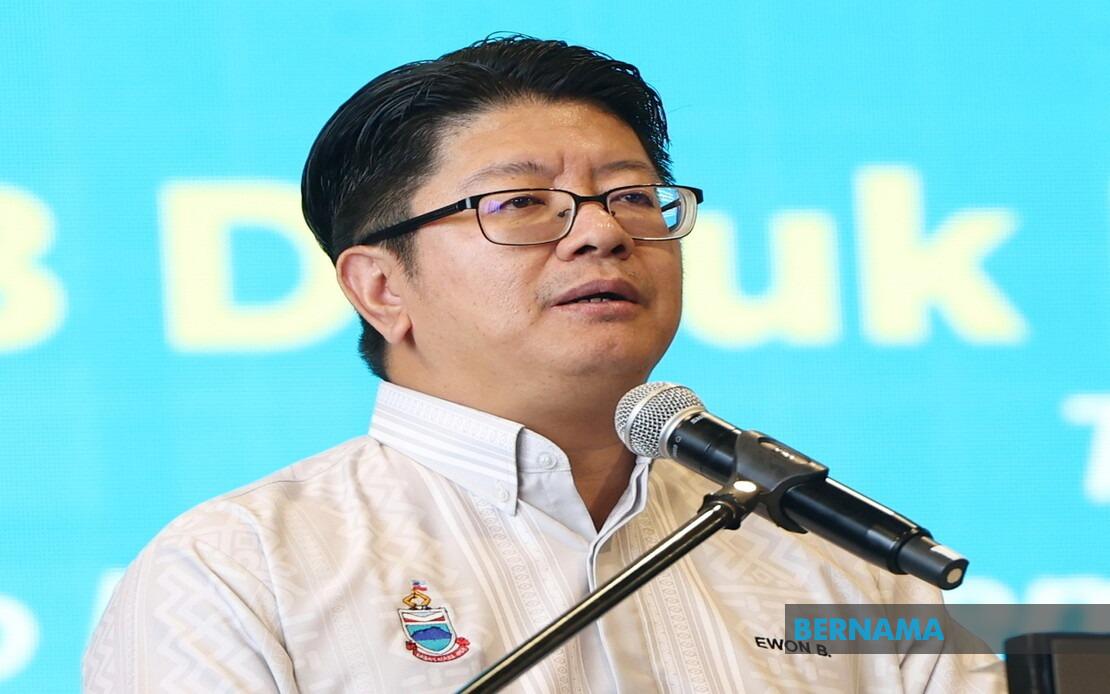
The United Progressive Kinabalu Organisation has affirmed continuity in its top leadership, with Datuk Ewon Benedick and Datuk Donald Peter Mojuntin securing reelection as president and deputy president respectively for the 2026-2029 term. The unopposed victories came during voting at the party's 17th triennial delegates conference held in Penampang, reflecting broad internal consensus among the party's grassroots membership on the direction of leadership.
Accompanying the reelection of the party's two most senior positions, five vice-presidents also secured their roles without contest. Jairaiaz Joseph, Datuk Wong Thien Fook, Datuk Pangiran Lalung, Datuk Basari Sarikun, and Datuk Dr Laurentius Nayan Ambu will continue their responsibilities in the upper echelons of the party structure. The absence of challenges to these positions suggests the party's membership views the current senior management as effective stewards of the organisation's interests during what has been a period of relative stability within Sabah's political landscape.
During his closing remarks at the conference, Ewon articulated a vision of institutional strength rooted in democratic participation. He acknowledged the delegates' decisions while emphasising that electoral processes, even when uncontested, remain crucial to legitimising the party's internal governance. His emphasis on unity rather than division reflects an understanding that Sabah's coalition politics—where UPKO sits within the Gabungan Rakyat Sabah framework—demands cohesion at the state level to maintain influence within government structures and policy discussions.
The party president's characterisation of UPKO membership as a "big family" carries particular resonance in the Malaysian context, where intra-party factionalisms have destabilised several major organisations. By framing the organisation around kinship bonds rather than purely transactional political relationships, Ewon seeks to build resilience against the personalised conflicts that have plagued other parties. This rhetorical approach also acknowledges UPKO's deep roots in Sabah's indigenous communities, where family and ethnic networks remain primary organising principles.
Ewon also underscored the new leadership's responsibility to translate party resolutions into tangible government action. This obligation extends through multiple channels—direct engagement with Sabah Chief Minister Datuk Seri Hajiji Noor in his capacity as Gabungan Rakyat Sabah chairman, parliamentary and state assembly debates, and behind-the-scenes policy development. For a smaller coalition partner like UPKO, this multifaceted advocacy approach is essential to ensuring minority interests receive adequate consideration within GRS decision-making processes.
Beyond the senior echelons, several UPKO wings underwent leadership transitions that signal generational renewal within the organisation. Carlye Lajimin assumed the youth chief position, displacing the previous occupant, whilst Newbaxter Tibin entered the youth leadership structure as deputy chief. These changes indicate the party is attempting to refresh its interface with younger voters and party members, a demographic consideration increasingly important as Malaysian politics becomes more volatile and ideologically fluid at the grassroots level.
In the party's women's wing, Mohina Sidom successfully defended her position as chief, suggesting her previous tenure was well-received by party women and demonstrating stable confidence in her stewardship. Her retention stands in contrast to the youth wing rotation, indicating that the party values consistency in certain leadership roles whilst embracing change in others. The election of Lomiti Jahan as deputy chief adds another female voice to women's wing decision-making structures.
The party's generational wing also experienced leadership changes with Emmanuel Atin elected chief and Alison Chan as deputy chief. This tier of party machinery, focused on individuals beyond youth but not yet in senior party roles, remains critical for building long-term institutional capacity. In Sabah's context, where UPKO has long served as a representative vehicle for specific community interests, ensuring robust bench strength across age cohorts protects against leadership vacancies caused by retirement, health issues, or unexpected political transitions.
These internal developments occur against the backdrop of Sabah's broader political dynamics. The Gabungan Rakyat Sabah coalition, formed in 2021, has thus far maintained stability compared to earlier periods of fluid coalition-building in the state. UPKO's role within GRS, though representing a minority of the coalition's legislative seats, carries outsized importance in Sabah's ethnic politics. By maintaining experienced leadership whilst introducing fresh voices in mid-tier positions, the party aims to preserve institutional memory whilst signalling openness to generational change.
For Malaysian political observers more broadly, UPKO's internal stability contrasts with turbulence in other major parties undergoing leadership transitions or factional disputes. The unopposed nature of the elections at the triennial conference suggests the party has achieved a degree of internal equilibrium that eludes larger national organisations. Whether this reflects genuine consensus or the suppression of alternative voices remains a question that scholars of intra-party democracy continue to examine.
Looking forward to the 2026-2029 term, UPKO's reconstituted leadership faces several challenges. These include maintaining relevance for younger Sabahans who increasingly participate in electoral politics, ensuring the party's voice remains heard within GRS policy discussions, and adapting to evolving voter expectations around governance and service delivery. The party's decision to retain experienced senior leaders whilst renewing younger echelons suggests an institutional strategy of balancing continuity with measured reform—a pragmatic approach suited to the risks and opportunities that will likely define Sabah politics through the next election cycle.

