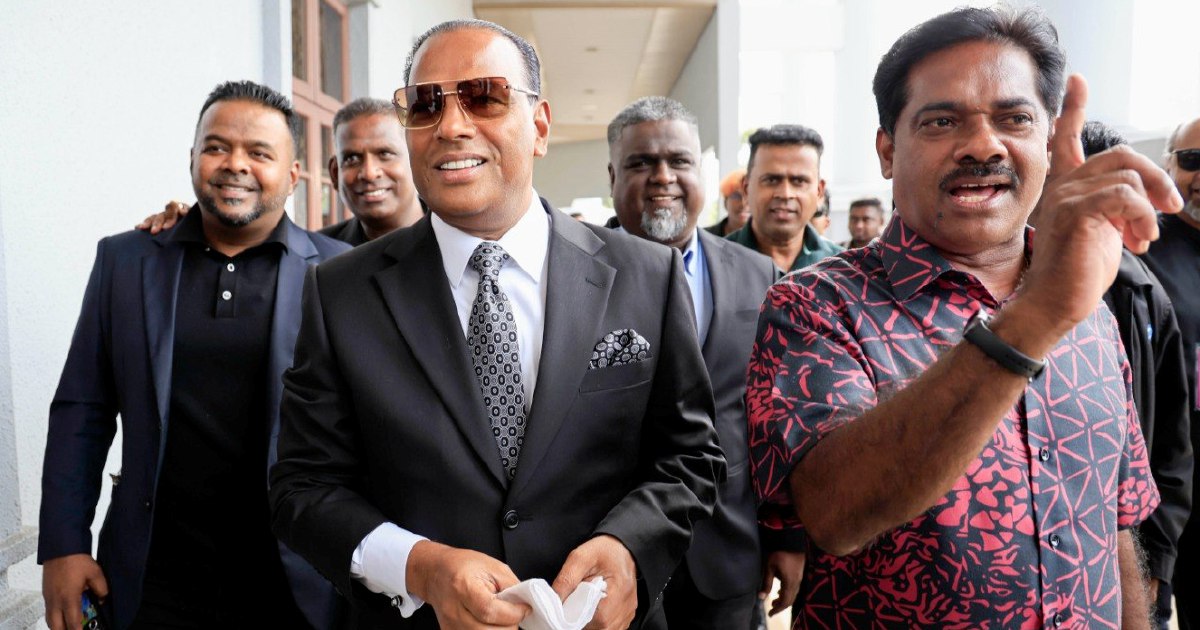
Datuk Seri M. Saravanan, who previously served as Human Resources minister, has strongly rejected corruption allegations levelled against him, dismissing the charges as baseless accusations devoid of merit. The former cabinet member faces three separate counts of allegedly receiving RM1.097 million in bribes, a claim he has publicly described as a "wild accusation" that lacks foundation.
The charges represent a significant development in Malaysia's ongoing anti-corruption efforts, which have intensified considerably since institutional reforms were implemented following the country's previous electoral cycle. Such high-profile cases involving former government ministers continue to dominate the political landscape and raise questions about governance standards within the country's administrative structures. The timing and nature of these allegations underscore the persistent challenges surrounding financial impropriety at senior levels of government.
Saravanan's categorical denial of the accusations reflects a pattern commonly observed when senior political figures face corruption charges in Malaysia. His assertion that the allegations constitute unfounded claims contrasts sharply with the formal nature of legal proceedings initiated against him. The characterisation as a "wild accusation" suggests his legal team intends to mount a vigorous defence, challenging both the evidence presented and the credibility of those making the allegations.
The former minister's tenure in the Human Resources portfolio placed him in a position overseeing policies affecting millions of Malaysian workers and employers. During his time in office, he would have wielded significant influence over labour policies, workplace regulations, and government contracts within the human resources sector. This prominence makes the allegations particularly noteworthy from a governance perspective, as corruption at ministerial level potentially undermines public confidence in institutional integrity and fair administration of government services.
Corruption investigations targeting former ministers have become increasingly common in Malaysia's legal system, reflecting greater institutional independence and willingness to pursue high-profile cases. The Anti-Corruption Commission's decision to charge Saravanan indicates a substantial investigation likely involving documentary evidence, witness testimonies, and financial records. Such cases typically require extensive groundwork before charges are formally filed, suggesting prosecutors possess material they deem sufficiently compelling to proceed with legal action.
The allegations carry implications beyond individual accountability, touching on broader questions about the public service's integrity and the mechanisms through which oversight operates. For Malaysian citizens and the business community alike, high-profile corruption cases serve as indicators of whether the state's institutions function effectively in rooting out wrongdoing among the powerful. Each prosecution or acquittal sends signals about the strength and impartiality of the country's anti-corruption apparatus.
Saravanan's defence strategy will likely focus on discrediting the allegations and scrutinising the evidence presented by prosecutors. Given the complexity of financial crime investigations, his legal team may challenge the chain of evidence, witness credibility, or the interpretation of transactions presented as bribes. Such defences are standard in corruption cases involving substantial sums of money, where demonstrating intent and direct bribery can prove legally challenging despite circumstantial evidence.
The case unfolds within Malaysia's broader political context, where corruption remains a persistent concern for policymakers and citizens. International observers have noted fluctuations in the country's anti-corruption ranking depending on political circumstances and institutional capacity. Cases involving former ministers carry symbolic weight beyond their immediate legal significance, representing either institutional strength or perceived political selectivity, depending on observers' perspectives.
The financial quantum involved—RM1.097 million across three charges—suggests transactions significant enough to warrant serious investigation but not necessarily indicating the scale of some previous high-profile corruption cases. This magnitude places the allegations within a range that demands careful examination of documentation, transaction trails, and the relationships between Saravanan and those allegedly providing the bribes. Prosecutors will need to establish clear links between payments received and ministerial actions or decisions favouring those making the payments.
Looking forward, the case will proceed through Malaysia's court system, where the burden of proof rests with prosecutors to establish guilt beyond reasonable doubt. Saravanan's emphatic rejection of the charges suggests he intends a full legal battle rather than negotiated resolution. The proceedings will be closely monitored by political observers, civil society groups tracking anti-corruption efforts, and international organisations assessing Malaysia's governance standards.
For the broader conversation about institutional accountability in Malaysia, this case represents a test of whether the country's legal mechanisms can operate effectively regardless of the accused's former status or political connections. Each such proceeding contributes to either reinforcing or undermining public confidence in the impartiality of Malaysia's courts and enforcement agencies. The outcome will likely have resonance beyond Saravanan himself, influencing perceptions of institutional integrity among government officials and the public.

