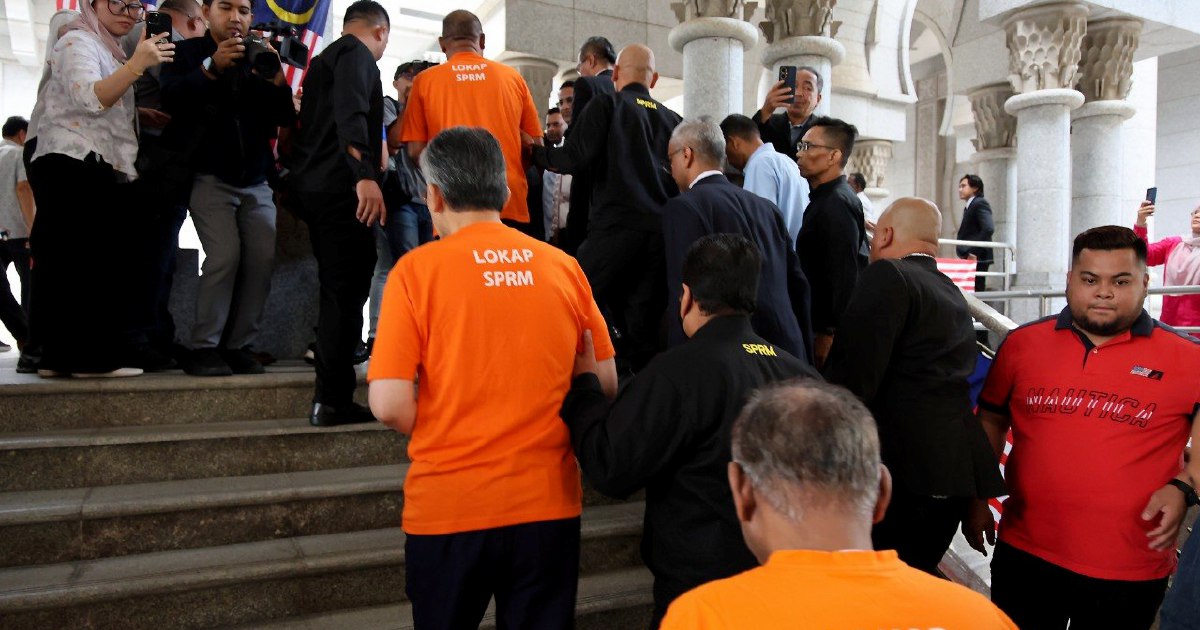
Two high-ranking former government officials appeared at the Putrajaya magistrates' court for remand hearings, marking a significant moment in what appears to be a substantial inquiry into administrative and financial management within Malaysia's public institutions. The former chairman of Lembaga Tabung Haji, the Malaysian pilgrimage financial body, and a retired Treasury secretary-general both presented themselves before the court to address detention matters in connection with ongoing investigations.
The simultaneous appearance of both officials at the federal court venue signals the interconnected nature of the investigation, suggesting that authorities are examining transactions or decisions that span multiple government agencies. The involvement of Lembaga Tabung Haji, a constitutionally established entity entrusted with managing funds for Malaysian Muslims undertaking the hajj pilgrimage, indicates that the inquiry may concern the stewardship of public resources of considerable significance to the national Muslim community. The presence of a former Treasury secretary-general, the most senior financial administrator in the civil service, reinforces the gravity and institutional scope of the matter.
Remand hearings represent a critical juncture in the Malaysian legal process, where courts determine whether detained individuals should remain in custody pending trial or investigation completion. During such proceedings, prosecutors typically present evidence justifying continued detention, while defence teams argue for bail or release conditions. The outcome of these hearings frequently sets the tone for subsequent legal proceedings and can significantly impact how investigations progress. For individuals of the stature of a former TH chairman and Treasury secretary-general, such court appearances invariably attract public and media scrutiny, particularly given the custodial positions they previously held.
Lembaga Tabung Haji itself has undergone considerable scrutiny in recent years, with various questions raised about investment management, operational efficiency, and governance structures. As a statutory body managing billions of ringgit in pilgrim savings, the organisation operates under intense public interest, as its performance directly affects the financial security of ordinary Malaysians planning their religious obligations. Any investigation touching on its leadership therefore carries implications extending beyond individual accountability to questions about institutional integrity and the adequacy of oversight mechanisms governing such important financial bodies.
The Treasury secretary-general position represents one of the most influential roles in Malaysia's administrative hierarchy, wielding substantial authority over budgetary decisions, fiscal policy implementation, and coordination of government financial operations. A former holder of this office undergoing remand proceedings would naturally draw attention from financial markets, civil service observers, and international watchdogs monitoring governance standards. The circumstances prompting investigation into such a senior figure's activities often reflect systematic concerns rather than isolated irregularities, potentially pointing to procedural deficiencies or control gaps within government financial administration.
For Malaysian readers, the unfolding legal process carries broader implications regarding accountability standards within the public sector. The visibility of these proceedings at the federal court level, combined with the seniority of those involved, sends signals about the authorities' commitment to investigating financial propriety at the highest levels of government. Such cases often catalyse discussions about strengthening oversight institutions, enhancing transparency in public financial management, and reinforcing consequences for administrative misconduct, regardless of an individual's former position or rank.
The timing and nature of these remand hearings may also influence broader conversations within Southeast Asia regarding governance and anti-corruption frameworks. As regional economies grapple with questions about institutional strength and the rule of law, visible enforcement against high-ranking officials demonstrates or tests the resilience of Malaysia's independent judicial and investigative institutions. International observers, including rating agencies and foreign investors evaluating Malaysia's investment climate, frequently monitor how legal systems handle cases involving powerful former officials as barometers of institutional integrity.
For the Malaysian public sector workforce, proceedings of this magnitude can affect institutional morale and operational culture. Questions surrounding the conduct of former top officials prompt civil servants to reflect on ethical standards, compliance expectations, and the potential consequences of administrative decisions. Conversely, if due process is observed and the legal system functions transparently, such cases can reinforce confidence in institutional mechanisms designed to police official misconduct and maintain standards across government agencies.
The remand hearing process itself will likely reveal more details about the specific allegations, the nature of evidence prosecutors have marshalled, and the legal arguments defence counsel will advance. Subsequent court appearances, decisions on bail or detention, and eventual trial proceedings will progressively illuminate the factual circumstances and legal questions at issue. For now, the appearance of both officials before the Putrajaya magistrates' court represents a visible manifestation of investigative progress and the judicial system's engagement with matters affecting significant public institutions and substantial sums of public trust.

