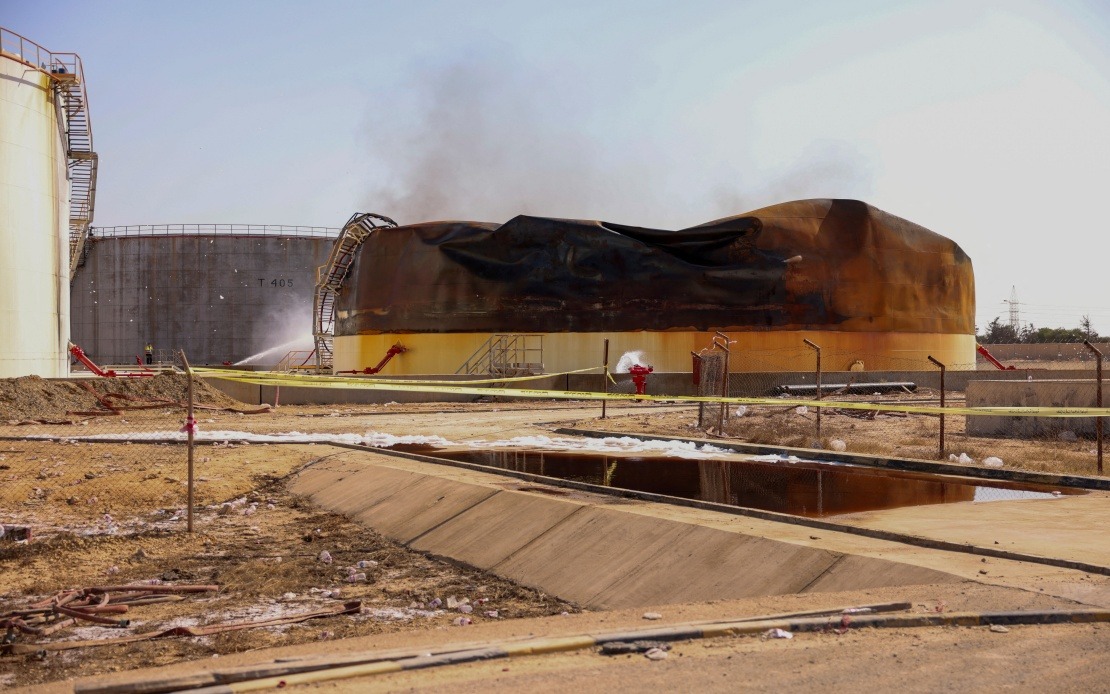
Critical energy infrastructure in western Libya has suffered a significant setback following a Saturday explosion near the Zawiya power plant, which disabled multiple electricity generation units and intensified concerns about the nation's vulnerability to sabotage and attack. The General Electricity Company of Libya (GECOL) confirmed the incident occurred near the facility, resulting in the immediate shutdown of several generating units and widespread power disruptions across the region.
LIBYA's electrical grid, already fragile from years of civil conflict and institutional weakness, faces mounting pressure as technical teams mobilise to restore service. GECOL announced that investigations were underway to establish the precise technical circumstances and root cause of the explosion, though authorities have not yet determined whether the incident resulted from mechanical failure, sabotage, or external attack. The company's acknowledgement that power restoration would occur only gradually suggests the damage was substantial enough to require methodical repair work rather than simple system reboots.
The timing of this incident carries particular significance given Libya's recent security trajectory. Merely one week prior to Saturday's explosion, unidentified drone strikes targeted multiple critical installations in Zawiya, including petroleum storage facilities, desalination plants that supply fresh water, and additional power infrastructure. That coordinated assault demonstrated sophisticated operational capability and raised alarm bells about Libya's capacity to defend its essential systems against organised threats. The absence of any group claiming responsibility for either the drone attacks or the power plant explosion has left authorities and analysts grappling with fundamental questions about who is targeting these facilities and why.
Zawiya itself occupies substantial strategic and economic importance within Libya's western region. The city serves as a crucial nexus for energy production, water provision, and commerce, making successive strikes against its infrastructure particularly damaging to regional stability and citizen wellbeing. Each disruption to electricity supply cascades through hospitals, water systems, communications networks, and commercial enterprises, creating humanitarian ripple effects that extend far beyond technical infrastructure concerns. Residents already accustomed to chronic power shortages now face renewed uncertainty about basic service reliability.
GECOL's public apology to citizens reflected the political sensitivity surrounding repeated power failures in a nation already struggling with governance legitimacy. The company committed to continuous operations until the electricity grid achieves full stabilisation, signalling that authorities recognise the urgency of the situation and understand that prolonged outages risk deepening public frustration and potentially fuelling further instability. However, such commitments carry limited weight without transparent timelines and demonstrable progress.
Libya's broader energy predicament transcends the immediate Zawiya incident and reflects structural vulnerabilities accumulated over more than a decade of fragmentation and conflict. The country possesses vast petroleum reserves and significant hydrocarbon export capacity, yet paradoxically struggles to generate reliable domestic electricity. Infrastructure neglect, insufficient investment, brain drain of technical expertise, and the absence of coherent national governance have left power generation systems chronically undercapitalised and poorly maintained. Recent violence against energy facilities compounds these baseline weaknesses dramatically.
For Southeast Asian observers, Libya's trajectory offers cautionary insights into how protracted instability erodes state capacity to deliver fundamental services. Malaysia and the region have maintained careful diplomatic engagement with Libya and broader Middle Eastern and North African partners, with significant energy trade relationships. Deteriorating conditions in Libya could indirectly affect global petroleum markets and create broader security externalities that ripple across international commerce and migration patterns.
The investigation into Saturday's explosion represents a critical juncture for Libyan authorities to demonstrate investigative competence and institutional accountability. Should investigators definitively establish whether the incident resulted from external attack, mechanical failure, or sabotage, their public disclosure of findings would significantly shape regional threat assessment and international responses. Opacity or inconclusive findings would amplify speculation and undermine confidence in GECOL's technical management capabilities.
Looking forward, Libya faces difficult choices regarding infrastructure hardening and security protocols. Zawiya's repeated targeting suggests either systematic intelligence work by adversaries or vulnerability patterns that aggressive actors have identified and exploited. Enhanced physical security, redundant systems, distributed generation capacity, and coordinated civil defence measures would require substantial investment and coordination that fractious Libyan institutions currently struggle to mobilise. Without deliberate infrastructure resilience improvements, successive incidents like Saturday's explosion appear likely, perpetuating cycles of disruption that degrade living standards and governance legitimacy across western Libya.

