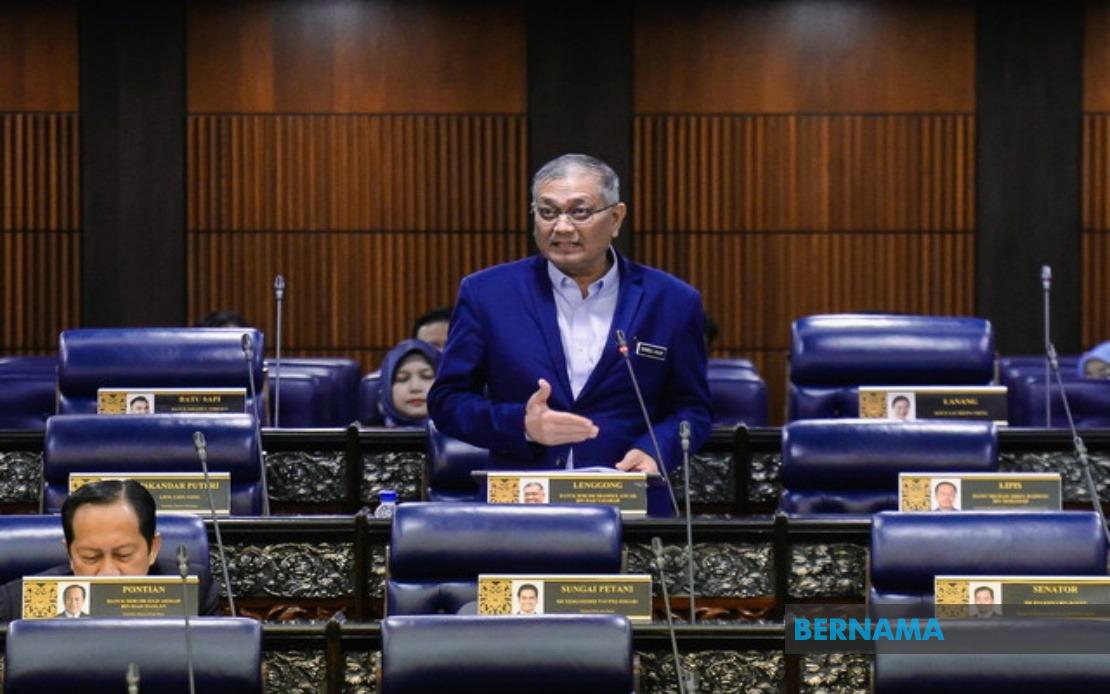
The Home Ministry has moved to defend the use of extra drills and field duties within the Royal Malaysia Police, characterising them as essential tools for maintaining discipline rather than harmful punitive measures. Deputy Minister Datuk Seri Dr Shamsul Anuar Nasarah made the distinction during parliamentary proceedings on July 14, emphasising that such duties operate under established regulatory frameworks designed to correct minor breaches of conduct among officers. The clarification comes against a backdrop of public concern regarding the death of a police officer in Sepang in May, an incident that prompted renewed scrutiny of how the police force disciplines its lower-ranking members.
The ministry anchored its defence on Paragraph 32 of the Inspector-General of Police's Standing Orders (PT KPN) A110 governing disciplinary matters. According to Shamsul Anuar, this provision specifically addresses corrective action for junior police officers facing minor misconduct, offering an alternative pathway to formal disciplinary procedures that could carry more severe consequences. The framework reflects a graduated approach to enforcement within police ranks, acknowledging that not all breaches warrant the full machinery of formal disciplinary tribunals. This layered system sits within a broader ecosystem of police management designed to address conduct issues at varying levels of severity.
In response to parliamentary questions from Roy Angau Gingkoi (GPS-Lubok Antu) regarding standard operating procedures following the Sepang incident, the ministry outlined recent procedural enhancements. The PDRM Integrity and Standards Compliance Department (JIPS) issued a new administrative directive on June 29 requiring implementation of health assessment forms as a protective measure within the existing disciplinary framework. This addition represents an effort to integrate occupational health safeguards into the implementation of disciplinary duties, recognising that field duties must account for individual officer circumstances.
The regulations governing field duties impose specific temporal and operational limits designed to prevent excessive or unsafe application. Extra drills cannot extend beyond four hours in any single day, and field duty assignments cannot continue for longer than five consecutive days. These boundaries attempt to balance the need for disciplinary correction with the physical welfare of personnel undergoing such measures. The supervising officer bears responsibility for ensuring that duties proceed in a controlled, prudent manner while accounting for the officer's physical condition, health status, the surrounding environment, and other variables affecting personal safety.
Concerns raised in parliament centred on whether disciplinary measures are applied uniformly across all ranks or whether junior officers bear a disproportionate burden of such treatment. Shamsul Anuar addressed this by distinguishing between the disciplinary architecture for junior and senior officers. Paragraph 32 provisions apply specifically to junior personnel, he explained, reflecting the different legal provisions and disciplinary categories governing officers at various career levels. Rather than evidence of favouritism, this distinction reflects the tiered nature of police law and service regulations that assign different procedural safeguards depending on an officer's rank and classification within the force.
Datuk Awang Hashim (PN-Pendang) raised supplementary questions regarding concerns that extra drills could constitute bullying or ragging within the police hierarchy. Shamsul Anuar countered by emphasising that disciplinary measures operate within stringent procedural constraints and cannot be imposed arbitrarily by supervising officers acting on personal whim. Each disciplinary action must navigate a formal process involving specified authorisation and oversight mechanisms, preventing the kind of ad-hoc or retaliatory conduct that might constitute bullying. This procedural safeguard attempts to distinguish between legitimate discipline and abuse of authority.
The parliamentary exchange reveals the complex balancing act facing police management in Malaysia. On one side lies the institutional need to maintain discipline and behavioural standards among frontline officers. On the other sits legitimate public concern about the conditions under which such discipline is imposed, particularly following a high-profile death. The Sepang incident appears to have acted as a catalyst for the ministry to publicly clarify and reinforce the safeguards surrounding field duties, signalling responsiveness to public accountability concerns while maintaining the disciplinary tools considered necessary for police management.
For Malaysian readers and observers of police administration, these clarifications carry significance beyond parliamentary procedure. The police force, as the primary law enforcement agency handling public interaction across the country, operates under considerable public scrutiny regarding how it treats its own personnel. Public confidence in police conduct depends partly on perceptions that officers themselves are treated fairly and safely within their own institutional framework. Incidents such as the Sepang death inevitably raise questions about whether internal systems protect officer welfare adequately.
The ministry's defence of field duties as discipline rather than punishment reflects a particular conceptual approach to police management that emphasises corrective intervention over punitive sanction. This philosophy suggests that officers breaching minor rules might be redirected through structured duties rather than subjected to formal disciplinary proceedings that could damage their careers. Whether this approach achieves its stated objective of instilling discipline while protecting officer welfare depends substantially on how field duties are implemented in practice across different police headquarters and operational units throughout Malaysia.
The June 29 directive requiring health assessment forms represents a tangible policy response intended to prevent future incidents comparable to the Sepang death. However, the effectiveness of such measures depends on consistent implementation across the police force's geographically dispersed units and varying supervisory practices. Malaysian police headquarters must ensure that the protective mechanisms outlined by the Home Ministry translate into actual practice rather than remaining procedural documentation.
The parliamentary exchange also touches on broader questions of police accountability and reform. As Malaysia's police force continues modernisation efforts and faces evolving public expectations regarding operational standards, the internal mechanisms governing discipline warrant continued scrutiny and refinement. The distinction between legitimate discipline and harmful punishment, while clearly articulated by the ministry, depends ultimately on consistent application and meaningful oversight at unit level throughout the country.

