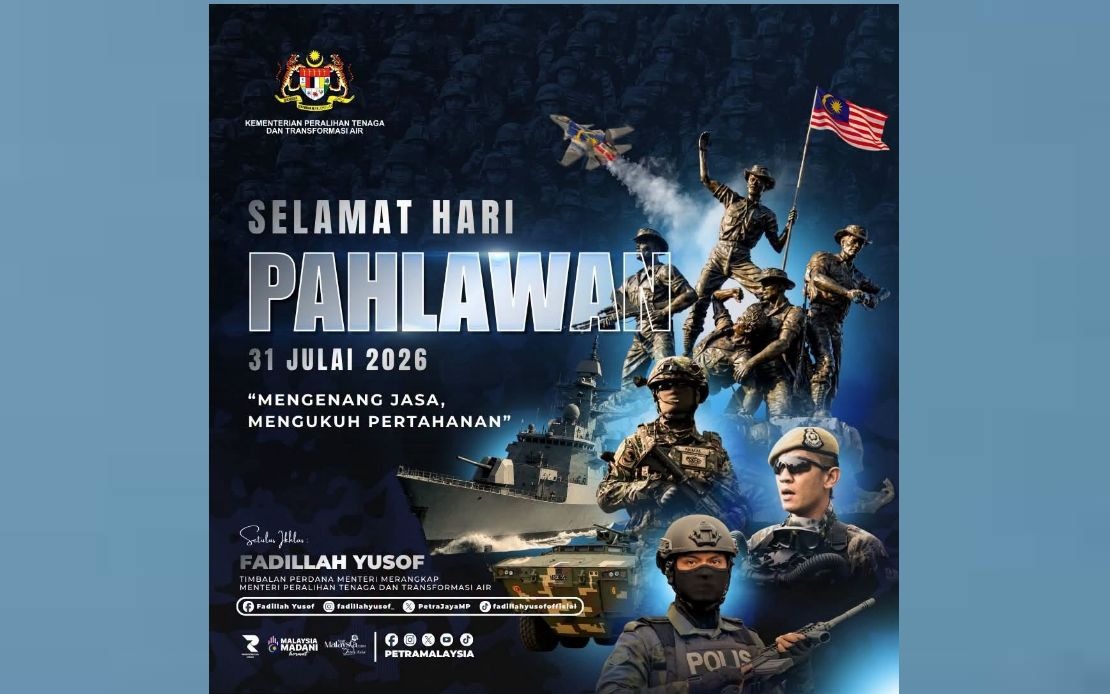
Malaysia's Deputy Prime Minister Datuk Seri Fadillah Yusof has made a stirring appeal to the nation to remember and honour those who have given their lives defending the country's independence and territorial integrity. Speaking through social media on the occasion of Warriors Day 2026, Fadillah emphasised the profound debt owed to generations of service personnel whose commitment has preserved Malaysia's hard-won sovereignty and security.
The 2026 Warriors Day observance carries the theme "Mengenang Jasa, Mengukuh Pertahanan"—a phrase that encapsulates both reflection on past service and a forward-looking commitment to strengthening national defence. This framing is particularly significant as it positions the commemoration not merely as historical remembrance but as an active reinforcement of Malaysia's security foundations at a time of evolving regional challenges and shifting geopolitical dynamics in Southeast Asia.
Fadillah's message traversed the full arc of Malaysia's modern history, connecting the dots between different epochs of struggle and sacrifice. From the colonial liberation movements through the decades-long battle against communist insurgency to contemporary counter-terrorism and peacekeeping operations, the Deputy Prime Minister drew a continuous line of service and courage. This historical narrative serves an important function in Malaysian civic culture, establishing that the contemporary armed forces and security agencies are inheritors of a proud legacy of defending national interests against various threats.
The language employed—characterising fallen and serving personnel as bearers of courage, loyalty, and unwavering patriotism—reflects the emotional and moral core of how Malaysia's security forces are portrayed in official discourse. Fadillah's invocation of these virtues goes beyond ceremonial rhetoric; it attempts to establish a cultural template for how all Malaysians should regard those in uniform, positioning them not as mere government employees but as custodians of the national project itself.
A critical dimension of the Deputy Prime Minister's address involves his appeal for public emulation of military virtues in civilian contexts. By urging Malaysians to embrace the courage and patriotism demonstrated by security personnel, Fadillah suggests that national resilience extends beyond barracks and police stations into workplaces, communities, and homes. This democratisation of martial virtues represents an effort to bind the entire nation together around shared values of service and dedication to collective wellbeing.
The role of religion in the commemoration received explicit acknowledgment through Fadillah's invocation of Islamic prayers and divine mercy. The inclusion of "Al-Fatihah" and appeals for Allah's blessings reflects the religious dimension of how Malaysia, as a Muslim-majority nation, infuses state commemoration with faith-based language. This integration of Islamic practice into national civic rituals demonstrates how religious and patriotic sentiment are intertwined in Malaysian public life.
For Malaysian readers, particularly younger generations, Warriors Day represents an annual opportunity to engage with the narratives that underpin national identity and stability. The sacrifices referenced—whether against colonial powers or internal security threats—form the historical basement upon which contemporary Malaysia was constructed. Understanding this lineage helps contextualise why security, sovereignty, and national unity remain such central preoccupations in Malaysian political discourse and policy formation.
The regional context adds further weight to such commemorations. Across Southeast Asia, nations grapple with questions of territorial integrity, maritime security, and counter-insurgency operations. Malaysia's Warriors Day acknowledgment of this ongoing security mission resonates across borders, particularly given the country's strategic location and its roles in multilateral security arrangements and counter-terrorism cooperation with regional and international partners.
Fadillah's dual role as Deputy Prime Minister and Minister of Energy Transition and Water Transformation underscores how Malaysia's leadership views national security and civilian welfare as interconnected. Development, infrastructure, and resource management—the portfolio areas suggested by his ministerial title—depend fundamentally upon the peace and stability that the armed forces and security agencies maintain. This implicit linkage reinforces why honouring those who provide security is framed as integral to nation-building rather than separate from it.
The Warriors Day message also carries implications for military morale and recruitment. By publicly emphasising the historical significance and moral weight of service, political leaders reinforce for serving personnel that their sacrifices are recognised and valued at the highest levels of government. This symbolic affirmation can influence retention, motivation, and the attractiveness of security careers to the younger Malaysians upon whom future force strength depends.
As Malaysia navigates complex security challenges ranging from transnational terrorism to cybersecurity threats to maritime security concerns in the Straits of Malacca, Warriors Day serves as an annual reminder that these challenges demand sustained commitment and resources. Fadillah's call to strengthen national unity through emulation of military virtues can be read as an implicit argument for public support for security spending and defence modernisation initiatives.
Ultimately, the Deputy Prime Minister's Warriors Day message articulates a vision of Malaysia in which remembrance of past sacrifice generates present commitment to national resilience. By connecting fallen heroes to contemporary peacekeeping missions, by integrating religious solemnity with patriotic fervour, and by extending the application of military virtues into civilian spheres, Fadillah presents national commemoration not as backward-looking nostalgia but as forward-looking national renewal rooted in time-tested values.

