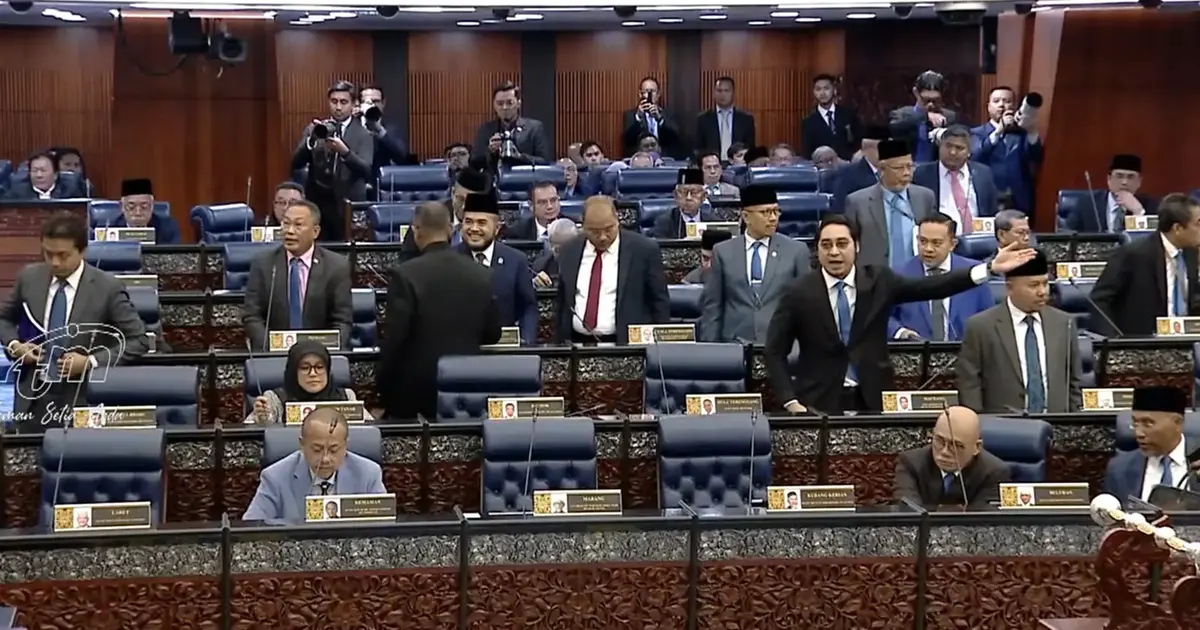
Communications Minister Fahmi Fadzil has publicly acknowledged the participation of Bersatu members of parliament in the ongoing Royal Commission of Inquiry into the governance and financial operations of Tabung Haji, even as he highlighted the contrasting stance taken by other lawmakers from the Perikatan Nasional coalition who chose to abandon the proceedings.
The minister's commendation reflects growing tensions within the opposition alliance over how its component parties should engage with what some view as a politically motivated investigation. Bersatu's decision to attend the RCI sessions stands in marked contrast to the walkout orchestrated by fellow Perikatan members, signalling potential fractures in the coalition's unified approach to the inquiry.
Tabung Haji, Malaysia's pilgrimage fund established decades ago to help Muslims save for the hajj journey, has faced intense scrutiny following revelations about significant investment losses and governance concerns. The Royal Commission of Inquiry was established to examine the fund's management, investment decisions, and the circumstances that led to its financial difficulties, drawing considerable public and parliamentary interest.
For Bersatu, the decision to participate rather than protest represents a pragmatic political calculation. By maintaining engagement with the RCI proceedings, the party positions itself as willing to cooperate with legitimate investigative processes while potentially avoiding accusations of obstruction. This stance may also reflect internal assessments that outright defiance could alienate voters who view the inquiry as necessary oversight of a major government-linked institution managing public savings.
The walkout by other Perikatan MPs, by contrast, appears rooted in opposition concerns about the RCI's scope, composition, or perceived political timing. Within Malaysia's polarised political environment, opposition parties often scrutinise the motivations behind government-initiated inquiries, particularly those touching on sensitive matters involving public institutions and substantial financial matters. Some may view the investigation as a potential mechanism for the government to shift blame or deflect from its own policy decisions regarding Tabung Haji's direction.
Fahmi's public remarks serve multiple strategic purposes. By commending Bersatu's attendance, he subtly underscores divisions within the opposition coalition while positioning the government as welcoming scrutiny from all stakeholders. This framing allows the administration to claim that only certain political actors refuse to engage constructively with the inquiry process, potentially damaging their credibility with voters seeking transparency and accountability.
For Bersatu, standing apart from Perikatan's more confrontational posture carries both benefits and costs. On one hand, the party demonstrates independence and pragmatism, qualities that may appeal to moderate voters concerned about governance standards at institutions like Tabung Haji. On the other, it risks being perceived as insufficiently loyal to opposition coalition partners or as complicit in a process that opposition members view as politically compromised.
The broader context of Malaysian politics cannot be overlooked. Perikatan Nasional entered formal opposition following the 2023 general election, a significant shift from its previous role as part of governing coalitions. The coalition's unity remains fragile, with multiple perspectives on how aggressively to challenge government initiatives. Tabung Haji, with its direct impact on millions of Muslim Malaysians and its considerable financial reserves, represents precisely the kind of high-stakes issue where coalition members may develop divergent views on optimal political strategy.
Tabung Haji's recent financial troubles have sparked widespread concern among contributors and prospective pilgrims who rely on the institution. The fund's investment losses and questions about governance have become significant political concerns, touching on matters of religious trust and public service. Any inquiry into its operations naturally attracts intense public attention and competing political narratives about responsibility and future direction.
The involvement of multiple parliamentary voices in the RCI process, whether through attendance or protest, reflects the significance Malaysians place on understanding what went wrong at the institution. Parliamentary engagement, even when contentious, serves the democratic function of ensuring that major inquiries receive sustained public and political attention, preventing them from becoming purely bureaucratic exercises insulated from public scrutiny.
Fahmi's acknowledgment of Bersatu's participation also underscores the importance that the government attaches to ensuring broad political buy-in for the RCI's findings and recommendations. When opposition parties engage constructively with investigations, the eventual conclusions carry greater legitimacy and are less easily dismissed as partisan exercises. Conversely, wholesale rejection by opposition figures can undermine public confidence in the inquiry's impartiality, regardless of its actual methodology and composition.
Looking forward, the contrasting positions of Bersatu and other Perikatan members may have lasting implications for coalition cohesion. If the RCI reaches conclusions favourable to the government or critical of opposition figures, the parties that refused to participate may claim their boycott was vindicated. If the inquiry identifies genuine governance failures requiring systemic reform, Bersatu's engagement may be remembered as the more constructive approach. Either way, these divergent strategies reflect the complex calculations opposition parties must navigate in Malaysia's current political landscape.

