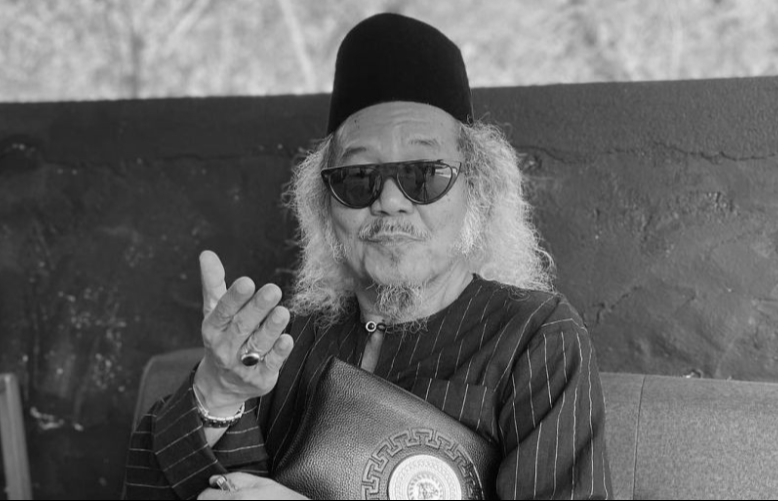
Malaysian cinema has lost one of its most recognisable character actors with the passing of Kamarool Yusoff, widely known by his stage name Cik Man, who died on August 5 at the age of 68. The veteran performer succumbed to a heart condition while undergoing treatment at Tanah Merah Hospital, with his family confirming that he passed away at 5:30 pm on that day.
News of Cik Man's death spread through social media when comedian Mohammad Amirullah Azmi, popularly known as Amir Raja Lawak, shared the announcement on Facebook. In his post, Amir Raja Lawak reflected on Kamarool's life and contributions to the entertainment industry, invoking prayers for the deceased. The tribute highlighted the esteem in which Cik Man was held within the creative community, with well-wishers extending their sympathies to his family during this difficult period.
Cik Man's son, Ahmad Fakhrol Aliff, who is 23 years old, confirmed the news when approached by media representatives. The younger Aliff provided details about his father's final moments, sharing that the actor had been receiving medical care for cardiovascular issues at the time of his death. The family's prompt confirmation helped ensure that accurate information circulated as the news gained traction across Malaysian news platforms and social networks.
Communications Minister Datuk Seri Fahmi Fadzil released a formal statement honouring Cik Man's legacy and contributions to Malaysia's cultural landscape. Fahmi acknowledged the actor's profound impact on Malaysian cinema, particularly for audiences who came of age during the golden era of Malay films in the 1980s. The minister's tribute underscored how deeply Cik Man's performances resonated with generations of viewers who grew up watching his work on screen.
Cik Man's most iconic role came in 1986 when he portrayed Farouk, the ruthless leader of the Gagak Hitam gang, in what became a classic film within the Malaysian cinema canon. This character became synonymous with his name and established him as a formidable presence in the industry. His ability to embody complex, morally ambiguous characters demonstrated a depth of acting talent that extended far beyond conventional hero-and-villain archetypes common in films of that era.
Beyond his defining 1986 role, Cik Man maintained an active career spanning decades. His filmography included appearances in various productions throughout the 1990s and 2000s, demonstrating his enduring relevance in an industry that rapidly transformed with changing audience preferences and production values. His 2010 appearance in a comedy project showed that he remained actively engaged with the entertainment world well into his later years, adapting to evolving trends while maintaining his distinctive on-screen presence.
Fahmi's tribute emphasised that Cik Man commanded respect not merely within the acting fraternity but across the broader spectrum of Malaysian arts and culture. This observation speaks to how veteran actors of his calibre serve as cultural anchors, embodying particular eras and aesthetic sensibilities that younger generations reference and celebrate. In Malaysia's relatively modest entertainment industry, such figures become touchstones against which subsequent performers are measured.
The minister's statement highlighted the lasting emotional imprint that Cik Man's work created for audiences. His performances had the quality of enduring memory—viewers who encountered his films decades ago could recall specific scenes and character moments with vivid clarity. This staying power distinguishes truly impactful artistes from those whose work fades into obscurity, indicating that Cik Man succeeded in creating cinema that transcended mere commercial success to achieve cultural resonance.
Fahmi's expression of gratitude toward Cik Man reflected broader societal acknowledgment of the contributions that entertainment professionals make to national identity and collective memory. Films like those featuring Cik Man served as cultural products that defined eras, captured prevailing values and social dynamics, and provided common reference points for disparate communities. His work became woven into the fabric of Malaysian popular culture in ways that persist long after initial theatrical release.
The death of veteran artistes like Cik Man inevitably prompts reflection on the preservation of Malaysia's film heritage and the documentation of entertainment history. As the original wave of 1980s cinema creators gradually passes from the scene, the imperative to archive, celebrate, and study their contributions becomes increasingly urgent. Retrospectives and critical reappraisals ensure that their legacies remain accessible to younger generations who may lack familiarity with classic Malaysian films.
Cik Man's passing marks the end of an era in Malaysian entertainment, representing the gradual departure of a generation of performers who established the nation's cinematic traditions. His death resonates beyond the immediate film community, touching countless individuals whose formative years were enriched by his performances. The collective mourning evident in tributes from public figures like Fahmi demonstrates how deeply such cultural figures embed themselves within national consciousness.

