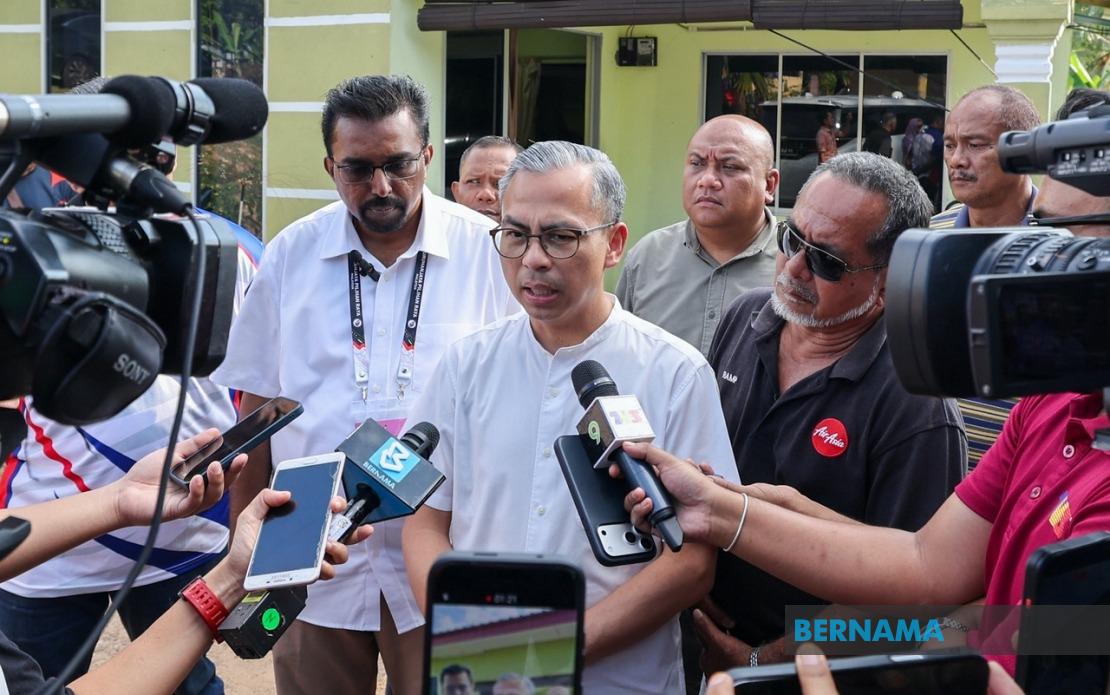
Communications Minister Datuk Seri Fahmi Fadzil has joined calls for the Royal Commission of Inquiry report on Tabung Haji to be made available to the public, arguing that disclosure would reinforce government commitment to openness and allow Malaysians to examine the inquiry's findings directly. Speaking in Jempol on Wednesday, Fahmi emphasised that releasing the report would serve the interests of depositors, contributors, and ordinary citizens seeking clarity on how the pilgrimage savings scheme's assets were managed and disposed.
The inquiry examined allegations surrounding controversial sales of Tabung Haji's strategic properties, transactions that sparked public concern about potential mismanagement and financial impropriety at the institution. By making the Royal Commission's conclusions accessible to the broader community, Fahmi suggested the government could demonstrate it has nothing to hide and trusts Malaysians to comprehend complex corporate governance issues affecting one of the country's largest religious savings schemes.
Fahmi's intervention reflects growing momentum within the cabinet to move beyond closed-door decision-making on sensitive matters. He framed transparency not merely as a procedural nicety but as fundamental to restoring public confidence in Tabung Haji's institutional integrity. The minister noted that the organisation currently operates under markedly improved management and administration compared to the period under scrutiny, implying that leadership changes and reformed governance structures now provide a stable foundation for public disclosure without compromising operational security.
Prime Minister Datuk Seri Anwar Ibrahim signalled earlier that the government remains willing to release the report, though the timing remained subject to consultation with senior officials. He indicated plans to review the publication timeline with Chief Secretary to the Government Tan Sri Shamsul Azri Abu Bakar, suggesting that a decision could materialise within days rather than weeks. Anwar's conditional openness to disclosure contrasts with previous administrations' tendency to classify sensitive reports, reflecting perhaps a broader shift toward stakeholder engagement in governance accountability.
For Malaysian Muslims who contribute to Tabung Haji's hajj savings schemes, understanding what transpired during the inquiry period carries profound implications. The pilgrimage savings programme holds distinctive significance in Malaysia's Islamic financial ecosystem, combining religious obligation with national development strategy. When allegations of mismanagement surface, they touch on issues of trust, religious duty, and personal life savings simultaneously, making transparency particularly pressing in this context.
The strategic asset sales that triggered the inquiry involved substantial property transactions, some of which were questioned for potentially undervaluing Tabung Haji's holdings or favouring connected parties. Public release of the Royal Commission's investigative conclusions and recommendations would allow independent analysts, media commentators, and affected depositors to assess whether adequate safeguards exist to prevent similar incidents. This scrutiny mechanism operates as a practical check on institutional conduct even when formal legal consequences remain limited.
From a Southeast Asian perspective, Malaysia's handling of this transparency question carries broader implications for regional governance standards. As other ASEAN nations grapple with balancing institutional accountability against political sensitivities, how Malaysia manages public access to sensitive inquiry reports influences regional norms around official transparency. Strong disclosure practices strengthen institutional legitimacy across the region and demonstrate that democratic governance need not be compromised by discussing past errors forthrightly.
The timing of Fahmi's statement alongside Anwar's commitment suggests deliberate coordination to build public expectation for release. By naming a tentative deadline of the following Wednesday, the Prime Minister created accountability for his own administration's follow-through, transforming vague promises into measurable commitments. This approach acknowledges that transparency commitments require specific timelines to retain credibility; indefinite delays undermine the entire rationale for openness.
Tabung Haji's restoration has proceeded across multiple dimensions simultaneously. Beyond management restructuring, the organisation initiated asset recovery efforts and implemented enhanced oversight mechanisms designed to prevent future irregularities. Publishing the Royal Commission report would provide institutional context for these reforms, explaining what specific weaknesses prompted each corrective action. Depositors could then evaluate whether remedial measures address root causes identified by the inquiry or merely address symptoms.
The political calculus supporting disclosure remains straightforward: withholding the report invites speculation, conspiracy theories, and persistent public distrust, whereas publication allows facts to displace rumour and permits evidence-based debate about appropriate remedies. Fahmi's emphasis on transparency as a principle rather than a tactical manoeuvre suggests the government recognises that public confidence in Tabung Haji ultimately depends on demonstrated commitment to honest governance rather than selective information control.
Looking ahead, the question transitions from whether release will occur to how effectively the government communicates the report's contents. Simply publishing a lengthy technical document does not automatically ensure public understanding or institutional rehabilitation. Strategic communication explaining key findings, addressing common misconceptions, and outlining implemented reforms would maximise the legitimacy benefits of transparency while demonstrating respect for the public's capacity to comprehend institutional accountability.

