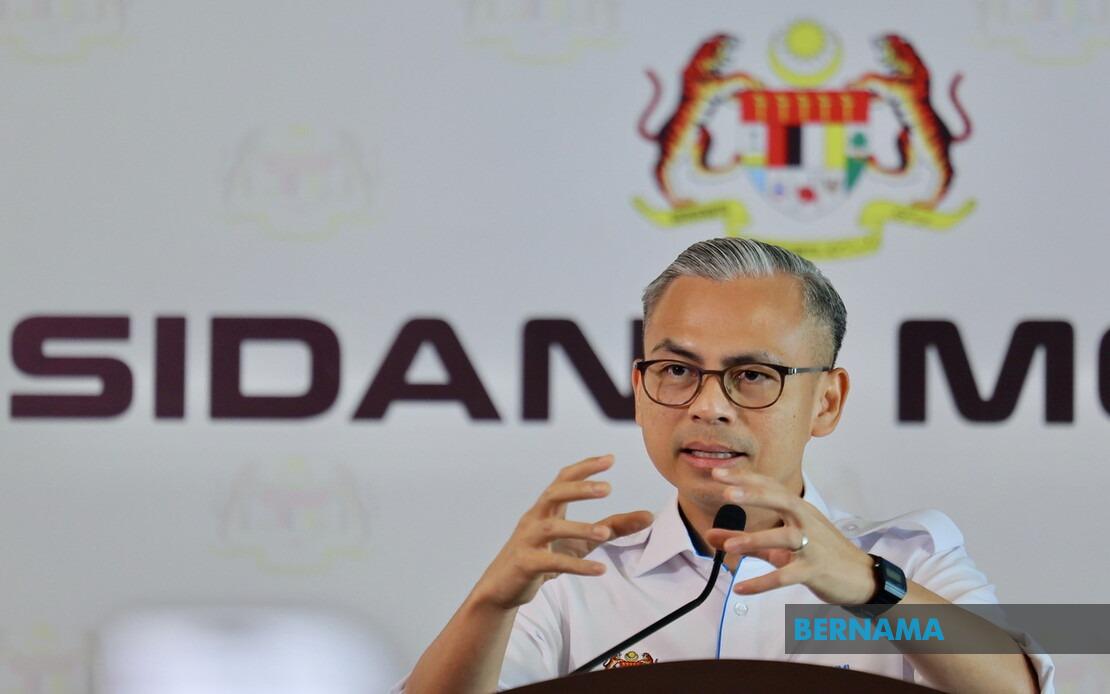
Communications Minister Datuk Seri Fahmi Fadzil has reminded Malaysians that the nation's independence stands as a testament to the hard work and dedication of previous generations, whose contributions form the bedrock upon which contemporary society is built. In his message commemorating the 2026 National Day and Malaysia Day festivities, Fahmi stressed that citizens must preserve and advance the legacy left behind by those who fought for the country's freedom and sovereignty.
Calling for continued efforts to strengthen national cohesion, the minister emphasized that Malaysians from all ethnic backgrounds, faiths, and cultural traditions share a fundamental responsibility to nurture intercommunal respect and uphold the delicate social harmony that underpins Malaysia's stability and development. This message resonates particularly in a diverse Southeast Asian context where maintaining interethnic and interfaith relations remains crucial to national stability.
Fahmi articulated a vision of Malaysia built on collaborative action and mutual accountability, suggesting that when citizens work together toward common goals, the nation can achieve greater inclusivity, economic progress, and social peace. The minister framed this not as an abstract ideal but as a practical necessity for creating a society where opportunities and prosperity are genuinely accessible to all communities.
The communications minister anchored his remarks to this year's official theme, "Malaysia MADANI: Kesejahteraan Dinikmati," which translates as Malaysia MADANI: Prosperity Enjoyed. This framing underscores a central government priority that economic and social development should not benefit only a privileged few, but rather that the fruits of national progress must be distributed equitably across the population. For Malaysian readers accustomed to conversations about wealth inequality and regional disparities, this emphasis carries particular relevance.
Fahmi's call for shared responsibility in development reflects broader contemporary governance challenges across Southeast Asia, where rapid economic transformation often leaves behind certain communities or regions. His message suggests that true celebration of national achievements requires acknowledging past sacrifices while simultaneously committing to ensure that future prosperity reaches citizens in both urban centres and rural areas, across all income levels and ethnic communities.
The minister expressed confidence that Malaysia will continue advancing as a unified nation capable of commanding international respect and influence. This optimism contrasts with periodic regional concerns about political fragmentation or social division, positioning patriotic unity not merely as a cultural value but as a strategic asset in Malaysia's regional and global standing.
In posted remarks on Berita RTM's official X account, Fahmi concluded his National Day message by encouraging all Malaysians to reignite their patriotic spirit as celebrations approached. This language suggests that patriotism, in the minister's conception, extends beyond ceremonial flag-waving to encompass active commitment to national cohesion and shared prosperity.
The timing of such messaging during the August period, when Malaysia marks both National Day on August 31st and Malaysia Day on September 16th, reflects the dual commemoration of the nation's independence and the formation of Malaysia as a federation including Sabah and Sarawak. For readers in East Malaysia, the separate recognition of Malaysia Day holds particular symbolic significance, acknowledging the distinct historical paths these states took toward joining the federation.
Fahmi's appeal for "togetherness and shared responsibility" can be interpreted as a subtle reminder that Malaysia's cohesion requires active maintenance and cannot be taken for granted. In a political environment where coalition formations and electoral contests sometimes emphasize partisan advantage, the minister's emphasis on cross-cutting unity addresses an underlying concern about whether democratic competition might occasionally undermine national solidarity.
The message also implicitly acknowledges that Malaysia's strength derives not from uniformity but from managed diversity—the successful navigation of multiple languages, religions, and cultural traditions within a single political framework. This understanding becomes increasingly important as Malaysia competes regionally for investment, talent, and diplomatic influence in an era when social fragmentation in other nations has sometimes become economically costly.
For business communities and foreign investors monitoring Malaysia's political health, Fahmi's remarks offer reassurance that the government remains focused on social stability and inclusive development as foundations for sustained economic performance. This emphasis on harmony and shared prosperity can influence perceptions of Malaysia's medium-term investment climate.
The minister's National Day message ultimately presents patriotism not as nationalist fervor or exclusionary pride, but as a practical commitment to preserving the institutional and social arrangements that have allowed Malaysia to navigate its complex diversity reasonably successfully compared to some regional peers. Whether citizens will respond enthusiastically to this particular framing of patriotic duty remains to be seen during the August and September celebrations.

