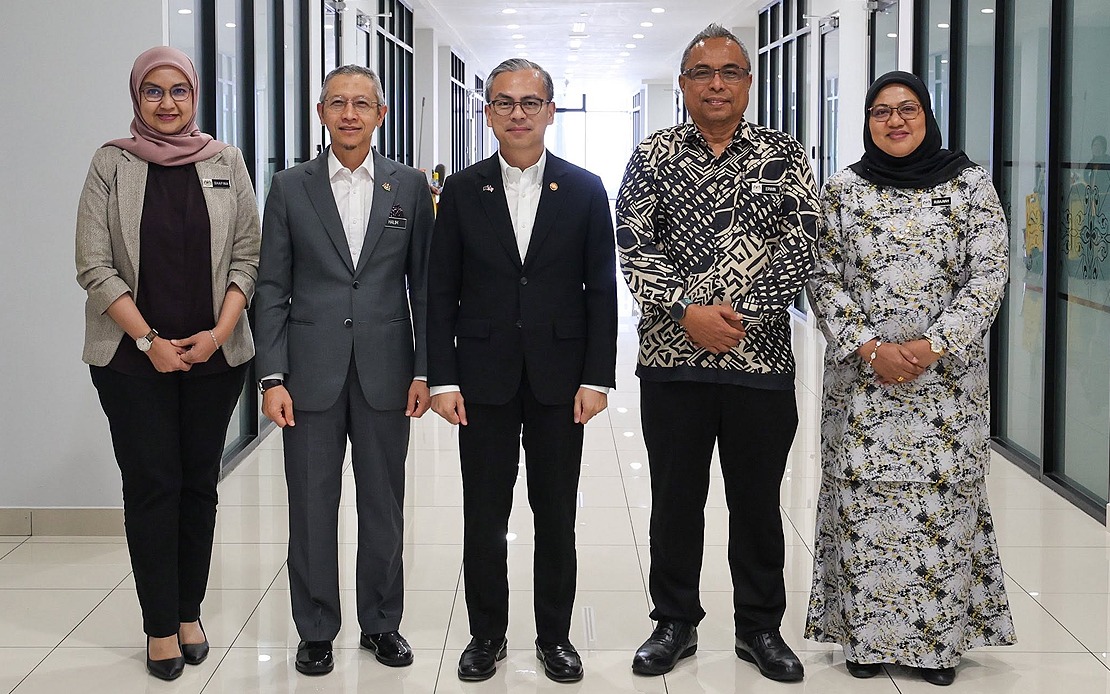
The Information Department (JaPen) has entered a new leadership chapter with the appointment of Erwin Khairul Ahmad as director-general and Wan Saidatul Shafina Mohd Amin as deputy director-general (Digital Content), moves that have drawn approval from Communications Minister Datuk Fahmi Fadzil.
Fahmi extended his congratulations to both appointees, emphasising the importance of their roles in steering the nation's information apparatus. The minister's remarks underscored the government's commitment to maintaining an effective institutional framework for disseminating information to Malaysians. The formal letters of appointment were handed over by Tan Sri Wan Ahmad Dahlan Abdul Aziz, director-general of the Public Service Department (JPA), signalling the official completion of the appointment process.
In his statement, Fahmi called upon the newly appointed leaders to execute their duties with unwavering dedication and sound judgment. He articulated a vision of a strengthened Information Department functioning as a reliable conduit for public information, a particularly salient aspiration in an era marked by competing narratives and information challenges. His remarks reflected the government's broader focus on institutional competence and public communication effectiveness.
The minister also acknowledged the substantial contributions of Julina Johan, the outgoing director-general of JaPen. Fahmi recognised her service record and the leadership she provided during her tenure, a gesture that underscores the institutional continuity that such transitions are meant to preserve. The acknowledgment of her work signals respect for the departing leader's legacy while the appointment of new personnel indicates readiness for fresh perspectives and potentially renewed approaches.
Erwin Khairul Ahmad assumes responsibility for an institution that has evolved considerably in recent years. The Information Department operates at the intersection of traditional government communications and increasingly complex digital information ecosystems. This backdrop makes his directorship significant not merely as a personnel change but as a moment reflecting on how Malaysia's public information machinery will adapt to contemporary demands.
Wan Saidatul Shafina's specific focus on digital content within her deputy role highlights the government's recognition that contemporary information dissemination cannot ignore digital channels. The explicit carving out of a digital content portfolio suggests that JaPen has institutionalised the need for specialised digital expertise, a practical acknowledgment of how modern publics consume and interact with information. Her appointment signals investment in this critical domain.
For Malaysia's broader information governance landscape, these appointments carry implications extending beyond bureaucratic routine. The leadership of JaPen directly influences how government messaging reaches citizens, how policy announcements are framed, and how public understanding of government initiatives develops. Effective leadership in this space can enhance public confidence and clarity, whilst gaps in institutional performance can contribute to information vacuums that alternative sources may fill.
The timing of these appointments comes as governments across Southeast Asia grapple with questions about information credibility, digital misinformation, and the role of state institutions in the broader information ecosystem. Malaysia, with its diverse media landscape and active online population, faces particularly acute challenges in ensuring that official information competes effectively and credibly in crowded communication spaces. The new leadership team will inherit these ongoing tensions.
The Public Service Department's formal involvement in presenting the appointment letters underscores the bureaucratic significance of these postings within Malaysia's civil service hierarchy. JaPen directorship represents a senior position within the information and communications sphere, and the ceremonial presentation of appointments reflects the institutional gravity attached to these roles. This formality also symbolises the government's commitment to proper procedural conduct in senior appointments.
Looking forward, the new JaPen leadership will likely face expectations to modernise communication approaches whilst maintaining the institutional independence and credibility that public information services require. The balance between responsive, contemporary digital engagement and the fundamental mission of accurate, timely information delivery will define their tenure. Given Malaysia's complex political context and diverse stakeholder expectations, this balance proves particularly delicate.
The international dimension also warrants consideration. As regional communications become increasingly interconnected, Malaysian information governance operates within a Southeast Asian context where disinformation and competing narratives from multiple sources shape public discourse. Effective JaPen leadership contributes to Malaysia's information sovereignty and its capacity to project credible narratives domestically and regionally.
Fahmi's public endorsement of the new appointees, coupled with recognition of his predecessor's work, establishes a framework of institutional continuity with strategic renewal. This messaging suggests the government views the Information Department not as requiring fundamental overhaul but rather as an institution capable of evolution under new leadership. How Erwin Khairul Ahmad and Wan Saidatul Shafina implement this vision in practice will determine whether such continuity proves beneficial or whether more substantial transformation becomes necessary.