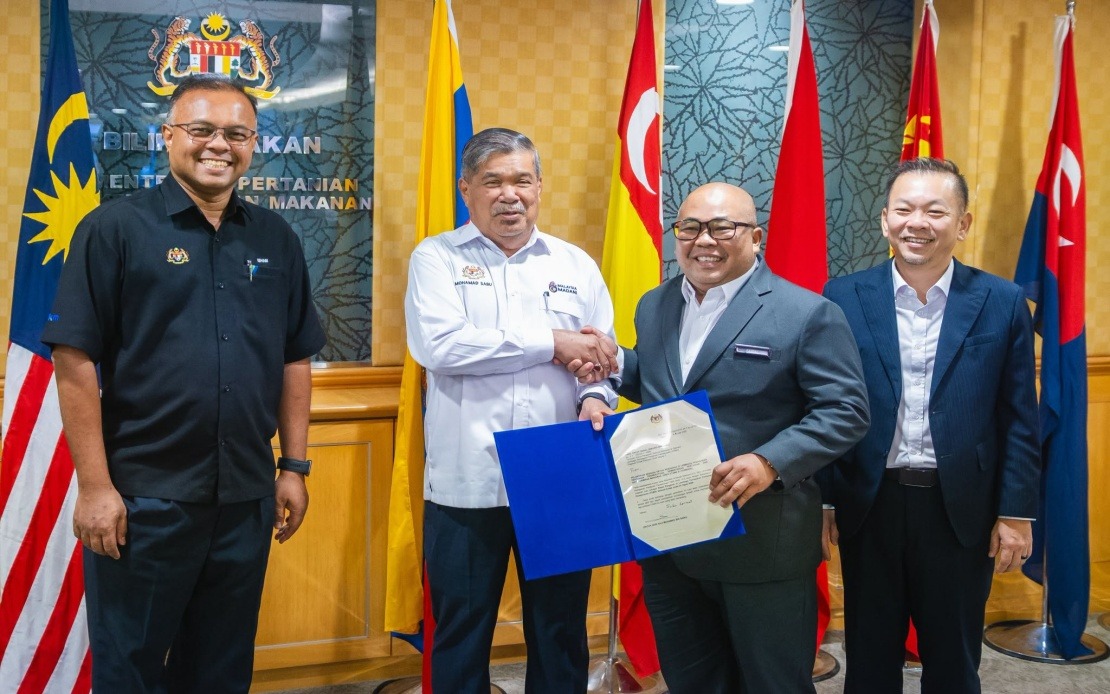
Malaysia's Federal Agricultural Marketing Authority (FAMA) has elevated Faisal Iswardi Ismail to the position of director-general, effective August 1, in a move that reflects the government's commitment to strengthening agricultural marketing and food security infrastructure. Agriculture and Food Security Minister Datuk Seri Mohamad Sabu formally presented the appointment letter to Faisal Iswardi following a Cabinet meeting on August 5, cementing the leadership transition at the organisation that serves as a crucial intermediary between producers and consumers across the nation's farm sector.
Faisal Iswardi's elevation represents a promotion from his previous role as deputy director-general overseeing food security and operations, a position that provided him with extensive experience in the operational and strategic dimensions of agricultural marketing. His career trajectory within FAMA positions him to navigate the complex challenges facing Malaysia's agricultural landscape, where balancing farmer profitability with consumer access to affordable produce remains a persistent policy objective. The appointment signals continuity in leadership philosophy while offering an opportunity to implement fresh initiatives in agricultural market development.
Mohamad Sabu's public endorsement of the appointment underscores the government's confidence in Faisal Iswardi's capacity to lead during a period when Malaysia faces mounting pressures to enhance domestic food production and reduce dependency on agricultural imports. The minister's Facebook post emphasised that FAISAL's stewardship arrives at a moment when FAMA's responsibilities have expanded beyond traditional marketing functions to encompass broader food security considerations that extend across the entire supply chain from farm to consumer.
The minister articulated a clear vision for FAMA's mandate, describing the organisation as pivotal in promoting locally-grown agricultural products and strengthening the interconnected networks that move food from producers to markets. This positioning reflects a broader governmental strategy to nurture the agri-food sector as both an economic engine and a strategic resource for national self-sufficiency. For Malaysian farmers and agri-entrepreneurs, FAMA's effectiveness in market facilitation directly influences income stability and business viability, making leadership quality at the organisation a matter of considerable sectoral importance.
FAMA's dual mission of bolstering farmer incomes whilst ensuring reliable food supply poses inherent tensions that require sophisticated policy navigation. Faisal Iswardi assumes leadership at a juncture when global supply chain disruptions, climate pressures, and shifting consumer preferences demand agile institutional responses. His previous operational background suggests familiarity with the logistical and administrative frameworks necessary to manage FAMA's diverse functions across procurement, distribution, and market intelligence gathering.
The timing of this appointment carries significance for Malaysia's broader agricultural policy agenda. With rising food import costs affecting household budgets and persistent challenges in attracting younger generations to farming, FAMA's role in creating viable market pathways for agricultural producers has assumed heightened importance. Enhanced marketing infrastructure and better price realisation mechanisms could meaningfully improve the sector's attractiveness as a livelihood option whilst simultaneously contributing to the government's food security objectives.
For Southeast Asian observers monitoring Malaysia's approach to agricultural development, this leadership change reflects ongoing institutional adaptation within the region's economies as they confront shared challenges around agricultural productivity, climate adaptation, and food system resilience. The appointment of a career official with deep operational knowledge suggests a pragmatic approach to governance, prioritising continuity and institutional learning over external disruption.
The government's emphasis on FAMA's role in strengthening the entire food supply chain indicates recognition that agricultural marketing extends beyond simple price-setting mechanisms. Modern food systems require attention to quality standards, storage infrastructure, transportation logistics, and market information systems—areas where Faisal Iswardi's previous responsibility for operations positions him to drive meaningful improvements. His appointment may herald renewed focus on these foundational elements that, whilst less visible than headline policy announcements, determine whether farmers receive fair compensation and consumers access reliable supplies.
Moving forward, Faisal Iswardi's effectiveness will be measured against FAMA's ability to expand market access for small-scale farmers, reduce supply chain inefficiencies that inflate consumer prices, and create more transparent pricing mechanisms that protect both producers and buyers. His background in food security operations suggests awareness of how marketing interventions ripple through the broader system, affecting everything from agricultural investment decisions to household food affordability across Malaysian demographics.

