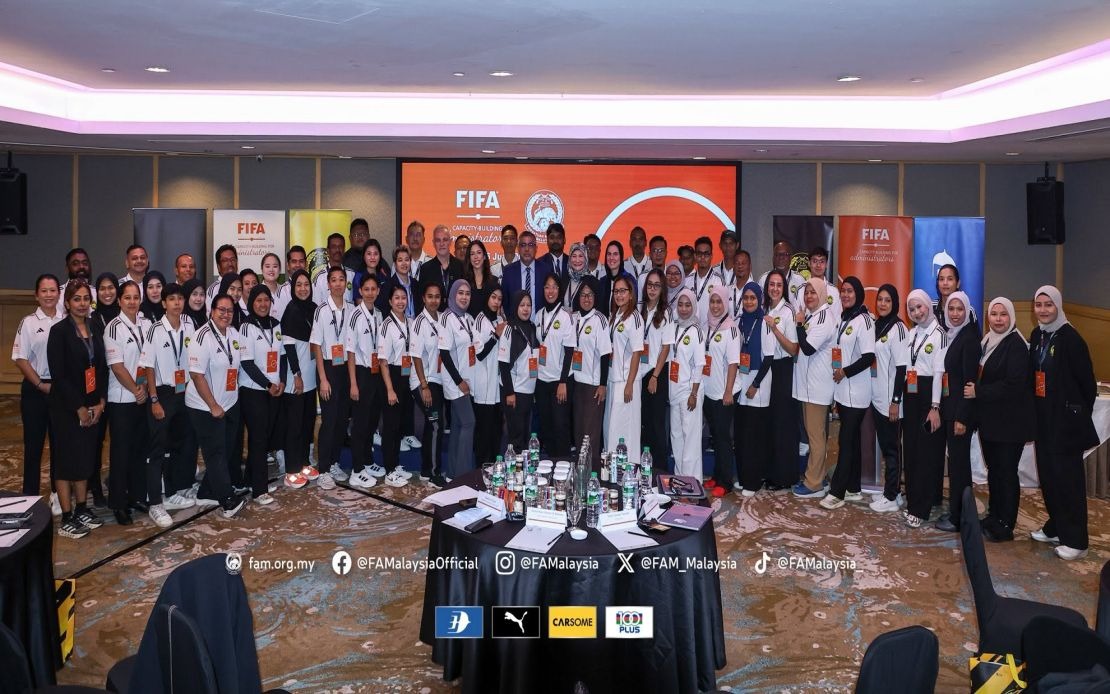
The Football Association of Malaysia has embarked on a significant capacity-building initiative designed to elevate the professionalism and sustainability of women's football in the country. Beginning on June 23, FAM is rolling out FIFA's Capacity-Building For Administrators 2026 programme, a targeted intervention aimed at developing the administrative infrastructure that underpins elite women's football. This move reflects a strategic recognition that lasting success in women's sport requires more than on-field talent; it demands robust off-field structures managed by skilled, knowledgeable professionals.
The four-day programme brings together two internationally acclaimed FIFA Women's Football Development Experts, Safia Abdeldayem and Pema Choden Tshering, to lead instruction. Their involvement underscores FIFA's commitment to strengthening governance and administration across women's football globally, with Malaysia positioned as a beneficiary of this international expertise transfer. The collaboration between FAM and FIFA represents an important opportunity for Malaysian administrators to acquire world-class knowledge applicable directly to their domestic context.
Participants in the programme will engage with a structured curriculum covering four key operational domains critical to modern women's football management. Women's Leadership forms the foundation, addressing how female leaders can navigate and influence football organisations effectively. Women's Competition modules will examine structural frameworks that govern domestic and international tournaments, helping administrators understand competition design, scheduling, and integrity mechanisms. Club and Players' Rights instruction focuses on the legal and regulatory dimensions protecting stakeholders within the football ecosystem, an area often neglected in developing football nations. Strategic Planning rounds out the curriculum, equipping participants with frameworks for long-term institutional development.
This multipillar approach signals FAM's understanding that women's football development cannot succeed through isolated technical initiatives. While coaching quality and player development remain essential, the administrative layer determines whether talent receives adequate support, whether competitions are properly managed, and whether the sport can attract sustained investment and media attention. By targeting team managers and administrative officers, FAM is building capacity at the interface between policy and implementation, where decisions fundamentally shape player experiences and organisational success.
The presence of senior FAM leadership at the programme's launch, including secretary-general Datuk Noor Azman Rahman and Women's Football Technical Director Soleen Al-Zoubi, demonstrates institutional commitment to the initiative. Equally significant is the involvement of Datuk Suraya Yaacob, who holds positions on both FIFA's Women's National Team Competitions Committee and the AFC Women's Football Committee. Her participation connects Malaysia's efforts to broader regional and global conversations about women's football governance, potentially amplifying the programme's impact beyond individual participants.
For Malaysian women's football, this intervention arrives at a critical juncture. Southeast Asia has witnessed growing investment in women's football across the region, with countries like Thailand and Vietnam making significant strides. Malaysia's ability to compete at regional and continental levels depends partly on the quality of institutional management surrounding its national and club teams. Administrative competence affects everything from player welfare protocols to fixture scheduling, from sponsorship negotiation to compliance with international standards. By systematically developing this capacity, FAM is positioning Malaysian women's football to meet contemporary professional standards.
The programme also reflects FIFA's broader strategic pivot toward women's football development as a long-term priority. Major football nations have invested heavily in women's administration following the commercial and competitive success of events like the FIFA Women's World Cup. Malaysia's participation in structured capacity-building programmes demonstrates openness to international best practices and willingness to adopt governance standards aligned with global norms. This positioning could enhance Malaysia's attractiveness to international sponsors, broadcasters, and players considering regional opportunities.
Expanding the pool of skilled administrators carries particular significance in a context where the traditional football establishment has historically concentrated resources on men's competitions. Creating opportunities for women team managers, administrators, and female leaders in football organisations helps counterbalance this historical imbalance. FAM's explicit commitment to empowering women's participation in football administration goes beyond mere fairness; it recognises that women often bring distinct perspectives to management challenges and that their leadership enriches organisational culture and decision-making.
The sustainability angle proves equally important. Professional, well-trained administrators create institutional continuity that transcends individual personalities or political changes. When women's football administration rests on solid professional foundations rather than goodwill or informal arrangements, the sport becomes more resilient. Training programmes like this one build institutional muscle memory, establishing standards and practices that persist even when personnel change. For a developing football nation, this institutionalisation represents a genuine competitive advantage.
Looking ahead, the ripple effects of this programme should extend well beyond the immediate participants. Those trained by FIFA experts will likely become internal educators, sharing knowledge with colleagues and embedding new practices within their organisations. Over time, improved administration at the national team level can create templates that filter down to club structures, creating consistency and professionalism throughout the women's football system. The Malaysian football community should monitor how these participants implement their learning and whether follow-up programmes consolidate gains achieved during the initial four-day intensive.
Regionally, Malaysia's engagement with FIFA capacity-building initiatives positions it as part of a broader Southeast Asian conversation about professionalising women's football. As other nations similarly invest in administrative capacity, regional competition intensifies, but so does overall quality and investment in the sport. Malaysia's participation signals that it takes women's football seriously as a long-term strategic priority rather than a peripheral activity, a message that carries weight with potential sponsors, talented players, and international partners seeking to invest in the region's football development.