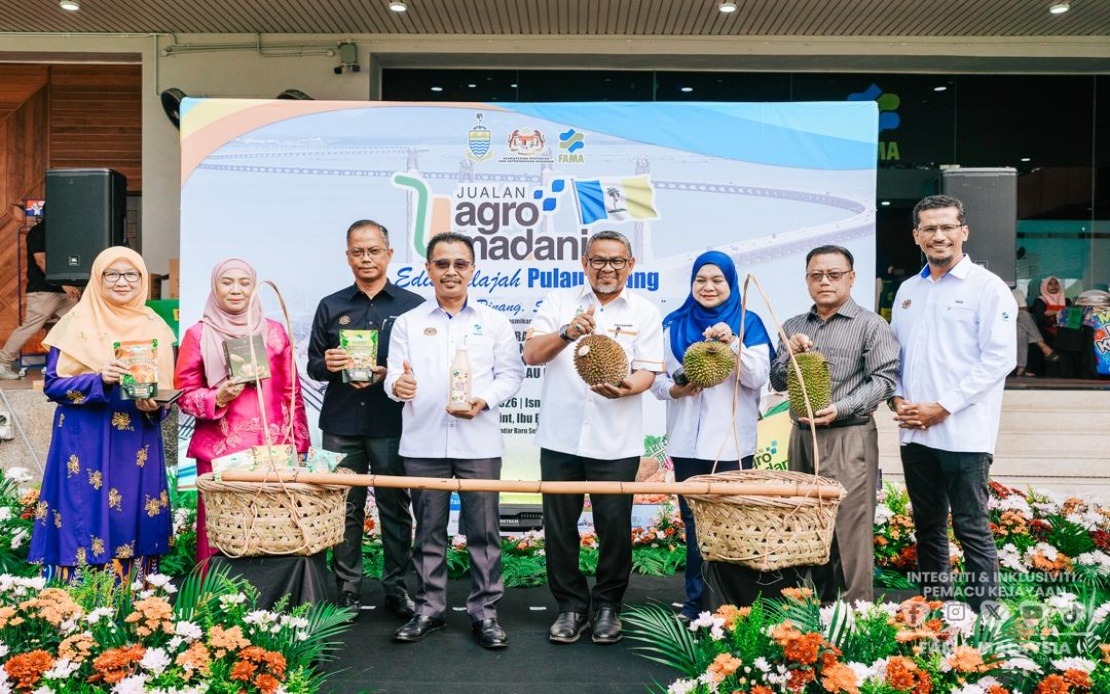
The Federal Agricultural Marketing Authority (FAMA) is accelerating its push to reshape Malaysia's agricultural marketing landscape through its Agro MADANI Sales programme, which has generated RM46.72 million in turnover since January. Across 1,833 organised events held in communities nationwide through May, the initiative has become a tangible mechanism for funnelling farm-fresh produce directly to Malaysian households whilst creating genuine income opportunities for rural and urban-based agri-entrepreneurs. This momentum reflects a deliberate policy shift toward decentralising agricultural commerce away from traditional middleman-dependent channels.
The programme's underlying philosophy addresses a persistent challenge in Malaysia's food supply ecosystem: the gap between what producers cultivate and what consumers can readily access at reasonable prices. By establishing temporary market platforms in different states, FAMA is attempting to collapse the distribution chain, allowing growers and food processors to interact directly with buyers. This structural intervention carries particular relevance for Malaysia, where urban consumers often pay significant premiums for locally-grown produce despite the nation's substantial agricultural capacity. The Agro MADANI approach effectively questions why geographic distance and intermediary costs should inflate prices for Malaysian food when domestic supply chains could theoretically operate more efficiently.
Penang's participation in the programme, launched at FAMA's Selayang headquarters in early July, represents the third major activation and signals the initiative's widening geographic reach. The state edition deployed 45 vendor slots to accommodate thirty Penang-based entrepreneurs, targeting RM100,000 in sales from an anticipated 2,000 visitors. This tiered expansion suggests FAMA has refined its operational model, moving beyond pilot phases toward systematic state-by-state implementation. Each activation now carries specific sales targets and attendance benchmarks, indicating that the authority is treating this not merely as a promotional exercise but as a measurable economic intervention.
Penang's economic positioning within this framework deserves scrutiny. The state has long been identified as a significant agri-food production hub, particularly for premium fruit varieties including its internationally-recognised durians. By featuring Balik Pulau premium durians alongside Black Thorn, Red Prawn, and Hor Lor cultivars, the Penang edition leverages the state's horticultural reputation whilst simultaneously introducing consumers to the range of produce available within the peninsula's agricultural ecosystem. The inclusion of Cempedak King—a hybrid fruit gaining traction in Malaysian horticulture—suggests FAMA is consciously promoting newer crops that could diversify rural income streams beyond traditional plantation agriculture.
The programme's integration with state-level governance structures underscores an important institutional dimension. Penang's Rural Development, Agrotechnology, Food Security and Cooperatives Committee, through Exco Datuk Rashidi Zinol, coordinated with FAMA using the Penang Bumiputera Development Council as the implementation vehicle. This tripartite arrangement—federal authority, state government, and indigenous business councils—reflects how Malaysia's agricultural policy now extends across multiple governance tiers. Such coordination can enhance reach and credibility locally, though it also creates potential bottlenecks if bureaucratic alignment proves difficult in other states.
The platform's dual function—simultaneously serving consumer interests and entrepreneur development—represents a calculated attempt to balance competing policy objectives. For consumers, the direct-from-producer model theoretically delivers fresher stock and lower prices by eliminating retail markups and storage costs. For entrepreneurs, the Agro MADANI framework provides ready-made customer access without requiring individual investments in retail infrastructure or marketing. This mutually-beneficial proposition has generated sufficient traction to justify expansion, with the accumulated RM46.72 million across five months suggesting organic growth rather than merely subsidised activity.
The culinary dimension embedded within the Penang edition—featuring nasi kandar, Penang laksa, char kuey teow, mee sotong and air sarbat—reveals how FAMA has strategically connected agricultural output to cultural consumption patterns. By pairing raw agri-products with prepared local delicacies, the programme acknowledges that Malaysian food practices are embedded within specific regional identities. Penang's legendary food culture becomes both a draw for visitors and a showcase for local ingredient quality. This approach generates secondary benefits: tourists visiting the state might discover Penang agri-products they would later seek in their home markets, potentially expanding distribution networks beyond initial programme footprints.
The entrepreneurship development angle carries particular significance for Malaysia's ongoing diversification agenda. Rural communities traditionally dependent on commodity crops face income volatility driven by global price fluctuations and climate variability. By creating structured market access for value-added agri-food products—processed, packaged, or specialty varieties—FAMA is encouraging agricultural diversification at the farmer and small-business level. The thirty Penang entrepreneurs participating represent a cross-section of the agri-food value chain, from producers to processors, suggesting the programme deliberately promotes vertical integration across agricultural sectors.
From a Southeast Asian perspective, Malaysia's Agro MADANI model offers lessons relevant to regional agricultural development. The programme responds to challenges common across ASEAN: ensuring smallholder farmers achieve viable incomes, reducing post-harvest losses through improved market linkages, and strengthening domestic food security through localised supply chains. As countries throughout the region prioritise agricultural productivity and rural development, FAMA's approach of systematising direct-to-consumer sales through government-organised platforms could be adapted or scaled. This positions Malaysia as a potential knowledge-sharer within regional agricultural policy discussions.
The RM46.72 million achievement across five months, while encouraging, warrants contextual analysis. Malaysia's total agricultural sector generates tens of billions in annual output, making this programme's contribution currently modest in macroeconomic terms. However, its significance lies not in immediate scale but in demonstrating proof-of-concept for an alternative distribution model that could gradually absorb larger volumes as state activations accumulate and consumer awareness grows. The trajectory suggests FAMA envisions this as a multi-year initiative with expanding ambitions.
Looking forward, the programme's sustainability depends on consistent execution across diverse state environments and continued entrepreneur participation. Early success in Selangor and Penang must replicate in less urbanised states where both consumer bases and entrepreneur networks may be thinner. FAMA's success will ultimately be measured not merely by individual event turnover but by whether the platform generates lasting business relationships between producers and buyers, encouraging repeat participation and sustained income growth for participating entrepreneurs beyond programmed event days.
The Agro MADANI Sales initiative represents a deliberate policy intervention in Malaysian agricultural marketing—one that recognises direct distribution channels can simultaneously benefit consumers through affordability and product quality while strengthening entrepreneurial opportunities across the agri-food sector. With five months of operations demonstrating RM46.72 million in sales across nearly two thousand events, the foundation appears solid for continued expansion, though the programme's true impact will only become apparent as it matures and reaches communities beyond initial urban-adjacent rollout zones.

