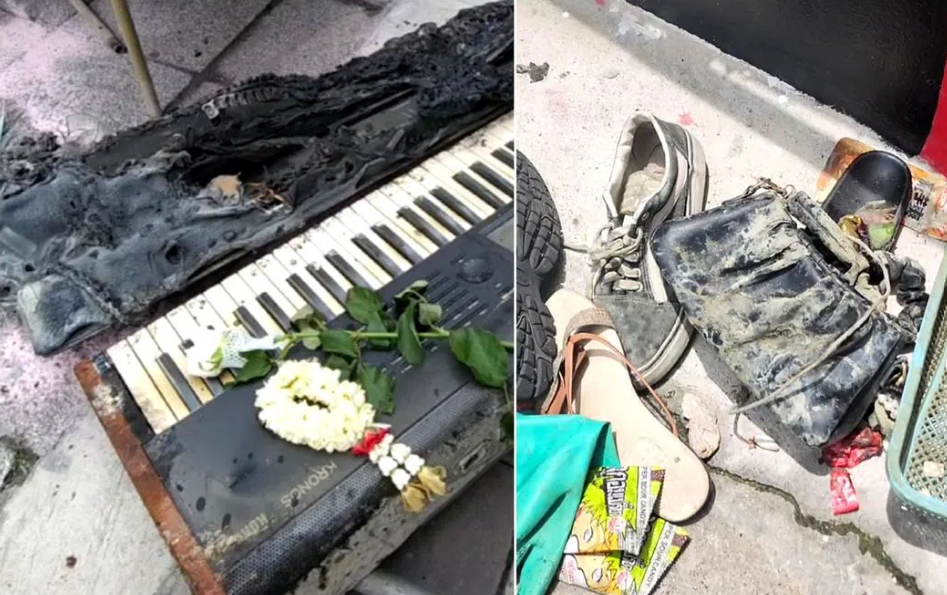
The discovery came through a television screen. Suwanna Saeteaw, 38, watching live news coverage of the Rong Beer Na Lat Phrao bar fire on the evening of July 13, spotted a familiar mobile phone among the recovered belongings laid out for identification. The device belonged to her younger sister Jarawee Sermsiri, 25. When Suwanna called the number, a rescue worker answered on the other end. In that moment, the fragile hope that Jarawee had escaped the inferno that ripped through the establishment near midnight on July 12 crumbled. "I'm extremely worried about her and devastated by what has happened," Suwanna told The Straits Times, her voice trembling as she fought back tears while moving between hospitals and forensic centres, scanning lists of survivors and dreading what the morgue might reveal.
Across Bangkok, dozens of families found themselves in similar anguish on July 13, desperately piecing together information about loved ones caught in the catastrophe. The fire has claimed 28 lives and left more than 70 injured, making it the deadliest blaze to strike Thailand in nearly two decades. The tragedy echoes the 2009 Santika nightclub fire during New Year celebrations, which killed 67 people and wounded over 200. The loss has reignited national anxiety about fire safety in entertainment venues, a recurring vulnerability in Thailand's hospitality sector that persists despite previous warnings and investigations.
Authorities are pursuing multiple lines of inquiry into how the single-storey concrete structure became a death trap within minutes. Bangkok Governor Chadchart Sittipunt outlined the focal points of the investigation: whether emergency exits were blocked, whether combustible ceiling materials accelerated the fire's spread, and critically, why occupants could not evacuate safely. "The fire spread very quickly, reaching up to the ceiling. Smoke was likely the main cause of death," Chadchart explained to reporters at the scene. The bar had passed a safety inspection in April, yet this routine clearance now raises uncomfortable questions about the adequacy of Thailand's inspection protocols. An estimated 300 customers were inside when flames erupted, though the venue typically accommodates 600 to 700 patrons during peak hours.
National Police Chief Kitrat Panphet revealed a chilling detail that speaks to the chaos of those final moments: most victims were discovered in the toilets, apparently driven there by panic as they sought refuge from smoke and flames in a darkened building. Evidence suggests that evacuation routes were severely compromised. One exit door was obstructed by a shelf, effectively reducing passage to single-file movement. The narrow apertures and apparent lack of adequate lighting transformed what should have been escape routes into obstacles. Investigators are examining the building's 50-year-old electrical systems and whether decorative elements fuelled the rapid fire progression, while the bar's owner remains in intensive care, limiting immediate questioning.
Structural engineers have identified design flaws that likely contributed to the lethality. Amorn Pimanmas, president of the Thailand Structural Engineers Association, inspected the charred wreckage on July 13 and identified a critical vulnerability: the low ceiling combined with polyurethane foam decorations created an environment where toxic smoke accumulated with lethal speed. "It's not like we don't have the law. It's the problem of how the law can be strictly enforced," Amorn told The Straits Times, highlighting a systemic weakness in Thailand's approach to fire safety compliance. The comment cuts to the heart of a persistent challenge facing Southeast Asian nations: legislation exists, but enforcement remains sporadic and inconsistent across different venues and jurisdictions.
Patrons who frequented the bar recognised the hazards but had grown accustomed to them. Chaiyo Piwisol, a 30-year-old waiter who had visited on three previous occasions, recalled consistently finding the space cramped and overcrowded with narrow doorways that created unease. "The place had a lot of decorations, lights and other things hanging from the ceiling. I think there should have been stronger safety measures," he reflected. These observations underscore a troubling pattern: staff and regular customers often perceive safety deficiencies, yet such concerns rarely translate into official action or closure until tragedy occurs. The normalisation of substandard conditions suggests a broader culture where convenience and profit margins outweigh precaution.
Prime Minister Anutin Charnvirakul visited the scene and identified another fundamental problem: blind spots without visible fire escape routes, a phrase that encapsulates the architectural and operational failures. While urging the public to await official findings, Anutin issued a pointed warning: "There will be no leniency if any laws have been broken." This statement signals political will to hold violators accountable, yet such pronouncements typically prove easier to make than to enforce, particularly in a nation where entertainment venues often operate with informal arrangements and relationships with local officials.
For survivors, the psychological toll mirrors the physical devastation. Panathaporn Thongyord, 19, escaped but lost a close friend of 14 years. "My friend told me, 'Just get out. Don't come back to help me'," Panathaporn recalled, her voice carrying the weight of that final instruction. "Everything happened so fast... We grew up together, slept over at each other's houses, ate together. I just want justice for my friend. I want to know why that back door couldn't be opened." The question encapsulates what families and survivors demand: not merely explanations, but accountability and systemic reform that prevents such tragedies recurring.
Identification remains painfully slow. Authorities have collected DNA samples from families, but analysis will require approximately three days—a timeline that feels interminable to those waiting. Suwanna, like hundreds of other relatives, continues moving between medical facilities and forensic centres, grasping at updates and clinging to diminishing hope. "I'm heartbroken right now, but I'm still hoping that my sister's alive and receiving treatment at one of the hospitals," she said, embodying the emotional limbo countless families occupy. The waiting period exposes another vulnerability: Thailand's forensic and identification infrastructure struggles to manage mass casualty events efficiently, leaving families in prolonged uncertainty during their darkest hours.
The implications for Southeast Asia extend beyond Thailand's borders. Malaysia, Indonesia, the Philippines, and Singapore all operate extensive hospitality sectors with similar regulatory challenges. Entertainment venues in the region frequently share comparable architectural shortcomings: combustible furnishings, inadequate emergency exits, crowding beyond safe capacity, and inconsistent inspection regimes. The Bangkok fire serves as a cautionary tale about the costs of regulatory complacency. Regional governments face mounting pressure from tragic incidents to strengthen fire safety standards, improve enforcement mechanisms, and establish accountability frameworks that penalise negligence rather than merely issuing fines that businesses absorb as operational expenses.
Investigators' examination of the building's history and the bar owner's practices may yet reveal whether violations were deliberate or negligent oversights. What remains evident is that multiple safeguards failed simultaneously: exit blockages, inadequate lighting, flammable decorative materials, and rapid smoke accumulation created a convergence of hazards. Each element alone might not have proven catastrophic; together, they transformed a licensed establishment into a confined space where 28 people perished and 70 more were scarred, physically and psychologically. The tragedy underscores that fire safety is not a single intervention but a system requiring rigorous design standards, consistent inspection, training, maintenance, and a cultural commitment to prioritising human safety over aesthetic or operational convenience.
As Suwanna and countless other family members navigate the coming days, they represent not merely personal grief but collective demand for systemic change. Whether Thailand's government will translate Prime Minister Anutin's stern warnings into substantive regulatory reforms remains to be seen. The families' desperate search for answers and justice, conducted through hospital corridors and forensic facilities, will likely define how the nation responds to this catastrophe. The Rong Beer Na Lat Phrao fire may prove to be a watershed moment prompting genuine reform, or it may fade into the tragic history of preventable disasters that Southeast Asian nations periodically endure, only to revert to previous practices until the next tragedy strikes.

