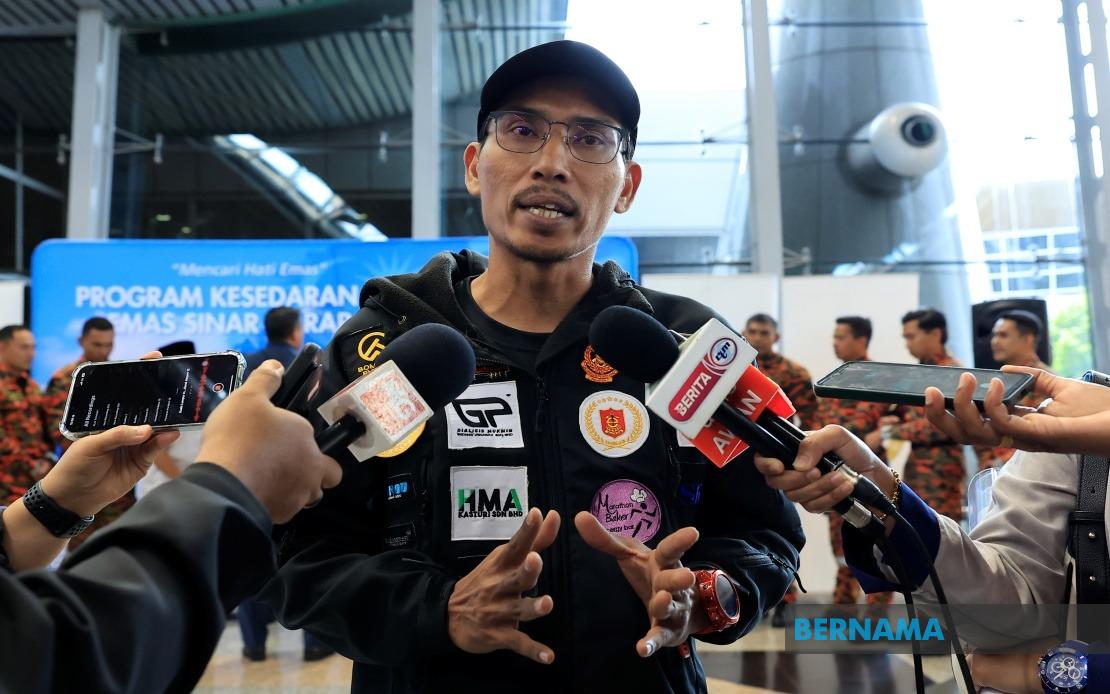
The family of Mohd Fakhrul Munir Mohd Isa, a 44-year-old member of the Malaysian Fire and Rescue Department's elite special forces contingent, continues to maintain optimism as search efforts continue following his disappearance during catastrophic flash floods and landslides that devastated the Rasuwa district in Nepal. Despite communication remaining severed since the disaster struck, relatives of the missing firefighter—known to friends and colleagues by the nickname Loe—are choosing to interpret the silence not as a dire sign but rather as an unfortunate consequence of the massive geological and meteorological event that has paralysed the region.
Mohd Saiful Munir Mohd Isa, the 46-year-old brother of the missing officer, conveyed the family's steadfast determination to remain positive during an interview with journalists. He acknowledged that while his family continues to pray fervently for Loe's safe recovery along with his companions, they have also begun preparing emotionally for every possible outcome. "We're treating this as a disaster where he's essentially trapped and unable to reach out," Mohd Saiful Munir explained, emphasizing that the family views the communication blackout as a symptom of the disaster rather than evidence of tragedy.
The missing firefighter was part of an ambitious mountaineering expedition comprising ten Malaysians who were trekking towards Everest Base Camp when the disaster occurred. According to the group's itinerary, they were traversing the valley regions of Rasuwa when the flash floods and accompanying landslides swept through the area, separating them and cutting off all lines of communication. The Malaysian Fire and Rescue Department has since confirmed that two of its personnel remain uncontactable—Mohd Fakhrul Munir Mohd Isa and Mohd Sani Harul, who serves as deputy director of the department's Planning and Research Division.
Mohd Saiful Munir, who currently serves as an operations officer at the Port Klang Fire and Rescue Station, expressed that his brother's adventurous pursuits in Nepal are well-established and routine within the family. The missing firefighter has developed a reputation as a dedicated climber and mountaineer, regularly venturing to Nepal to pursue his passion for high-altitude expeditions. "You could say Nepal is like his second home… he goes there about three to five times a year," Mohd Saiful Munir disclosed, revealing the depth of his brother's commitment to mountaineering activities across Southeast Asia's most challenging terrain. Beyond climbing, the missing officer is also an accomplished cyclist, further demonstrating his dedication to outdoor and adventure pursuits.
The last direct communication between the two brothers occurred approximately a week before Loe's departure for Nepal, leaving the family with limited recent information about his specific location or activities prior to the disaster. This timeline places the missing firefighter firmly within the affected zone when geological forces unleashed the flash floods and landslides that have since claimed multiple lives and displaced numerous trekking groups throughout the Rasuwa region. The family's understanding of the planned route suggests that the expedition team was navigating valley passages when the natural disaster struck, making rescue operations particularly challenging.
The Malaysian Fire and Rescue Department has maintained official channels of communication regarding the situation, with department director-general Datuk Seri Nor Hisham Mohammad publicly identifying the two missing officers and confirming their participation in the larger Malaysian expedition group. This official acknowledgment has provided some measure of clarity to anxious family members, though it has simultaneously underscored the gravity of their circumstances. The department's recognition of the missing officers as integral members of their specialized unit reflects the professional calibre of those caught in this unfolding crisis.
For the broader Malaysian community, particularly those within the emergency services sector, this incident highlights both the inherent risks associated with high-altitude mountaineering expeditions and the profound human costs of natural disasters in remote regions. Nepal's monsoon season and treacherous topography have long presented formidable challenges to trekkers and climbers, regardless of their experience or training. The Rasuwa district, located north of Kathmandu and encompassing some of the world's most demanding terrain, remains particularly vulnerable to flash flooding and landslide activity during periods of intense rainfall.
The family's measured approach to the crisis, balancing hope with realistic acknowledgment of potential outcomes, reflects a growing maturity in how Malaysian communities respond to overseas emergencies. Rather than succumbing to panic or despair, Mohd Saiful Munir has emphasized that the family will remain guided by official information from Malaysian authorities and relevant Nepalese emergency services. This disciplined stance helps prevent the spread of misinformation while maintaining the psychological resilience necessary to endure extended periods of uncertainty.
For Malaysian readers and policymakers, this situation underscores important questions about adventure tourism and the support structures available to nationals engaged in high-risk activities abroad. While international mountaineering expeditions have become increasingly popular among Malaysian adventurers seeking to test their limits on iconic peaks, the infrastructure for rescue operations in remote Himalayan regions remains limited. The incident serves as a sobering reminder that even well-trained professionals from specialized departments face profound vulnerability when confronted with the raw power of natural disasters in mountainous terrain.
As rescue operations continue in the Rasuwa district, the Malaysian community maintains a collective vigil alongside the family of Mohd Fakhrul Munir Mohd Isa. The situation exemplifies how individual tragedies in distant locations can resonate deeply within home communities, particularly when those affected are dedicated public servants. The coming days will be critical in determining the fates of the missing Malaysians, and authorities on both sides are reportedly coordinating search and rescue efforts despite the hazardous conditions that continue to complicate access to affected areas.

