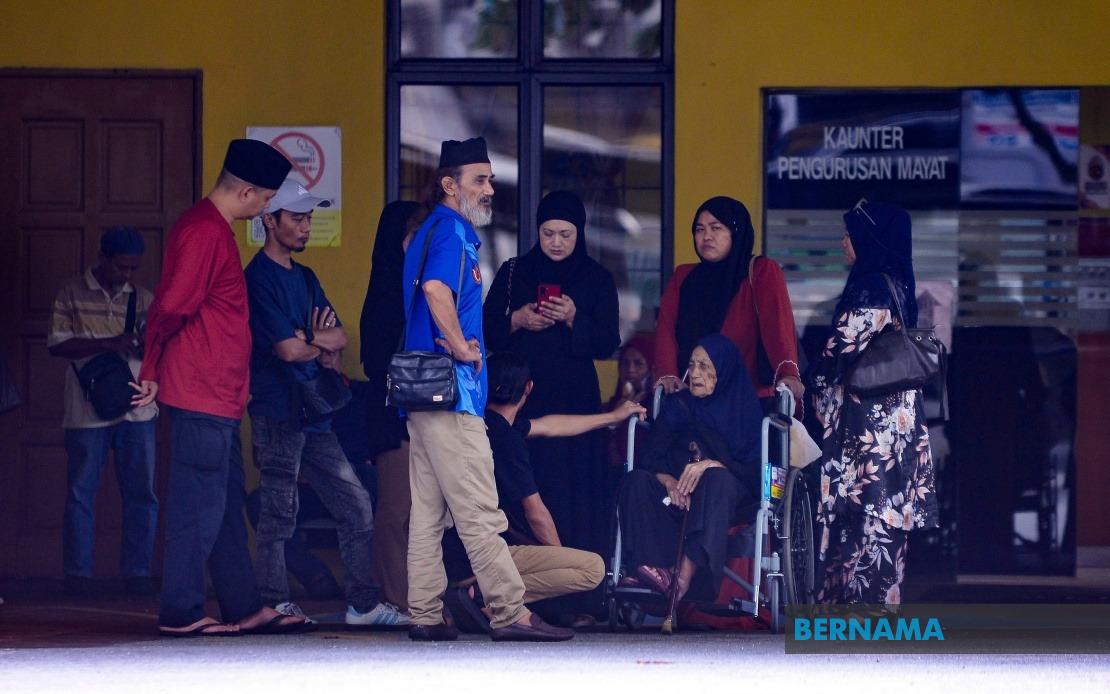
A grieving family member has publicly appealed for a thorough and transparent investigation into last month's fatal collision at Maju Junction in Kuala Lumpur, after an Immigration Department lorry allegedly breached traffic signals and struck a family of pedestrians, resulting in three deaths and serious injuries to a fourth victim. Mohd Nadzri Razali, 69, whose brother-in-law Shaik Mohd Firdaus Shaikh Yahya, 53, died in the incident, expressed his frustration during an interview at his home in Taman Aman Fasa 2, Mambang Di Awam, insisting that justice must be served for his lost relatives and that all circumstances surrounding the crash be scrutinized thoroughly.
The collision unfolded in the early hours around 1 am when an unoccupied Isuzu Black Maria lorry operated by the Immigration Department was en route from the Kuala Lumpur Immigration Office to Chow Kit to conduct operations targeting undocumented migrants. According to accounts of the incident, the lorry entered the Maju Junction intersection while its traffic signal displayed red, notwithstanding that the vehicle had activated both beacon lights and sirens. At the precise moment, a Proton Saga traveling through the intersection on a green light proved unable to avoid the massive lorry, resulting in a collision that set off a devastating chain of events.
Following impact, the lorry spun uncontrollably across the junction, its trajectory taking it directly into a group of pedestrians who happened to be crossing at that location. The vehicle struck a family of four as well as an Inokom Matrix multi-purpose vehicle in its path. The destructive nature of the collision proved immediately fatal for three members of the pedestrian family: Shaik Mohd Firdaus himself, along with his two daughters Siti Nor Sazlin, 25, and Siti Darwisyah Auni, 12, who were pronounced dead at the scene. The fourth family member, the mother Norhayati Razali, 55, sustained severe injuries and required emergency medical attention.
Norhayati remains hospitalized at Kuala Lumpur Hospital's Intensive Care Unit, where her condition has shown some improvement with the regaining of consciousness. However, her family remains uncertain about her discharge prospects and are exploring options to transfer her to medical facilities closer to their home in Perak, specifically Hospital Ipoh or Teluk Intan, where she could continue her recovery with family support. This uncertainty about her future treatment adds another layer of distress to an already traumatized family struggling to process their losses.
The family has made arrangements to lay three of their loved ones to rest in a single grave at the Muslim Cemetery in Kampung Air Hitam Labu, Kampar, an arrangement that speaks to both the close bonds within the family and the significance of this collective tragedy. Mohd Nadzri described the shock of losing three family members simultaneously as profoundly devastating, particularly given that the family had recently experienced another loss just months earlier, on May 30. The cumulative weight of these tragedies has left the household reeling, with members struggling to process grief compounded by ongoing medical concerns and questions about accountability.
Mohd Nadzri's recollection of recent interactions with his sister's family underscores the ordinariness of their lives before tragedy struck. Just two weeks prior to the accident, he had seen them when they returned to their hometown to perform customary rituals at the graves of other family members in Teluk Bakong, Ayer Tawar, a practice illustrating the family's deep roots and traditions in Perak. The normalcy of that recent meeting makes the sudden loss all the more shocking and difficult to comprehend.
The core issue troubling the family centers on the allegation that the Immigration Department lorry entered the intersection contrary to traffic signals. Mohd Nadzri emphasized hearing claims that the lorry's traffic light was showing red at the moment of the fatal collision, a detail that raises serious questions about vehicle operation and judgment. While the activation of warning lights and sirens may have been intended to alert other road users, the apparent disregard for the red signal itself forms the crux of the family's demand for investigation. They want clarity on whether emergency response protocols were properly followed and whether standard road safety rules should have taken precedence in this situation.
The investigation into the incident is proceeding under Section 41(1) of the Road Transport Act 1987, a provision dealing with motor vehicle-related offences and accidents. This legal framework provides the structure through which authorities will examine the circumstances of the crash, though the family's call for transparency suggests concerns that a perfunctory investigation might not adequately address questions about the Immigration Department's vehicle operation procedures and accountability mechanisms. The family's public plea indicates a lack of confidence that standard processes alone will deliver the thorough examination they believe the case warrants.
The incident raises broader questions about how emergency response vehicles operating under government authority navigate public roads and the extent to which emergency protocols supersede regular traffic regulations. In Malaysia's context, where traffic safety remains a significant public health concern, the collision at Maju Junction illustrates the potential consequences when large vehicles operated by uniformed agencies interact with civilian traffic in high-density urban areas. The family's push for transparency reflects not merely personal grief but a desire to ensure that systemic issues are identified and addressed to prevent similar tragedies from occurring to other families in the future.
For the bereaved family, the months ahead will involve managing their grief, supporting Norhayati's recovery, and pursuing answers about how their relatives came to be in the path of a government vehicle operating contrary to traffic signals. Mohd Nadzri's public statements signal the family's determination not to allow this matter to be quietly resolved through standard bureaucratic channels, but rather to insist on accountability and a full accounting of the events leading to the deaths of three family members. The family's advocacy serves as a reminder that beyond statistics and legal provisions, road tragedies carry profound human costs that demand serious, transparent investigation and meaningful responses from authorities responsible for both road safety and the vehicles that operate upon them.

