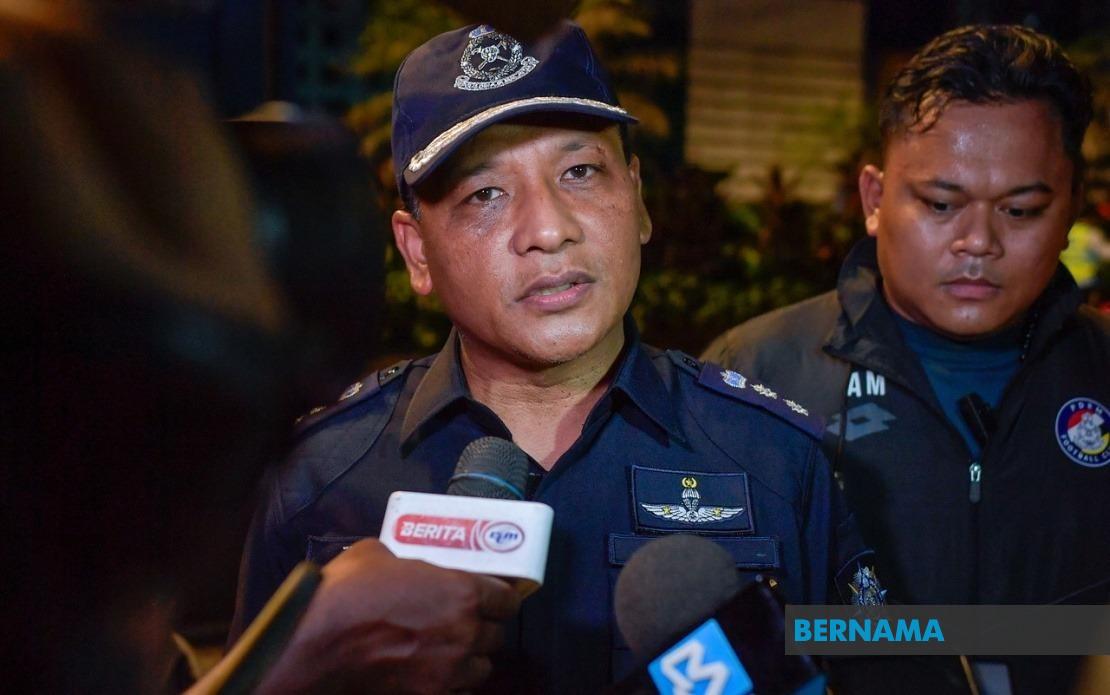
A deadly collision in central Kuala Lumpur that claimed three lives early Monday morning has triggered a formal referral to the Attorney General's Chambers, marking the next phase in determining potential criminal liability. The Kuala Lumpur Traffic Investigation and Enforcement Department confirmed it will submit its investigation papers to prosecutors tomorrow, setting the stage for decisions on whether charges will be filed in connection with the incident on Jalan Sultan Ismail.
According to ACP Mohd Zamzuri Mohd Isa, chief of the traffic investigation unit, the referral follows consultations between police and the Kuala Lumpur Prosecution Director. The case will be presented to the Head of the General Crime and Public Order Division at the Attorney General's Chambers, with both the prosecution director and investigating officer present to discuss potential charges. This procedural step typically occurs when police complete their investigation and submit findings for prosecutorial review and decision-making regarding formal charges.
The incident has drawn attention to safety protocols governing emergency vehicle operations in the capital. The Kuala Lumpur Immigration Department truck, known colloquially as a "Black Maria" prison van, was operating with its beacon and siren activated while responding to an immigration enforcement operation in the Chow Kit area. Initial reports suggest the vehicle entered the intersection at Jalan Sultan Ismail against a red traffic signal, subsequently colliding with a Proton Saga that was lawfully proceeding through the same junction on green.
The cascade of events unfolded rapidly after the initial impact. The force of the collision caused the Immigration Department truck to lose control, veer sharply off its intended path, and strike multiple victims standing in the vicinity. The vehicle also struck an Inokom Matrix during this chaotic sequence. The three fatalities emerged from a single family unit caught in the collision zone: Shaik Mohd Firdaus Shaikh Yahya, aged 53, and his two daughters Siti Nor Sazlin, 25, and Siti Darwisyah Auni, 12. His wife, Norhayati Razali, 55, sustained serious injuries and remains hospitalised in the Intensive Care Unit at Kuala Lumpur Hospital.
Both drivers involved in the primary collision—the operator of the Immigration Department truck and the Proton Saga driver—have been detained for questioning. Police obtained one-day remand orders for both individuals as the investigation proceeded. The case is being examined under Section 41(1) of the Road Transport Act 1987, which addresses dangerous or negligent driving causing death or serious injury. This statutory framework provides authorities with tools to assess whether either driver's conduct fell below acceptable safety standards.
The timing of the collision, occurring at approximately 1 am, may have contributed to the tragedy. Early morning hours typically see lighter traffic volumes but reduced visibility and heightened fatigue risks for drivers. The Immigration Department's operational necessity—conducting late-night enforcement activities related to illegal immigration—reflects institutional imperatives that sometimes require round-the-clock service delivery. However, this incident raises questions about whether current protocols adequately balance operational urgency with public safety obligations.
Emergency vehicle operations occupy a complex legal and ethical space across jurisdictions. While official vehicles engaged in authorized enforcement activities receive certain regulatory exemptions, those exemptions are not absolute and carry an implicit requirement that operators exercise heightened care. The apparent discrepancy between the truck's red-light entry and the Proton Saga's lawful green-light passage creates a factual foundation for investigating whether the Immigration Department vehicle operator breached this duty of care.
For Malaysian road safety advocates, the incident underscores persistent concerns about enforcement patterns at high-risk intersections. Jalan Sultan Ismail serves as a major arterial route through central Kuala Lumpur, handling substantial traffic volumes throughout the day and night. The presence of pedestrians in the collision zone at 1 am suggests either nearby commercial or residential activity, or possibly individuals waiting for public transportation. Each factor contributes to understanding how tragedy emerged from this particular location.
The Attorney General's Chambers now assumes a critical gatekeeping function. Prosecutors must evaluate whether the investigation file contains sufficient evidence of criminal culpability and which statutory provisions best reflect the circumstances. Their decision will effectively determine whether formal charges proceed and against whom. This prosecutorial discretion carries significant consequences not only for the individuals involved but also for broader signalling around accountability in government vehicle operations and road safety enforcement.
For families and communities affected by traffic fatalities, the referral to the Attorney General's Chambers represents both procedural progress and mounting uncertainty. The forthcoming prosecutorial decision will shape how this tragedy is officially characterised—whether as a tragic accident, negligent conduct, or something more culpable. The outcome may also influence how government agencies recalibrate their operational protocols to prevent recurrence of such devastating incidents.

