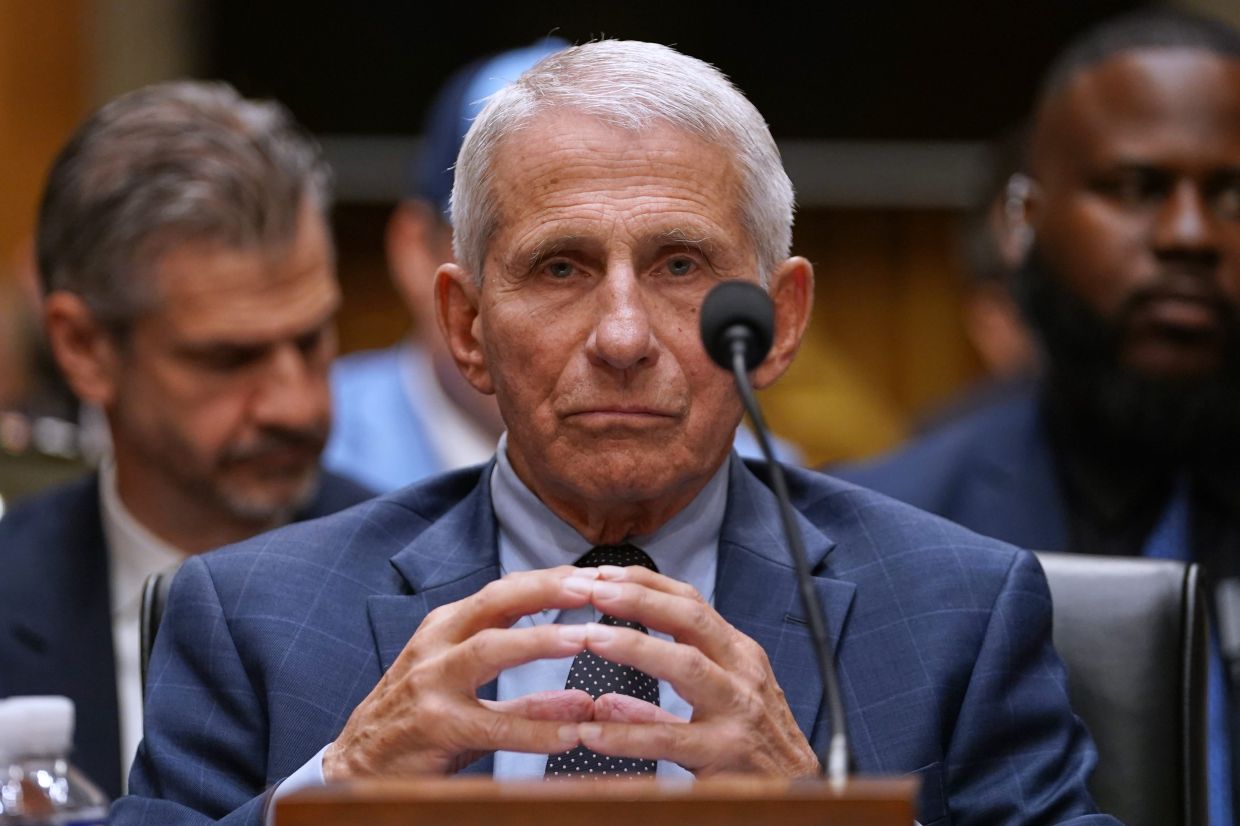
The appearance of Dr Anthony Fauci before the US Senate Homeland Security and Governmental Affairs Committee on Wednesday marked an extraordinary escalation in the years-long dispute over COVID-19's origins, with the former director of the National Institute of Allergy and Infectious Diseases systematically refusing to respond to lawmakers' inquiries by invoking his Fifth Amendment rights. Throughout the nearly three-hour hearing, Fauci responded to every substantive question with a prepared statement: "On the advice of counsel, I respectfully decline to answer based upon my rights under the Fifth Amendment of the Constitution." The hearing crystallised one of Washington's most polarised debates—whether the pandemic emerged through natural animal-to-human transmission or resulted from a laboratory incident in Wuhan—and whether American government officials properly monitored the safety of research conducted with US taxpayer funds.
The subpoenaed appearance represented a turning point in the persistent accusations levelled by Republican Senator Rand Paul of Kentucky, who has spent years asserting that Fauci orchestrated a cover-up of evidence pointing toward the Wuhan Institute of Virology. In his opening remarks, Fauci countered Paul's allegations directly, characterising the senator's behaviour as an "obsession" driven by a desire to see him imprisoned rather than a genuine legislative inquiry. Fauci argued that responding to the committee's questions would expose him to what he described as politically motivated prosecution, effectively signalling his legal team's calculation that testifying carried greater legal risk than invoking constitutional protections. This defensive posture—unusual for a retired government official—underscored the charged political atmosphere surrounding pandemic investigations and the extent to which COVID-19's origins have become entrenched in partisan conflict.
At the centre of the dispute lies approximately US$600,000 in grants that the National Institutes of Health distributed to EcoHealth Alliance, an American non-profit organisation, which subsequently allocated funds to support coronavirus research at the Wuhan institute focusing on bat viruses. Republican senators, particularly Paul, have characterised this work as perilous "gain-of-function" research—experiments designed to enhance pathogenic characteristics—though Fauci and NIH leadership have consistently disputed this classification. The fundamental disagreement concerns whether such internationally collaborative research protocols adequately safeguarded against potential laboratory accidents and whether American institutions adequately monitored the work's safety standards. For regional audiences in Southeast Asia, where several countries host biosafety research facilities and participate in international scientific cooperation, the hearing highlights ongoing tensions between advancing scientific knowledge and maintaining rigorous safety oversight in sensitive research domains.
The timing of this hearing carries particular significance given that the CIA released a revised assessment in January 2025 supporting the lab-leak hypothesis, albeit with "low confidence," marking a subtle shift in intelligence community thinking. Simultaneously, former US President Joe Biden issued Fauci a broad pre-emptive pardon shortly before leaving office in January 2025, covering potential federal offences committed between January 1, 2014, and January 20, 2025, arising from his government service. Notably, the pardon excluded potential crimes committed after that date, including any false statements during subsequent congressional testimony. This legal safeguard evidently prompted Fauci's legal counsel to advise silence, as answering questions could create exposure to future prosecution for alleged misrepresentations made during the hearing itself.
Republican committee members expressed visible frustration throughout the proceedings as Fauci remained unresponsive. Senator Bernie Moreno of Ohio grew particularly agitated, directly accusing the former health official of responsibility for alleged wrongdoing and declaring, "I hope that one way or the other, somewhere, sometime, you answer for your crimes." Senator Paul, concluding the hearing, declared it would serve as the "capstone" to what he described as Fauci's "40 years of abuse of power" at the NIH and indicated plans to pursue additional congressional action. These confrontational exchanges revealed the deep mistrust Republicans harbour toward Fauci's stewardship of pandemic policy and research oversight, with the hearing serving as a public platform for their allegations regardless of Fauci's refusal to engage substantively.
Democratic committee members offered staunch defence of the former official, characterising the proceeding as a partisan inquisition divorced from genuine legislative purpose. Senator Gary Peters of Michigan, the ranking Democratic member, argued that the hearing represented the culmination of months of biased and selective efforts by the Republican majority to legitimise a predetermined conclusion reached years earlier. This partisan split reflects deeper divisions within American politics regarding pandemic accountability and the extent to which scientific disagreements about origins have become weaponised for political advantage. The inability of Congress to reach consensus on investigation parameters and appropriate questioning demonstrates how COVID-19 has become permanently embedded within America's partisan landscape.
The scientific consensus among virologists remains substantially aligned with Fauci's position. A survey published in February 2024 by the Global Catastrophic Risk Institute found that most scientists in the virology community support the natural spillover theory, whereby the virus jumped from animals to humans before spreading through human-to-human transmission. Meanwhile, China's embassy in Washington maintained that determining COVID-19's origins constitutes a scientific matter requiring scientific resolution rather than political combat. The embassy referenced the World Health Organization-China joint study, which concluded that a laboratory leak was "extremely unlikely" following expert field investigations. China's spokesperson characterised the Republican allegations as "sheer smearing and slander" and opposed what Beijing termed "political manipulation" of the origins question.
For Malaysia and Southeast Asian nations, this American political drama carries practical implications extending beyond symbolic significance. The hearing demonstrates how scientific questions become subordinated to partisan narratives, potentially undermining international trust in collaborative research frameworks and transparency mechanisms. The incident also illustrates how developed nations' internal political divisions can reverberate through global scientific cooperation networks, complicating efforts to establish shared protocols for monitoring emerging infectious diseases and biosafety standards. Regional countries participating in international research initiatives must navigate these heightened sensitivities while protecting their own scientific communities from politicisation.
The broader question of appropriate accountability for government health officials during pandemic crises remains unresolved. Fauci's invocation of constitutional protections, while legally sound, prevents Congress from obtaining direct testimony about the decision-making processes surrounding research oversight and funding mechanisms. Whether this represents a failure of congressional investigation or a necessary protection against prosecutorial overreach depends largely on one's political perspective. What remains clear is that the hearing solidified the partisan divide regarding COVID-19 accountability rather than resolving underlying disputes about research practices, funding decisions, or transparency. The proceedings illustrated how legal mechanisms designed to protect individual rights can simultaneously prevent public understanding of contested historical events.

